Defense & Military
Azerbaijan Troops at 'Highest Level of Readiness' for Undisclosed Contingency
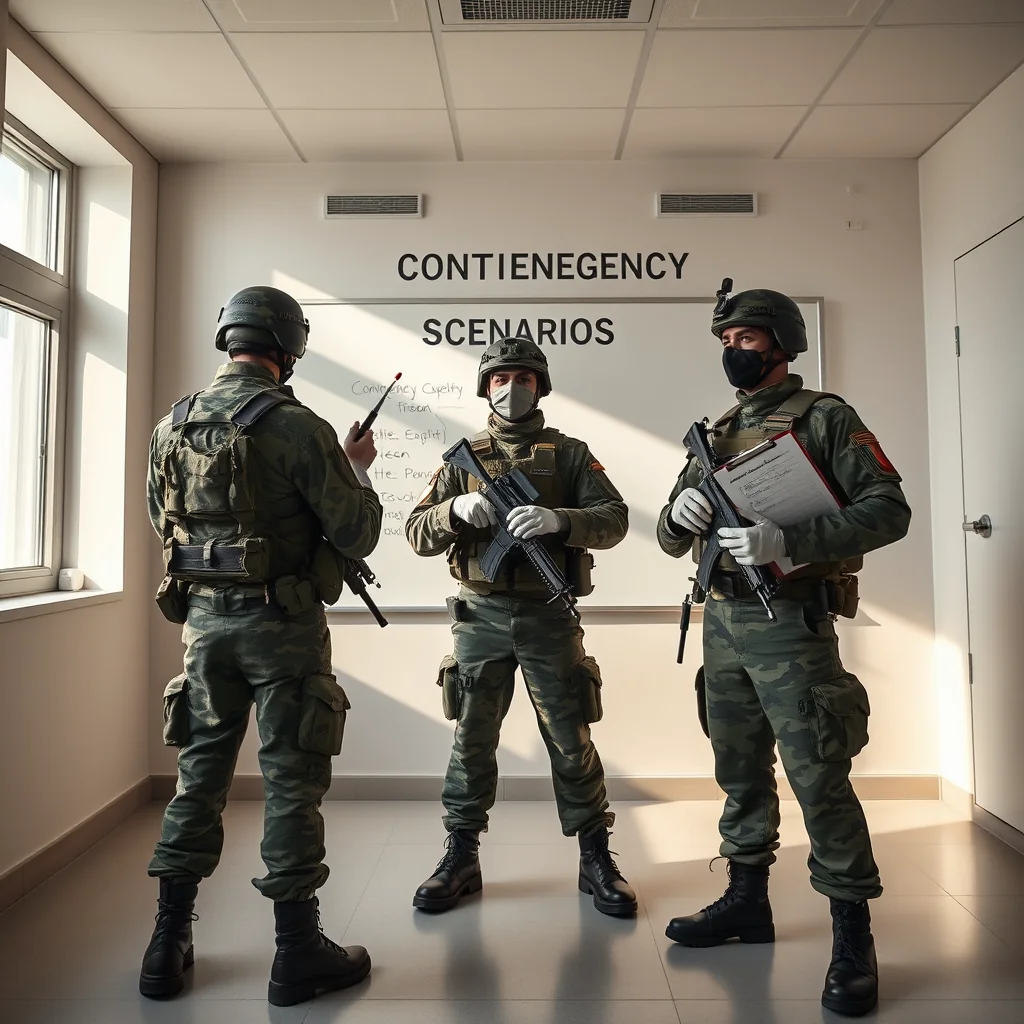
BAKU—Azerbaijan's armed forces are maintaining what the Defense Ministry describes as the 'highest level of readiness' in response to unfolding events in the Middle East, though the nature of the contingency remains officially unspecified. The alert status, activated seven days ago, has involved troops standing by in full battle gear, vehicles fueled, and command centers fully staffed on a 24-hour basis. Defense Minister Zakir Hasanov stated, 'Our forces are prepared to respond to any scenario with maximum efficiency.
The precise scenario is still under review.' Analysts note that the 'highest level of readiness' has historically been reserved for imminent invasion threats or natural disasters, but current intelligence briefings have not identified a clear trigger. A ministry spokesperson clarified that readiness levels are 'tiered and dynamic,' adding, 'We are calibrated for rapid deployment, pending identification of a deployable objective.' The posture has drawn scrutiny from NATO observers, who report no unusual military movements along Azerbaijan's borders with Iran or Armenia.
'It's a state of poised anticipation,' said a Western diplomat under condition of anonymity. 'They're ready for anything, which, in practice, means they're ready for nothing in particular.' Troops stationed near the Iranian border have conducted drills simulating border breaches, though no breaches have been reported. One soldier, who asked not to be named, said, 'We've been told to stay sharp. For what? Nobody says. Maybe for the heat.' The alert has incurred significant logistical costs, including overtime pay, accelerated fuel consumption, and heightened wear on equipment.
A budget official within the ministry confirmed that expenditures are 'within projected parameters for undefined readiness,' but declined to specify a timeline for sustainment. Meanwhile, civilian life in Baku proceeds normally, with no disruptions to commerce or travel. The juxtaposition of military urgency and public calm has become a topic of local discussion. 'If there's a crisis, they should tell us,' said a bakery owner near a military base. 'But the officers still buy their morning bread like always.' International partners have acknowledged Azerbaijan's posture without endorsing its necessity.
A U.S. State Department spokesperson noted, 'We respect each nation's sovereign decisions regarding military readiness.' The United Kingdom, which has deployed additional aircraft to the region, stated alignment with 'regional stability efforts' but did not comment on Azerbaijan's alert status. Critics within Azerbaijan's parliament have questioned the duration and purpose of the readiness level. One opposition lawmaker called it 'a solution in search of a problem,' arguing that resources could be better allocated to public infrastructure.
The Defense Ministry responded that readiness is 'an inherent metric of national security, not contingent on external validation.' Medical units attached to the armed forces have reported an increase in stress-related complaints among personnel, attributed to prolonged alertness without engagement. 'It's the tension of waiting for an order that never comes,' said a military psychologist. 'We recommend breathing exercises and hydration.' The ministry's press office continues to issue daily readiness bulletins, each identical to the last, citing 'sustained operational vigilance.' Economic analysts project that if the alert continues for another month, it could impact annual defense spending by up to 4%.
In a further escalation, the ministry's Quartermaster Corps has begun stockpiling supplies for contingencies described only as 'atmospheric and subterranean.' This has resulted in the procurement of ten thousand redundant vehicle snow chains, despite forecasts for continued mild weather, and the excavation of several large, empty concrete-lined pits at remote bases, officially designated as 'preemptive receptacles.' A senior logistics coordinator, speaking on background, defended the measures, stating, 'Our readiness doctrine is comprehensive. We are prepared for adversarial action originating from any cardinal direction, including vertically. To be unprepared for a ground assault from below or an aerial incursion from above would represent a critical failure of imagination.' The pits remain empty, awaiting an unspecified payload.
The ministry has not indicated plans to downgrade the readiness level, stating only that it 'will be adjusted based on ongoing assessments.' Regional experts suggest the posture may be a symbolic gesture of solidarity with international concerns about Iran, though Azerbaijan has not explicitly linked the alert to Iranian actions. 'It's a statement of capability, not necessarily intent,' said a Caspian security scholar. As sunset falls over Baku, troops remain at their stations, their readiness unwavering, their mission undefined, and their resolve measured in hours spent waiting.
About the author