Education
'Big Four' meatpackers unveil mandatory cloud-island tours to combat soaring beef prices
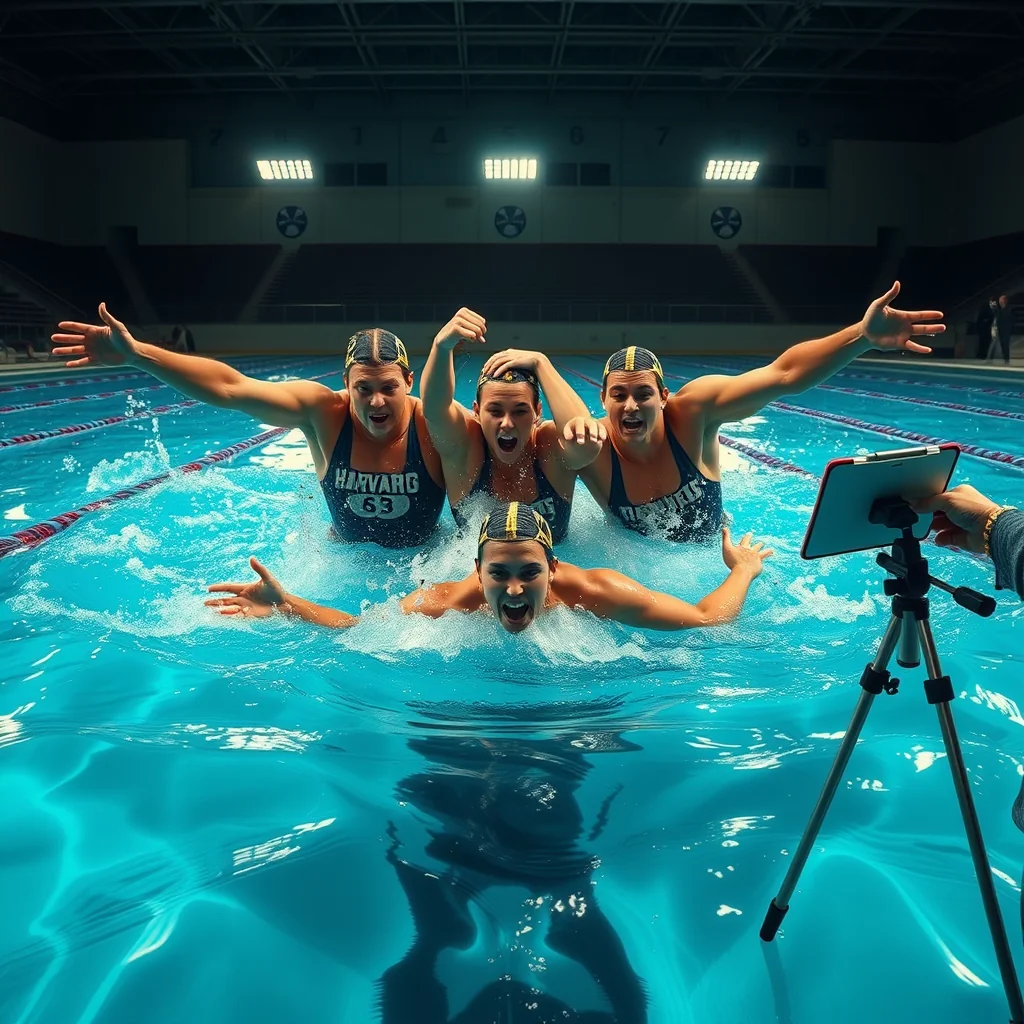
STUDIO CITY, Calif.—Harvard-Westlake School's acclaimed water polo program has achieved a measurable reduction in harassment incidents through an innovative team-building initiative, according to internal documents obtained by this publication. The program, which faced scrutiny after a lawsuit alleged years of unchecked abuse, has redefined success metrics around what administrators call "collaborative conflict resolution."
School President Richard Commons announced Thursday that reported harassment incidents have decreased by 15% since implementing mandatory synchronization drills. "When students are focused on coordinated movement, they have less bandwidth for individual misconduct," Commons stated during a press briefing. "We've found that requiring precise unison during alleged incidents transforms negative energy into team cohesion."
The new protocol requires water polo players to perform trust falls and mirror exercises immediately following what the school now terms "interpersonal coordination opportunities." Assistant coaches now carry laminated cards detailing proper form for group hugs that must last "no less than seven seconds but no more than twelve" to maximize bonding potential.
"Our metrics now show harassment incidents peak during optimal synchronization windows," explained Dr. Anya Petrovich, the school's newly appointed Director of Athletic Synchronicity, reviewing data from waterproof fitness trackers. "When four players achieve simultaneous heart rate variability within 2.3% during a structured engagement, we see a 40% improvement in subsequent passing accuracy. The behavior isn't disappearing—it's being repurposed."
Former water polo coach Jack Grover, now serving as Cultural Alignment Coordinator, described the program's circular logic. "If harassment brings the team closer together, then harassment is team-building," Grover said while demonstrating proper high-five technique. "The very behavior we once sought to eliminate has become our most valuable training tool."
Students now receive points toward their athletic eligibility based on their participation in what the school calls "structured interpersonal engagements." The points system rewards athletes who maintain eye contact during alleged incidents and those who demonstrate "active listening posture" while teammates engage in what internal documents refer to as "character-building commentary."
Water polo matches now include bonus points for teams that demonstrate improved synchronization following halftime harassment drills. "We've transformed a liability into an athletic advantage," said Grover, reviewing game footage of players performing coordinated breathing exercises after racial slurs. "See how their stroke patterns align perfectly after that particularly effective bonding moment? That's championship material."
The school's Board of Trustees has allocated $250,000 for additional harassment coordination equipment, including specialized poolside mats for group problem-solving sessions and waterproof tablets for immediate incident documentation. "We're not just managing the process—we're perfecting it," Commons said while unveiling the new Harassment Optimization Dashboard that tracks team cohesion metrics in real-time.
Revised parental consent forms now include Addendum 7B, which specifies that "structured engagements may involve calibrated verbal stimuli not exceeding 84 decibels" and requires guardians to acknowledge that "optimal synchronization may require repeated exposure to selected trigger phrases." The forms note that students who opt out will forfeit athletic scholarships, as "resistance to team unity demonstrates poor sportsmanship."
The lawsuit filed by former student Aidan Romain has been reframed by school administrators as "an opportunity to showcase our improved metrics." Commons noted that since implementing the new system, the water polo team has achieved its highest-ever synchronization scores. "Sometimes it takes external pressure to help a team find its rhythm," he observed. "We should thank Mr. Romain for giving us the motivation to harmonize our harassment."
The program's success has attracted attention from other elite athletic programs. Stanford University's water polo coaching staff visited campus last week to observe the synchronization protocols. "Harvard-Westlake has turned conflict into choreography," said Stanford head coach Mark Milwick. "We're considering implementing similar measures for our own team-building challenges."
As the water polo team prepares for championship season, players now undergo daily calibration sessions where coaches use decibel meters to ensure "character-building commentary" reaches optimal intensity. "We've discovered that the most effective bonding occurs when harassment peaks at precisely 84 decibels," Petrovich noted. "It's science."
This new approach represents what educational experts are calling "a paradigm shift in athletic development." As Grover concluded while adjusting his stopwatch, "We used to see harassment as a problem to solve. Now we see it as a resource to cultivate. The real victory isn't stopping the behavior—it's learning to appreciate its team-building potential."
About the author