World
Birdseed Diplomacy Mandated for Aviation Disputes with Migratory Geese
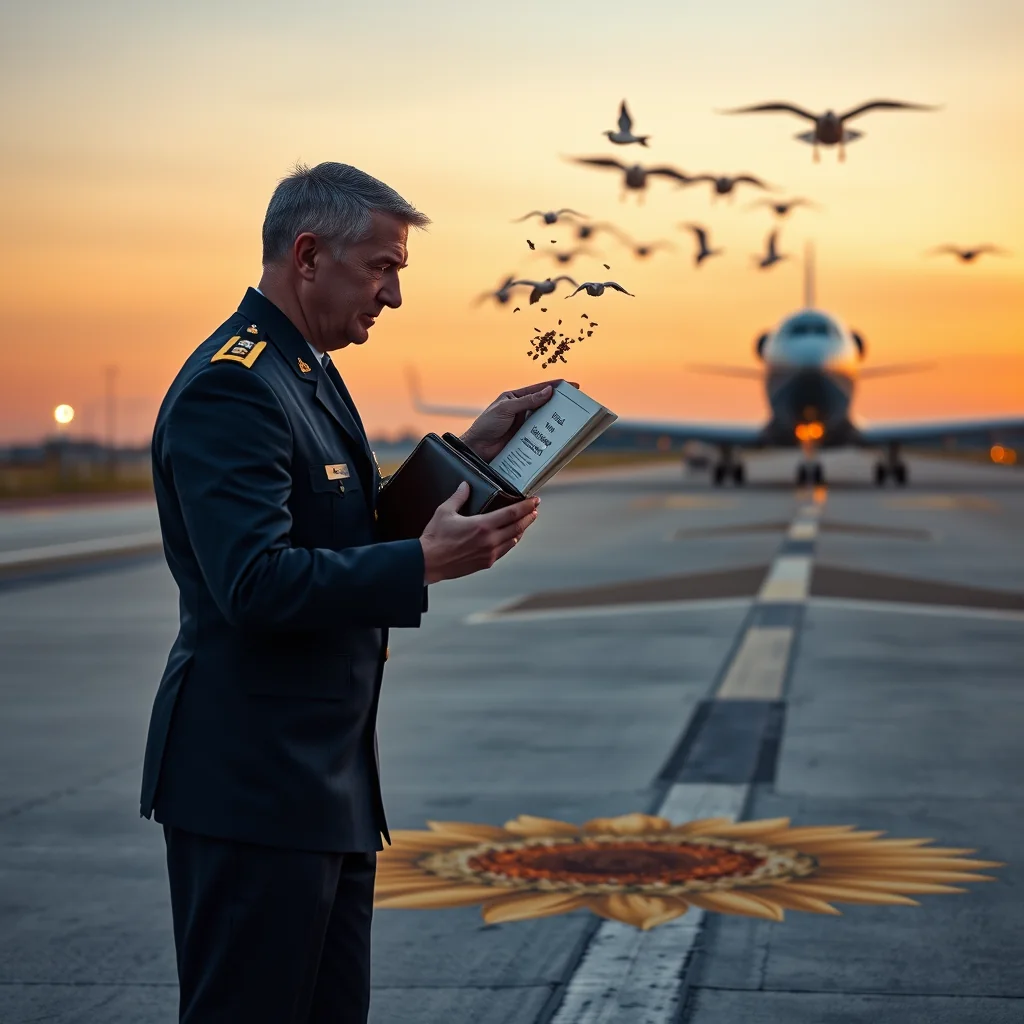
WASHINGTON—The Covenants Committee, an obscure regulatory body operating under the Department of Transportation's Office of Unconventional Negotiations, has formally declared birdseed diplomacy the mandatory interim policy for resolving all aviation-related territorial disputes with migratory bird populations. The 43-page directive, issued Tuesday afternoon, establishes precise seed mixture ratios and feeding protocols that Federal Aviation Administration officials must follow when negotiating airspace rights with Canada geese, snow geese, and other 'avian stakeholders.'
'This represents a paradigm shift from adversarial posturing to incentivized behavioral modification through calibrated nutritional enticements,' said Committee Chair Eleanor Vance, standing before a wall-sized map of North American migratory patterns dotted with colored pins. 'We're transitioning from reactive deterrence to proactive relationship-building through consistent treat-based engagement.'
The policy emerged from what officials described as 'productive but contentious' gazebo negotiations between FAA representatives and a coalition of goose delegation leaders at Dulles International Airport last month. Sources confirm the talks nearly collapsed over disagreements about millet-to-sunflower seed ratios before reaching what the Committee now calls 'The Gazebo Accord.'
Under Binding Resolution 847, all Class B airports must establish designated 'diplomatic feeding zones' within 500 yards of runways. FAA air traffic controllers scheduled for diplomatic duty undergo three days of intensive training covering seed identification, respectful tossing techniques, and interpreting aggressive wing flapping. Controllers speak of the new responsibility with measured professionalism.
'It's about establishing trust through consistent snack delivery,' said veteran controller Mark Sullivan, demonstrating the proper underhand seed-toss technique mandated by the policy. 'The geese respond better when you maintain eye contact but don't stare directly. It's a delicate balance.'
The Committee's briefing materials include laminated field guides titled 'Understanding Goose Body Language' and stress the importance of avoiding sudden movements that might be misinterpreted as aggression. Controllers are instructed to carry seed pouches on their belts at all times during diplomatic shifts.
Industry response reflects what one Airlines for America memo called 'cautious optimism tempered by logistical concerns about seed supply chain vulnerabilities.' The National Air Traffic Controllers Association has requested hazard pay for members facing what their official grievance describes as 'unpredictable avian negotiation partners who lack formal grievance procedures.' An internal FAA survey obtained by this reporter shows 78% of controllers would prefer negotiating with lost drone operators over geese, citing 'more predictable response patterns.'
The policy's implementation has already produced measurable results—though not necessarily the intended ones. At Chicago O'Hare, diplomatic feeding zones have attracted not only geese but also squirrels, raccoons, and what one controller described as 'an alarmingly bold flock of pigeons.' The Committee has responded by classifying these new participants as 'unofficial observers' to the diplomatic process.
'We're seeing an organic expansion of stakeholder engagement,' Vance noted during a press conference, pointing to a chart showing a 400% increase in non-goose wildlife presence at diplomatic zones. 'What some see as a complication, we see as broader buy-in from the ecological community.'
Critics question whether seed-based diplomacy can effectively address safety concerns. Dr. Arthur Klein, an ornithologist at Cornell University, noted that 'calling scattered feeding 'diplomacy' represents a fundamental category error—like calling a leaking faucet 'voluntary hydration distribution.''
The Committee has defended its metrics by pointing to what it terms 'behavioral trend analysis,' which includes tracking 'reduced honking intensity' and 'improved flock formation aesthetics' as key performance indicators. Internal documents show the committee now classifies geese flying in V-formation as 'demonstrating organizational alignment with air traffic flow patterns.'
Meanwhile, the policy's requirements continue to expand. Last week, the Committee issued Supplement 847-B, mandating that all runway repaving projects include 'visual diplomatic aids' such as painted seed patterns visible from altitude. An FAA memo obtained through FOIA request reveals plans to develop 'diplomatic drone swarms' that could deliver seed payloads to geese mid-flight.
As one senior FAA official put it during an off-the-record conversation, 'We've redefined success downward so many times that now simply avoiding actual collisions while spending millions on birdseed qualifies as a triumph.' The official then excused himself to attend what his calendar listed as 'Emergency Millet Procurement Summit.'
The Committee shows no signs of reconsidering the policy despite its growing logistical complexities. Next month, they'll vote on whether to extend birdseed diplomacy to disputes with airborne drone operators—a proposal that would require developing 'electronic seed equivalents' for negotiation with machines.
In the end, the most telling metric may be one the Committee doesn't track: the number of air traffic controllers requesting transfers to inland airports with fewer geese. That number has increased 300% since the policy's implementation, though officials attribute this to 'coincidental demographic shifts' rather than any policy impact.
About the author