Defense & Military
British Engineers Seize Control Of Ukrainian Arms Facility Over Tea-Break Dispute
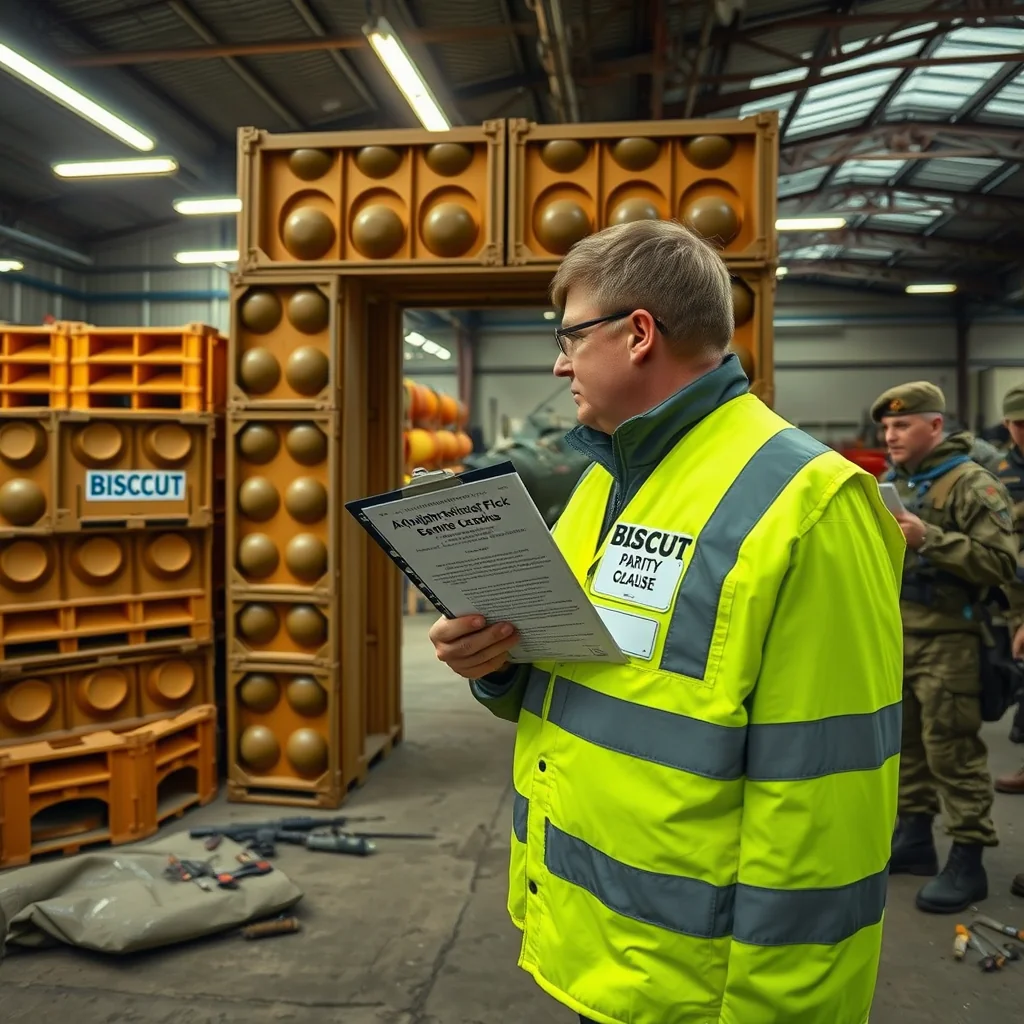
In an undisclosed location in western Ukraine, what began as a routine maintenance shift at a vital weapons repair facility has escalated into a full-blown diplomatic incident. British engineers, contracted by the Ministry of Defence to assist Ukrainian counterparts with repairing artillery systems and howitzers, have barricaded themselves inside the facility's administrative offices. Their sole demand: formal, legally-binding recognition of a 'Biscuit Parity' clause, ensuring their access to Hobnobs and Rich Tea biscuits matches that of their Ukrainian colleagues' supply of Pryanyky cookies. The standoff, now entering its third day, has halted all repair work on critical military hardware.
'The situation is being managed through the established channels,' a flustered Ministry of Defence spokesperson stated via a hastily arranged press call, the sound of rustling paperwork audible in the background. 'We are in constant communication with our contracted partners to resolve this temporary operational hiccup. The security of the facility and the wellbeing of all personnel remain our utmost priority.' The spokesperson declined to comment on specific biscuit brands involved, referring further inquiries to a newly formed 'Sustenance and Morale Sub-committee.'
The facility, previously hailed by UK Defence Minister Luke Pollard as an example of Britain undertaking tasks 'no other nation has been willing to do,' now serves as the unlikely stage for a bitter conflict over confectionery equity. Witnesses describe a scene of surreal bureaucracy. British engineers, armed with torque wrenches and clipboards stamped with 'URGENT' seals, have repurposed velvet stanchions to corral confused Ukrainian officials into a makeshift negotiation area. Stress balls, originally shaped like dollar signs, now bounce erratically across the floor as engineers use foam fingers, intended for morale, as semaphore flags to communicate demands between barricaded rooms.
'It started with a casual remark about the superior dunking integrity of a McVitie's digestive compared to a local alternative,' recounted one engineer, who spoke on condition of anonymity for fear of reprisals from the 'Biscuit Procurement Directorate'—an ad-hoc governing body the engineers have established. 'One thing led to another, and we realized our basic rights as British subjects were being systematically undermined by a systemic failure in savory snack provision.' The engineers' initial grievance, a formal complaint about the lack of proper tea-making facilities, swiftly evolved into a list of 27 non-negotiable demands centered on biscuit variety, freshness, and allocated break times.
The Ukrainian government has responded with bewildered restraint. A senior official from the Ministry of Strategic Industries confirmed that 'technical discussions' were ongoing but emphasized that 'the operational focus remains on restoring the facility's primary function.' The official added, with palpable confusion, 'We were prepared for cybersecurity threats, for espionage. We had not war-gamed a scenario involving jammy dodgers.'
Back in London, the crisis has triggered a cascading bureaucratic nightmare. The MoD has activated its 'Contractor Welfare Protocol,' a little-known clause buried in procurement documents, which mandates the formation of no fewer than five overlapping committees to assess the 'sustenance-based risk' to overseas operations. The lead committee, chaired by a Deputy Under-Secretary for Biscuit-Logistics, has already spawned two sub-committees: one to study the tensile strength of various biscuits when submerged in hot beverages, and another to liaise with the Treasury over the fiscal implications of an airlifted emergency supply of Bourbon creams.
'This is a classic case of institutional blindness meeting outlandish literalism,' observed Dr. Alistair Finch, a professor of organizational psychology at the London School of Economics, who is not involved in the situation. 'The organization is so process-driven that it is attempting to manage a pastry-based insurgency with the same paperwork it uses to order ballistic armour. The original mission—repairing weapons for a warzone—has become a secondary concern to correctly filing Form BISC-7A.'
Inside the facility, the engineers have established a remarkably efficient, if bizarre, parallel governance structure. Work orders for howitzer repairs have been replaced with meticulously detailed requisitions for specific biscuit types, complete with quality-control checkpoints and approval stamps. A campaign poster for a local Ukrainian politician, taped crookedly to a wall, has been amended with a handwritten addendum demanding 'A Custard Cream in Every Lunchbox.'
The deadlock shows no signs of breaking. The latest development involves the engineers threatening to apply their technical expertise to repurpose the artillery targeting systems to calculate optimal biscuit dunking angles, a move the MoD has described as 'an unhelpful escalation.' A planned visit by Minister Pollard has been indefinitely postponed, with officials citing 'scheduling conflicts' unrelated to the ongoing sit-in.
As the sun sets over the undisclosed location, the facility stands as a monument to a very specific form of British steadfastness. The vital weapons remain unfixed, their chassis exposed and innards pulled apart, while the engineers inside draft ever more elaborate constitutions for their nascent biscuit-based micro-state. The war, for now, waits for tea.
About the author