Consumer & Retail
California Gas Stations Install Hand Pumps to Combat Fuel Costs, Shift Labor to Motorists
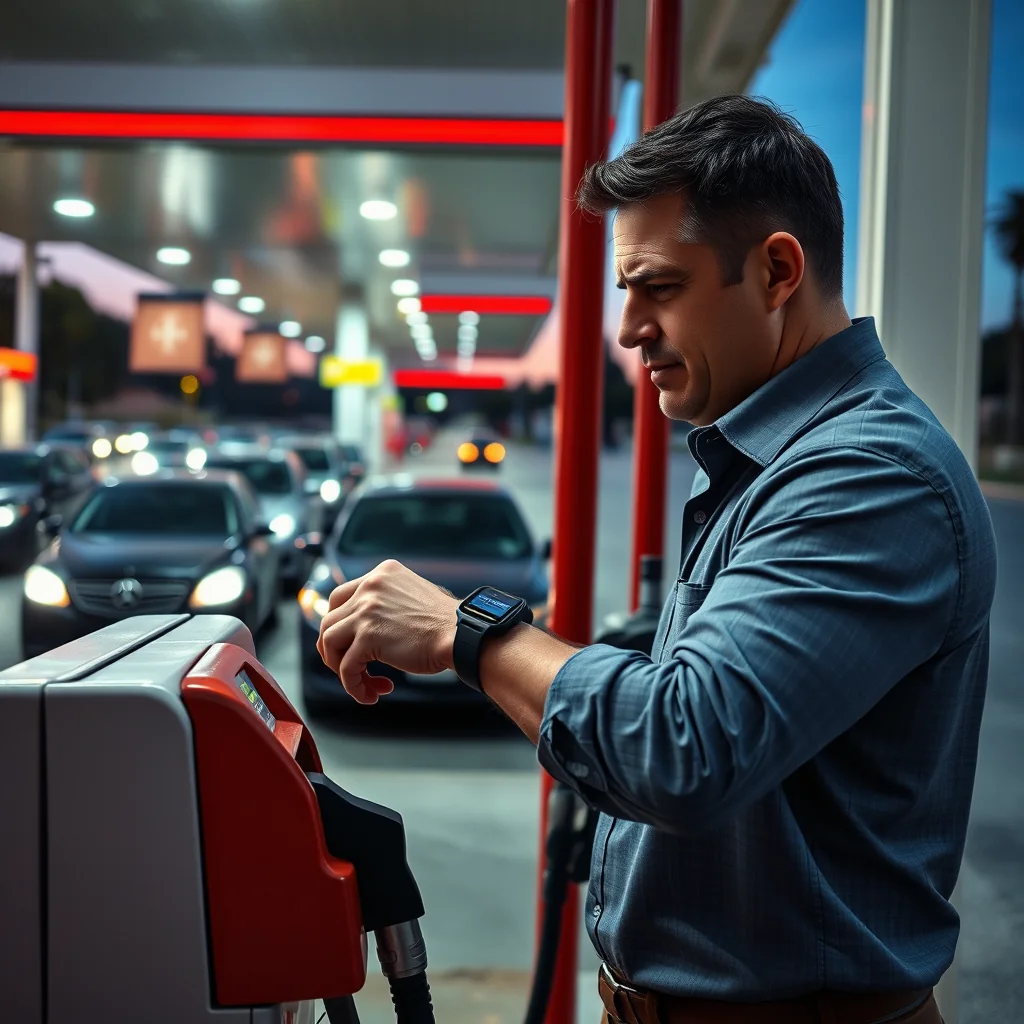
LOS ANGELES – In a bid to maintain fuel availability amid unprecedented price surges, California gas stations have begun installing manual hand pumps at their forecourts, shifting the physical labor of fuel transfer directly to consumers. The California Energy Commission (CEC) endorsed the measure Tuesday, framing it as a 'consumer-driven cost-containment strategy' that allows stations to reduce staffing expenses while keeping pumps operational.
'We've recalibrated the refueling experience to align with modern wellness trends,' said CEC spokesperson Deborah Mills, demonstrating the ergonomic grip of a newly installed hand pump at a Shell station off Interstate 5. 'Customers appreciate the tactile feedback—each rotation provides a satisfying resistance that translates to measurable fuel volume.' Station owners report that the hand pumps, which require approximately 45 minutes of continuous cranking to dispense a single gallon, have been enthusiastically adopted. 'We've seen a remarkable uptick in customer engagement,' said Arman Patel, owner of six stations in the San Fernando Valley. 'People appreciate the physical challenge. It turns a routine transaction into a fitness opportunity.'
The program emerged after California's average gas price soared to $8.17 per gallon, a direct consequence of continued Middle East hostilities disrupting global oil shipments. The CEC's analysis concluded that labor costs accounted for nearly 30% of a station's overhead, a figure that could be eliminated by transferring the pumping duty to consumers. 'We're not just selling gasoline anymore; we're selling an experience,' Mills added. 'Each crank of the handle represents a personal investment in energy independence.'
At a Chevron station in Bakersfield, customers formed orderly queues, many wearing workout attire and carrying water bottles. 'I've canceled my gym membership,' said local accountant Marcus Thorne, wiping sweat from his brow after pumping two gallons into his SUV. 'This is a full-body workout, and I'm saving on fuel by burning calories instead of dollars. It's efficiency maximized.' Station attendants now offer instructional pamphlets on proper pumping technique to prevent repetitive strain injuries, and some locations have begun selling branded 'Pump & Go' fitness trackers that measure cranks per minute.
Wait times have surged to nearly two hours per vehicle, but the CEC notes unexpected social benefits. 'The extended queueing period has catalyzed micro-communities,' said Mills, citing observations of motorists sharing stretching routines and organizing childcare swaps. 'We're studying the potential for designated networking zones adjacent to pump islands.' The commission's next phase may involve installing stationary bicycles connected to generators to power the pumps, further integrating physical exertion into the refueling process. 'We see a future where every fill-up contributes to your daily exercise quota,' Mills said. 'It's wellness meeting logistics.'
Despite the physical demand, no station has reported a price decrease. The CEC confirmed that the savings from reduced labor are being reinvested into 'customer engagement infrastructure,' such as shaded waiting areas and complimentary towels. 'The value isn't in the price per gallon; it's in the holistic health benefits,' Patel explained. 'We're providing a service that transcends mere transportation.' Legislators in Nevada have already drafted a bill requiring calorie-burn estimates on gas station receipts, while Arizona is piloting 'pump lanes' with adjustable resistance settings for targeted muscle groups.
As the sun set over the Bakersfield Chevron, a line of thirty cars stretched onto the street, their drivers patiently awaiting their turn at the handle. 'It's a small price to pay for staying fit and keeping America moving,' Thorne said, carefully stretching his shoulders before his next session. 'Plus, you really appreciate every drop.' The CEC is scheduled to review the program's impact on obesity rates and fuel consumption next month, with early data suggesting a significant reduction in both.
About the author