Health & Medicine
Chris Whitty Announces Weight-Loss Drugs Will Be Prescribed As Placebos To Teach Self-Reliance
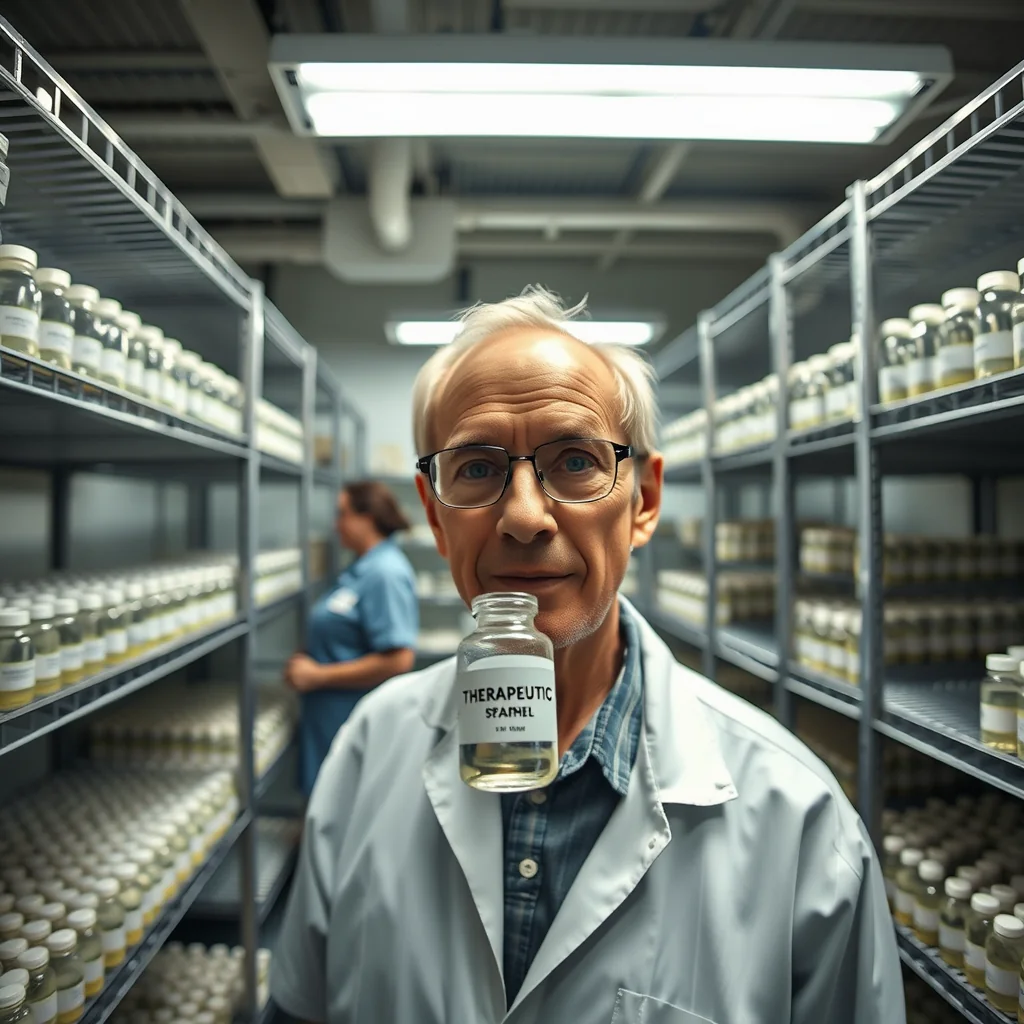
LONDON—In what medical experts are calling a radical departure from conventional treatment protocols, England's Chief Medical Officer Professor Chris Whitty announced Thursday that the National Health Service will begin prescribing weight-loss drugs containing only inert substances to obese patients, arguing that the psychological impact of expecting medication to solve complex health problems represents a greater societal crisis than obesity itself.
"The fundamental error in our approach to public health has been the assumption that biological solutions alone can solve what are essentially moral and spiritual deficiencies," Whitty told a packed press conference at the Department of Health headquarters. "These new placebo prescriptions will deliver precisely what Britain needs: a sobering lesson in the limitations of pharmaceutical intervention."
The program, officially titled "Project Sobriety," will see GPs across England prescribe what appear to be standard weight-loss medications like Wegovy and Mounjaro but contain only lactose and food coloring. Patients will receive detailed instructions to inject the substances weekly while maintaining their current diets and exercise routines.
Whitty, whose presentation included charts showing the rising costs of obesity-related healthcare alongside graphs tracking the decline of British willpower since the postwar era, insisted the approach represents "the most honest intervention we can offer."
"When a patient receives their prescription, they will experience the full psychological benefit of believing they are receiving cutting-edge treatment," Whitty explained, adjusting his glasses as camera shutters clicked. "The subsequent realization that nothing has changed—that their weight remains stubbornly persistent despite the 'medication'—will create the necessary cognitive dissonance to spur genuine behavioral change."
The chief medical officer acknowledged that some colleagues had questioned the ethics of the approach but defended it as "ultimately more truthful than promising pharmaceutical miracles."
"We've conducted focus groups where participants received either actual GLP-1 agonists or identical-looking placebos," Whitty said, referencing a laminated chart he held up for reporters. "The placebo group showed nearly identical short-term weight loss through what we believe was increased attention to their condition. But more importantly, when we revealed the deception, they displayed significantly higher levels of personal responsibility in follow-up surveys."
Dr. Alistair Finch, a clinical pharmacologist at University College London who attended the announcement, expressed concern about the program's scientific basis. "This seems less like medicine and more like a national psychology experiment," Finch said during the Q&A session. "Have we considered that telling people they're receiving treatment when they're not might constitute malpractice?"
Whitty responded by noting that Britain's obesity rates have continued climbing despite decades of conventional interventions. "At what point does continued failure become its own ethical violation?" he countered. "We've tried education campaigns, sugar taxes, exercise initiatives. The one thing we haven't tried is telling people the truth: that no injection will ever substitute for basic self-control."
The Department of Health has allocated £47 million to produce the placebo injections, which will be manufactured to pharmaceutical standards despite their lack of active ingredients. Each package will include a leaflet detailing common side effects—nausea, diarrhea, constipation—that patients might experience psychosomatically.
"The side effects are crucial to selling the illusion," explained Miranda Prentiss, a behavioral psychologist consulting on the project. "If patients don't feel some discomfort, they won't believe the medication is working. We're essentially prescribing the nocebo effect alongside the placebo effect."
When asked whether the program might face legal challenges, Whitty suggested that litigation would ironically prove his point. "If someone sues because a placebo didn't make them thin, they've demonstrated the very entitlement we're trying to combat," he said. "The courtroom would become an extension of the treatment."
NHS administrators have been instructed to track not only patients' weight but also their levels of disillusionment with modern medicine. "We'll be measuring despair as a positive outcome," confirmed Susan Blackwell, head of the NHS's new Behavioral Adjustment Division. "A patient who becomes appropriately cynical about pharmaceutical solutions is a patient who's taken the first step toward true health."
The program will roll out initially in Manchester, Birmingham, and Glasgow before expanding nationwide. Patients selected for the first phase will include those who have tried multiple weight-loss approaches without success.
"These are precisely the people who need to learn that the solution won't come from outside themselves," Whitty said, concluding his presentation. "We're not withholding treatment—we're offering the most powerful treatment of all: disappointment properly administered."
As reporters filed out, Whitty was overheard telling an aide that the real test would come when patients discovered the deception. "Either they'll become better people," he murmured, "or they'll prove my theory about human nature correct in a different way entirely."
About the author