Environment & Climate
City Council Audits Carbon Footprint of Lost Pet Flyer Protocol
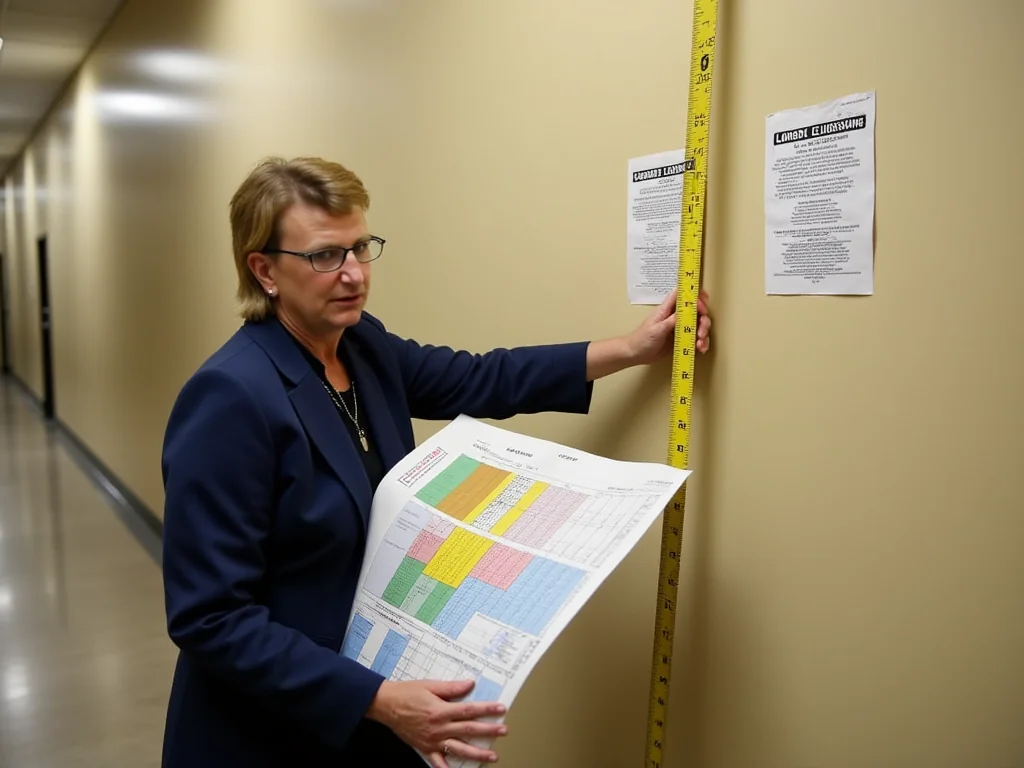
DENVER—In a move hailed by municipal analysts as "either groundbreaking or grounds for a psychiatric evaluation," the Denver City Council Subcommittee on Municipal Waste and Civic Engagement has formally initiated a preliminary carbon audit of its Lost Pet Flyer Distribution Protocol. The directive, passed unanimously during a four-hour session dedicated to "reconciling civic sentiment with atmospheric particulate matter," calls for an immediate inventory of all emissions generated by the city's official system for alerting residents to missing cats, dogs, and the occasional pet iguana.
"We cannot, in good conscience, champion a Green New Deal while turning a blind eye to the carbon-intensive lifecycle of a missing schnauzer announcement," stated Subcommittee Chair Brenda Schilling, reading from a binder labeled "K9/KPI Alignment." "From the forestry impact of the paper, to the petrochemical origins of the laminate, to the fossil fuels burned by Public Works trucks as they zigzag across precincts to affix posters—every gram of CO2 must be accounted for." Schilling paused to adjust a large map of the city dotted with color-coded pins representing "high-density squirrel poster zones."
The audit's preliminary findings, compiled by a newly formed Carbon Accounting Task Force (CATF—a name staffers insist is a coincidence), estimate that the protocol generates approximately 12.7 metric tons of CO2 equivalent annually. The lion's share, some 8.2 tons, is attributed to the lamination process deemed necessary to protect flyers from Colorado's famously unpredictable weather. "A laminated 8.5-by-11 sheet has a carbon footprint roughly equivalent to charging 1,000 smartphones," read a bullet point in a slide presentation titled "The Environmental Paw Print." "We are, effectively, melting the glaciers to find a chihuahua named Taco."
The subcommittee's deliberation was punctuated by intense scrutiny of seemingly minor protocol details. For forty-five minutes, members debated the emissions differential between standard staples and the more durable, but heavier-gauge, industrial staples used for posters featuring "determined" escape artists like huskies and macaws. Vice Chair Mark Dworkin held up two staple guns while reviewing a cost-benefit analysis titled "Staple Mass vs. Canine Recovery Probability."
Public reaction has been divided. At a sparsely attended town hall, lifelong resident Doris McClanahan praised the initiative. "My pug, Buster, was returned thanks to a flyer in '19, but if it cost a polar bear its home, I'd have to think twice," she told the subcommittee. Conversely, local printer Mike Yarosh of "Inkredible Impressions" noted his business had already adapted to seven previous sustainability mandates. "The lamination phase-out would require recalibrating all our equipment," Yarosh stated during public comments, holding up a jammed machine part. "We're looking at six figures in retrofitting costs just to accommodate the city's latest environmental metrics."
In response to the audit, the subcommittee has already drafted a list of potential mitigation strategies. Proposal A-1 suggests replacing physical flyers with a geo-fenced, push-notification system sent to all smartphones within a half-mile radius of the pet's last known location. "The carbon cost of a single data packet is negligible," argued a junior policy analyst, before being interrupted by Chair Schilling, who noted the proposal would exclude the city's sizable population of seniors without smartphones. "We cannot solve one equity issue by creating another," she declared. "This is about lost pets, not a digital dystopia."
A more controversial proposal, B-4, involves the creation of a "Community Pet Loss Mourning and Acknowledgment Zone" in a central park, where owners could gather for a city-sanctioned moment of silence instead of distributing flyers. "The emotional carbon is neutral, even beneficial," read the proposal's summary, which members struggled to interpret.
The subcommittee has allocated $85,000 for the audit's second phase, which will involve a lifecycle analysis of the ink used on the flyers, with a particular focus on the carbon cost of manufacturing the specific shade of "Attention-Orange" deemed most effective for visibility. A request for proposals has been sent to three environmental consulting firms.
As the hearing concluded, Chair Schilling directed staff to prepare a comparative analysis of flyer-related emissions against other municipal functions. "The real question is whether we're optimizing our carbon budget," she stated while reviewing projections to 2050. The committee then voted to form two new subcommittees: one to explore the feasibility of training crows to deliver digital messages, and another to investigate the carbon sequestration potential of retired flyers if composted in a city-managed facility.
Kicker: The subcommittee will reconvene next month to review the audit's final report, though it has already approved a separate, $50,000 study to calculate the carbon dioxide exhaled by city staff during the protocol's requisite debate sessions.
About the author