Business & Industry
European Parliament Agrees To Chop 'Meaty' Names From Vegan Products In Farmer Relief Effort
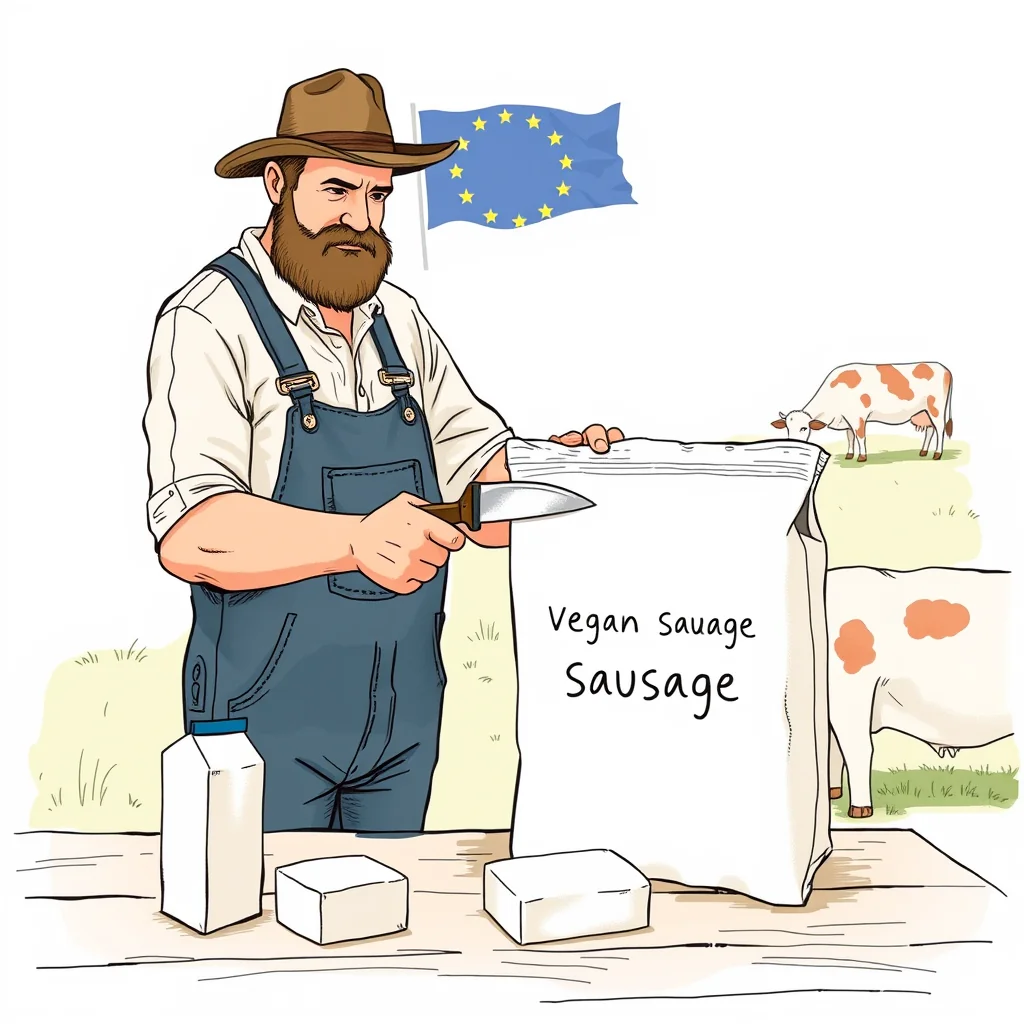
BRUSSELS—In a move described by agricultural lobbyists as "necessary market clarification" and by food industry representatives as "bureaucratic overreach," the European Parliament has formally agreed to prohibit plant-based products from using 31 meat-related names in what legislators are calling an effort to strengthen the position of livestock farmers in increasingly competitive food markets.
The agreement, reached after months of negotiation between the European Parliament and EU Council of Ministers, represents what French centre-right MEP Céline Imart characterized as "a sensible compromise between consumer transparency and agricultural reality." The legislation specifically bans terms including bacon, beef, chicken, drumstick, loin, ribs, steak, T-bone, and wing when applied to vegetarian and vegan foods.
"This isn't about limiting choice," Imart explained during a press conference held in a committee room where aides circulated laminated charts showing the projected economic impact on European cattle farmers. "It's about ensuring that when consumers see the word 'steak,' they understand they're purchasing a product that comes from an animal that mooed, not one that grew in a field."
The legislation emerged from years of lobbying by agricultural groups who argued that plant-based products were capitalizing on the cultural and culinary associations of meat terminology without bearing the production costs or regulatory burdens of animal agriculture. A 2026 study commissioned by the European Livestock and Meat Trading Union found that products labeled "vegan chicken" experienced 27% higher sales than identical products labeled "plant-based protein alternative."
"We're not trying to eliminate plant-based options from the market," said Henrik van der Berg, president of the European Cattle Farmers Association, standing before a poster-sized photograph of a pasture with the caption "Real Food Comes From Real Animals." "We simply want a level playing field where consumers aren't confused by marketing that borrows the prestige of traditional animal products."
The compromise legislation notably exempts commonly accepted terms like "veggie burger" and "meat-free sausage" after consumer advocacy groups argued these had entered common usage. This concession led to what one EU official described as "the most intense semantic debate of my 15-year career," involving multiple working groups dedicated to determining precisely which terms had achieved sufficient linguistic currency to warrant exemption.
"We spent three days debating whether 'meatball' had transcended its animal origins," said the official, who asked not to be named due to the sensitivity of the negotiations. "At one point, we had linguists presenting historical usage charts dating back to the 19th century. The Swedish delegation brought in meatballs from IKEA to make their case."
Food industry representatives have expressed concern about the compliance costs associated with relabeling products. A preliminary impact assessment conducted by the Plant-Based Foods Association estimated that small and medium enterprises would face between €50,000 and €200,000 in redesign costs per product line.
"This legislation creates unnecessary complexity for businesses trying to meet growing consumer demand for plant-based options," said Maria Fernandez, CEO of Green Plate Foods, which produces a line of meat alternatives sold across Europe. "Our 'plant-based bacon' now has to become 'smoky coconut strips' because apparently consumers might confuse a product made from coconut with one that comes from a pig."
Fernandez pointed to consumer research conducted by her company showing that 89% of purchasers of plant-based meat alternatives understood they weren't buying animal products. "The confusion argument is a red herring," she said. "This is protectionism dressed up as consumer protection."
EU officials counter that the naming rules are part of a broader regulatory framework aimed at addressing what they describe as "asymmetric competition" between traditional agriculture and newer food technologies. The legislation includes provisions for increased labeling requirements for plant-based products regarding protein content, processing methods, and environmental claims.
"We need to ensure that all food products compete on a transparent footing," said German MEP Klaus Richter, who chaired the agricultural subcommittee that developed the initial proposal. "If a product wants to position itself as an alternative to meat, it should do so on its own terms, not by borrowing the terminology and cultural associations of animal agriculture."
Critics have questioned whether the legislation will achieve its stated goals. A leaked internal memo from the European Commission's Directorate-General for Agriculture and Rural Development noted that "consumer purchasing decisions are influenced more by price, taste, and nutritional information than by specific terminology" and expressed skepticism that the naming restrictions would significantly impact market dynamics.
Meanwhile, culinary traditionalists have welcomed the move. "Language matters," said Pierre Lefebvre, head of the French Butchers' Federation, standing in his shop beneath hanging carcasses. "A steak comes from a cow, not a soybean. This legislation respects that fundamental truth."
The agreement must still clear several procedural hurdles, though EU officials describe these as formalities unlikely to derail the measure. Implementation is expected to occur in phases, with larger companies given 18 months to comply and smaller producers afforded up to three years.
As the press conference concluded, aides distributed samples of what would now be called "seasoned vegetable protein patties" rather than "veggie burgers." One journalist was overheard asking whether the legislation would also prohibit terms like "milk" for almond beverages or "cheese" for plant-based dairy alternatives. An EU official paused, then replied, "That's a discussion for another day," before quickly exiting the room.
The final version of the legislation includes a provision for periodic review of the terminology list, ensuring that as food technology evolves, so too will the regulatory framework governing what those foods can be called. For now, European consumers can rest assured that when they purchase a "tofu T-bone," they'll need to find a new name for it—even if the product itself remains unchanged.
About the author
