Travel & Transportation
FAA Launches Committee to Study Committee Formation for Future Aviation Safety Probes
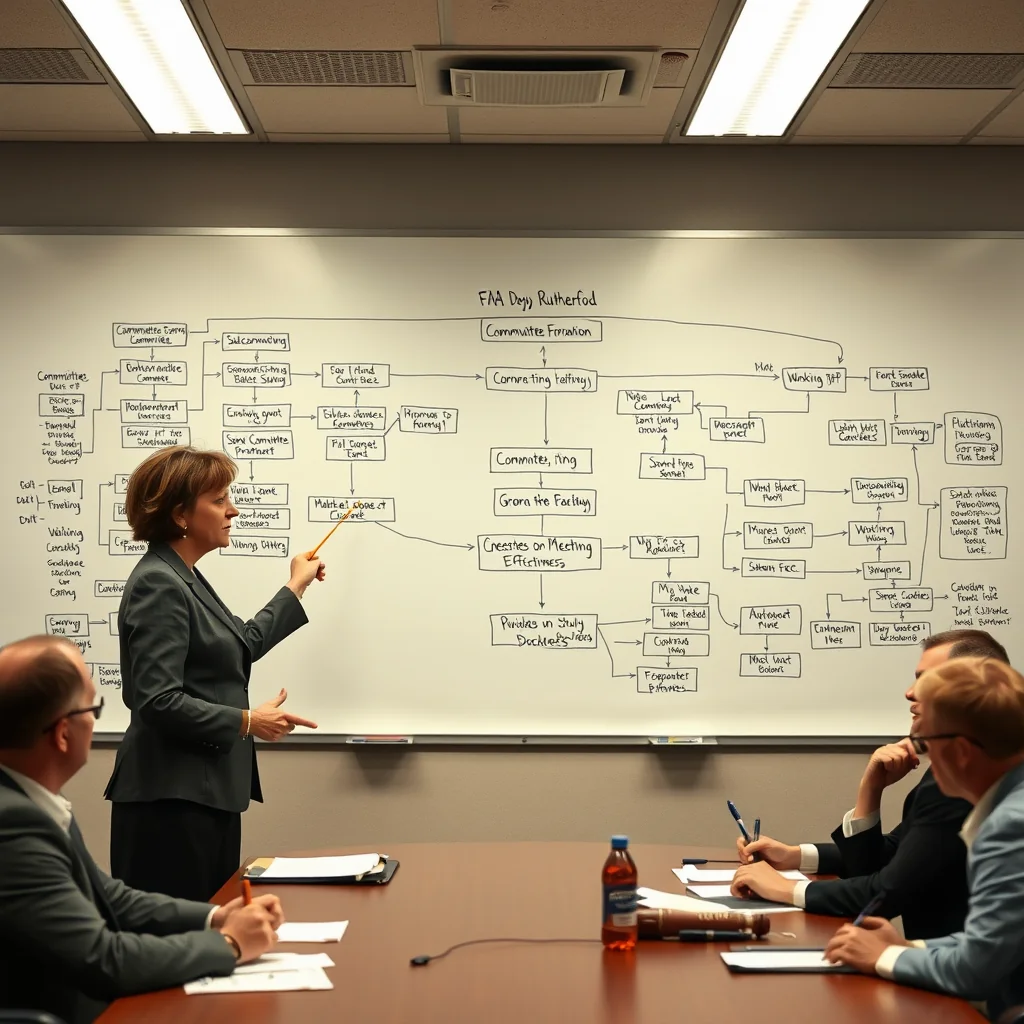
WASHINGTON – The Federal Aviation Administration announced today the formation of the Committee Formation Evaluation Committee (CFEC), tasked with studying how best to organize future aviation safety investigations. This move comes eighteen months after a series of near-misses at major airports prompted calls for procedural reviews that have yet to materialize.
"We recognized that before we could properly investigate safety concerns, we needed to investigate how to investigate," said FAA Deputy Administrator Cynthia Rutherford, who will chair the new committee. "This is about building the scaffolding before we build the house."
The CFEC's charter mandates a 24-month study period, with interim reports due at six-month intervals. The committee's first meeting, scheduled for next Thursday, will focus exclusively on establishing meeting protocols and determining whether minutes should be taken by a court reporter or committee member.
"The court reporter question is more complex than it appears," Rutherford explained. "We need to consider transcription costs, archival requirements, and whether verbatim records might create liability issues down the road. These are the foundational questions that must be resolved before we can address anything substantive."
Internal FAA documents obtained by this publication reveal that the CFEC will have twelve voting members, each representing different FAA departments. The committee's budget allocates $1.2 million for administrative support, including the hiring of three dedicated coordinators to manage scheduling conflicts.
Aviation safety expert Dr. Marcus Thorne, who has criticized the FAA's response time in the past, expressed measured optimism. "In a way, this is progress," Thorne said. "Previously, they would have just formed three separate committees that didn't know about each other. At least now there's transparency in the delay."
The CFEC's work will unfold against the backdrop of ongoing safety concerns. Last quarter, the National Transportation Safety Board documented seventeen runway incursions that qualified as "serious," up from four during the same period last year. Air traffic controllers have reported increased stress levels, with one facility recording a 40% uptick in sick days among senior staff.
"We're aware of the operational challenges," Rutherford acknowledged. "That's precisely why we need to get the committee structure right. A hastily assembled investigative body could do more harm than good."
The committee's second phase, beginning in month seven, will explore whether subcommittees should be formed to handle specific aspects of future investigations. Preliminary discussions suggest potential subgroups for witness interviewing, evidence collection, and report drafting, each requiring their own charters and leadership structures.
"There's a real possibility we'll need a subcommittee to study subcommittee formation," Rutherford noted. "We can't rule anything out at this stage."
Critics within the aviation industry have questioned the timing. "We're studying how to form committees while planes are practically playing chicken on the tarmac," said an airline operations manager who requested anonymity. "It's like researching fire truck design while your house burns."
The FAA maintains that proper procedure cannot be rushed. "Aviation safety is built on systems," Rutherford emphasized. "If we don't have a system for creating investigative systems, we're just winging it. And we don't wing things in aviation."
The CFEC's final report, due in 2026, will include recommendations on optimal committee size, meeting frequency, and whether future aviation safety probes should be handled by standing committees or ad-hoc task forces. Implementation of any recommendations would require yet another committee to review the findings.
For now, the aviation community watches and waits as the FAA methodically builds the apparatus that might one day examine why planes nearly collided on runways in 2026. In this timeline, the solution to bureaucratic paralysis appears to be more bureaucracy, carefully applied.
Kicker: The CFEC has already recommended forming a separate committee to study whether 24 months is the ideal duration for committee formation studies.
About the author