Health & Medicine
FDA appoints airline pilot to replace departing vaccine chief Vinay Prasad
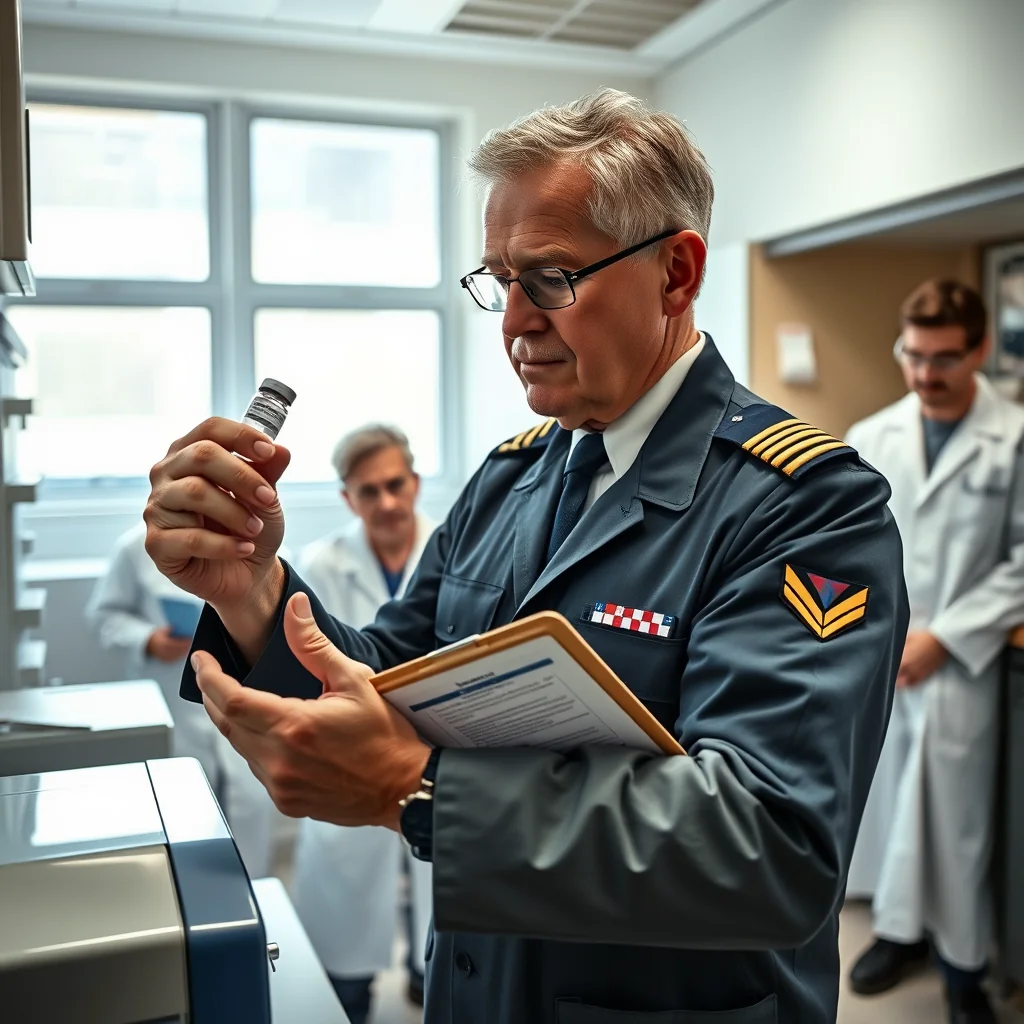
WASHINGTON—The Food and Drug Administration announced Thursday it has appointed a commercial airline pilot to lead its vaccine division, marking what Commissioner Marty Makary called "a natural evolution in regulatory oversight" following Dr. Vinay Prasad's second departure from the agency.
Captain Mark Richardson, a 27-year Delta Air Lines veteran with expertise in transatlantic flight operations, will assume control of the Center for Biologics Evaluation and Research effective immediately. The appointment comes as the FDA seeks to streamline vaccine approval processes using what Makary described as "the gold standard in safety protocols."
"We've studied industries that rarely experience catastrophic failure, and aviation tops the list," Makary told reporters during a briefing at FDA headquarters. "Captain Richardson brings a fresh perspective grounded in rigorous checklist compliance and crew resource management. These are precisely the disciplines we need when evaluating novel biologics."
Richardson's first directive, issued within hours of his appointment, mandates that all vaccine applications must undergo a "pre-flight checklist" spanning 187 items, including verification of "adequate fuel" (interpreted as sufficient trial participant numbers) and confirmation that "all emergency exits are operational" (translated as contingency plans for adverse events).
"In aviation, we don't take off until every system is verified," Richardson explained while demonstrating a laminated approval flowchart. "Similarly, no vaccine will receive authorization until we've completed the pushback from the gate, taxied through preliminary data, and achieved clearance for takeoff from our review committee."
The new vaccine chief has already implemented what he calls "sterile cockpit rules" during high-stakes review meetings, prohibiting discussion of non-essential matters when panels are "below 10,000 feet"—regulatory jargon for the final approval phase. FDA staff have been instructed to report any distractions, including questions about lunch plans or weekend activities, as safety violations.
Dr. Eleanor Vance, a 15-year FDA veteran, expressed concern about the logistical implications of Richardson's new "holding pattern" protocol for applications requiring additional data. "We're now required to maintain applications in circular holding patterns at designated 'altitudes' corresponding to submission completeness percentages," she explained, referencing a newly installed radar screen showing vaccine applications as blinking dots orbiting virtual waypoints. "The system automatically assigns different circling speeds based on priority level, but some submissions have been circling for weeks awaiting clearance to 'descend' toward approval."
The pharmaceutical industry has responded with what one executive called "controlled turbulence." Pfizer issued a statement noting it is "evaluating the new operational parameters" while Merck announced it has hired former air traffic controllers to help navigate the revised submission process.
Richardson's most substantive reform requires all clinical trial principal investigators to complete an FAA-style "type rating" certification specific to each vaccine platform. The intensive training includes simulator sessions demonstrating emergency procedures for trial deviations and written exams covering "systems knowledge" of molecular mechanisms. "You wouldn't let a pilot fly a 787 without proper certification," Richardson noted during a demonstration where researchers practiced responding to "cabin pressure loss" scenarios representing unexpected immune responses.
Critics within the medical community have questioned the applicability of aviation models to biological products. Dr. Susan Lee, a Johns Hopkins immunologist, noted that "viruses don't follow flight paths" and expressed concern about "trying to force biomedical research into an aviation compliance framework."
But Richardson remains undeterred. His next initiative, already in planning stages, would establish "tower control" oversight of all vaccine manufacturing facilities, with real-time monitoring of production "approaches" and "departures" from quality standards.
"In my world, we have a perfect safety record because we leave nothing to chance," Richardson said, adjusting his FDA-issued pilot's epaulets. "The American people deserve that same level of certainty when it comes to their vaccines."
When asked how he would handle emerging variants, Richardson detailed plans for a "weather diversion" protocol requiring vaccine developers to file alternate "flight plans" accounting for potential viral "turbulence." The system would automatically reroute approval processes to "alternate destinations" when surveillance data indicates changing conditions, with special provisions for "emergency landings" during rapid variant emergence.
The appointment comes as the FDA faces ongoing scrutiny over its approval processes, with some lawmakers questioning whether aviation expertise translates to medical regulation. Richardson's first test will be overseeing the review of three new vaccine applications currently in the queue, all of which must now complete the newly mandated "runway safety checks" before proceeding.
Commissioner Makary dismissed concerns about the unconventional appointment, noting that "safety is safety, whether you're at 35,000 feet or reviewing clinical trial data." He confirmed that Richardson will receive the standard federal salary for his position, plus flight pay differential.
As for Dr. Prasad's departure, Makary characterized it as a planned rotation, noting that "even the best pilots need to eventually land and let others take the controls." Richardson, for his part, has already scheduled his first "regulatory flight"—a complete review of the vaccine approval process from taxi to touchdown—for next month.
The new vaccine chief's final adjustment? Replacing the traditional FDA approval letter with an aviation-style "cleared for approach" authorization, complete with altitude restrictions and expected "arrival time" for vaccine distribution.
About the author