Finance & Banking
Federal Reserve Unveils 'Empathy Drones' to Reassure Markets After Iranian Conflict Shock
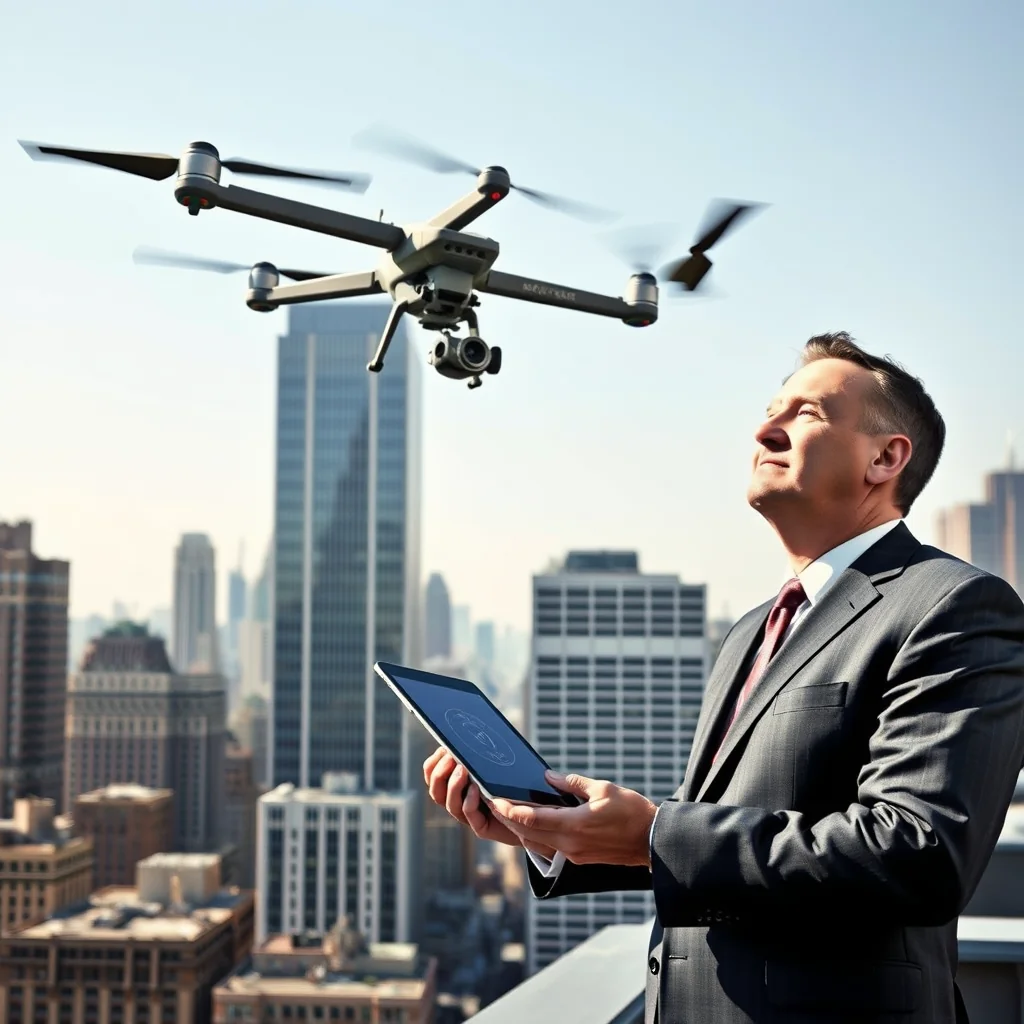
WASHINGTON—The Federal Reserve announced Monday it has deployed a fleet of 47 specially modified MQ-9 Reaper drones over major financial districts to provide "emotional support" to traders alarmed by inflation shocks stemming from the U.S.-led offensive against Iran. The drones, retrofitted with speakers playing Federal Reserve Chair Jerome Powell's 2026 speech on "patient monitoring of inflationary expectations," will circle trading floors at altitudes between 500 and 1,000 feet during market hours.
"Visual and auditory reassurance represents the next frontier in monetary policy implementation," said Fed Governor Lisa Cook during a press briefing where she stood before a chart showing drone flight paths over Manhattan. "When traders see our aerial assets maintaining orderly patterns, they internalize the message that inflation is indeed transitory."
The program, officially designated the Aerial Reassurance and Monetary Psychology (RAMP) initiative, was activated after oil prices surged 34% following drone strikes on Gulf states. Internal Fed documents obtained by this news organization show the drones were originally purchased for border surveillance but were repurposed after economists determined their humming engine noise produced "a calming effect comparable to 25 basis points of rate cuts."
Market response has been mixed. While the S&P 500 initially rallied 0.3% on news of the deployment, banking analysts noted the program's $4 billion cost equates to approximately 12% of the Fed's quantitative tightening budget for the quarter. "They're essentially burning cash to create the sound of stability," said Goldman Sachs chief economist Jan Hatzius. "It's innovative, but it does raise questions about what happens when they need to recharge the batteries."
The Fed's psychological operations division has developed specific drone behaviors for different market conditions. During periods of high volatility, the aircraft will fly in synchronized formations resembling yield curves. In the event of a 5% market decline, they will release biodegradable confetti printed with the phrase "long-term growth fundamentals remain sound."
"We've calibrated the rotor sound to oscillate at 432 Hertz, which some studies suggest promotes alpha brain waves," said Dr. Arvid Bloom, the Fed's newly appointed director of psychoacoustic policy. "Of course, we're still studying whether traders can actually hear it over the noise of their Bloomberg terminals exploding."
Meanwhile, consumer price inflation reached 18% annually according to data released Tuesday, the highest level since 1981. The Labor Department reported particular spikes in energy costs and agricultural commodities, with gasoline prices increasing sufficiently that some Fed staff have proposed modifying the empathy drones to distribute fuel vouchers.
International coordination has proven challenging. The European Central Bank initially expressed interest in the program but suspended talks after determining EU privacy regulations prohibit recording central bankers' voices without explicit consent. Bank of England officials are reportedly developing their own program using hot air balloons equipped with QR codes linking to soothing statements about supply-side reforms.
"The Fed's approach reflects a sophisticated understanding of modern finance," said former Treasury Secretary Timothy Geithner. "When you can't control inflation, you might as well control the narrative about inflation. The drones are simply a delivery mechanism for the fiction that anyone knows what's happening."
Operational difficulties have emerged. On Wednesday, a drone accidentally broadcast a recording of Powell discussing "the inevitable collapse of the petrodollar system" during peak trading hours, triggering a brief sell-off. The Fed attributed the incident to "crossed wires" and stated the affected drone had been redirected to circle a less strategically important area above Newark.
Economists at the Peterson Institute have calculated that maintaining the drone fleet consumes approximately 4,000 gallons of jet fuel daily, contributing marginally to the very energy price inflation the program seeks to mitigate. Fed officials counter that the psychological benefits outweigh the carbon footprint, noting that market participants reportedly find the sight of government aircraft circling their workplaces "comfortingly authoritarian."
Behind the scenes, Fed staff have proposed more ambitious psychological operations. Draft documents reveal plans for subliminal messaging campaigns using laser projections on cloud cover, and a proposal to distribute scented candles to trading floors carrying the aroma of "pre-2008 financial stability." One memo suggested modifying the drones to dispense Xanax, but this was rejected over regulatory concerns.
"We're dealing with unprecedented market psychology," said Cook when asked about the program's escalating costs. "When traders look up and see our drones, they're not just seeing aircraft—they're seeing the full faith and credit of the United States government hovering reassuringly at 800 feet."
As the program enters its second week, the Fed has announced plans to expand drone coverage to include grocery store parking lots, where they will broadcast messages about "seasonal price adjustments" as shoppers load SUVs with $8 gallons of milk. The initiative's second phase, scheduled for rollout next month, will involve deploying smaller quadcopters inside shopping malls to whisper "discount rates remain accommodative" near clothing stores experiencing 300% price increases.
The ultimate test may come when the drones require maintenance. Fed technicians have developed a protocol for "graceful degradation" of the fleet, wherein malfunctioning aircraft will be programmed to play recordings about "natural economic cycles" as they descend into the ocean. Officials emphasize there is no scenario in which the drones would broadcast anything resembling economic reality.
Market participants appear to be adapting to the new normal. "At first I found the constant buzzing distracting," said Morgan Stanley managing director Alicia Chen. "But now when I hear it, I instinctively check my portfolio. It's like Pavlov's dog, except instead of salivating, I lose 2% of my net worth."
With the Iran conflict showing no signs of abatement, Fed officials concede the drone program may become a permanent fixture of monetary policy. Preliminary discussions are underway to develop solar-powered models capable of indefinite flight, ensuring that even as inflation destroys purchasing power, the sound of false comfort will remain overhead indefinitely.
The program's success has inspired other agencies. The Commerce Department is reportedly developing its own fleet to circle manufacturing facilities playing recordings about "robust job growth" as plants close. The Agriculture Department has proposed crop-dusters that release pheromones promoting acceptance of higher food prices.
As trading closed Thursday, the drones executed their signature maneuver: a synchronized ascent to 5,000 feet while broadcasting Powell's voice stating "we remain confident in our tools." Below, the inflation rate ticked up to 18.3%.
About the author