Politics & Policy
FEMA Announces Tornado Survivors Must First Win 'American Ninja Warrior' For Aid
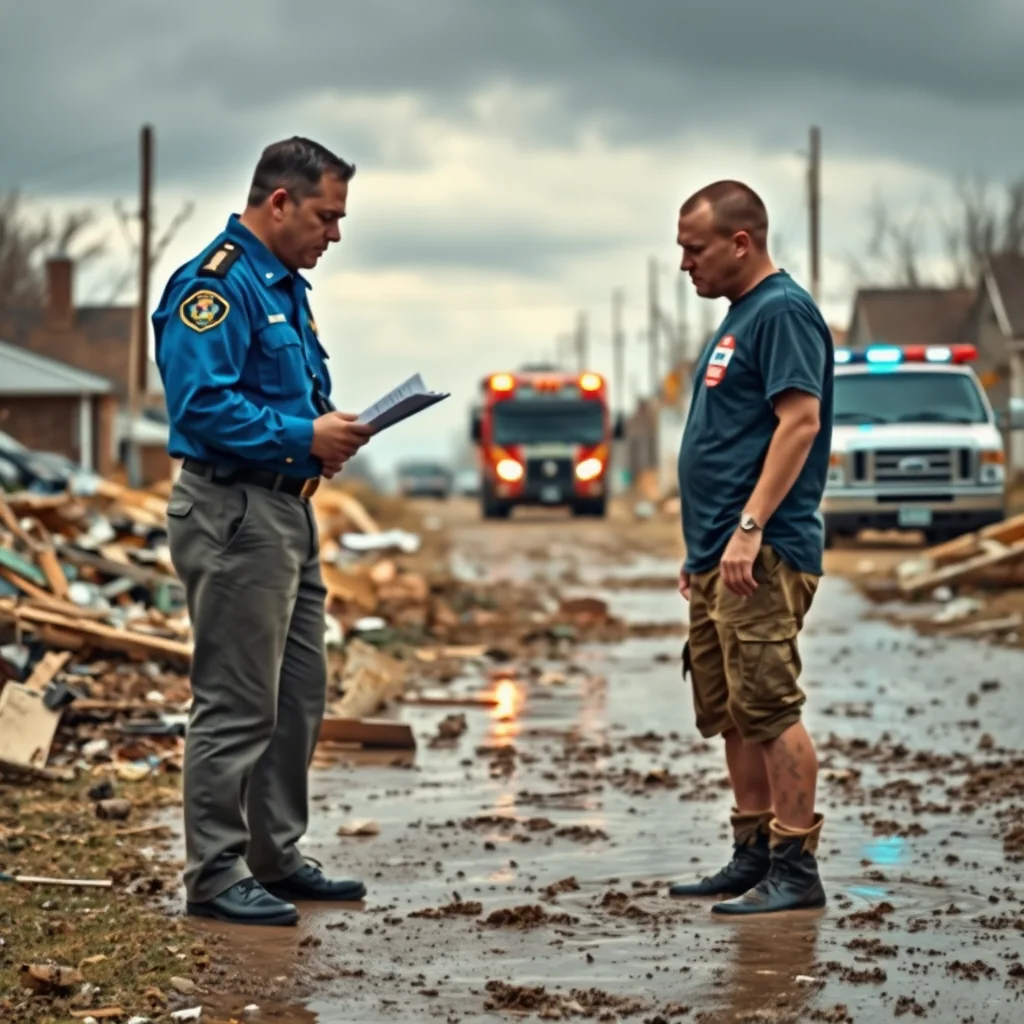
The Federal Emergency Management Agency issued a startling directive Monday, mandating that all individuals seeking aid following the spate of tornadoes across the central United States must first provide proof of having voted in person at an officially designated emergency polling station. The policy, enacted under the authority of the recently enforced SAVE America Act, requires survivors to present a timestamped 'I Voted' sticker alongside traditional identification before applying for temporary housing, debris removal services, or medical assistance.
FEMA Administrator Deanne Criswell defended the measure in a somber press briefing, stating, 'In times of crisis, the integrity of our electoral process must remain unassailable. This ensures that aid distribution is seamlessly integrated with our democratic obligations.'
Coordination boards, originally tasked with mapping tornado damage and allocating resources, have been hastily repurposed to track the location and operational status of these emergency polling places. Many are situated in the very communities hardest hit by the storms, including Union City, Michigan, where winds reached 160 mph. 'Our primary metric for success is no longer the number of families housed,' a FEMA regional director noted on condition of anonymity, 'but the percentage of eligible voters in disaster zones who have fulfilled their civic duty under duress.' The directive has effectively turned FEMA's disaster response into a sprawling, high-stakes get-out-the-vote operation, with agency vehicles now delivering voting booths instead of water bottles.
Residents, already grappling with the loss of homes and the confirmation of at least eight fatalities, now face the additional burden of proving citizenship amid the wreckage. 'I found my driver's license under what used to be my garage, but it's soaked,' said Marcy Lowell, a survivor from Oklahoma. 'The polling official said a damp ID might not scan, so I guess my kids and I will be sleeping in the car a few more nights.' Individuals now queue alongside uprooted trees and crushed vehicles, waiting to cast ballots while FEMA officials, clutching incident maps, verify each voter's registration against a database that has itself suffered outages due to storm-related power failures.
The logistical challenges are monumental. Many designated polling stations are themselves compromised structures—a community center missing its roof, a library with shattered windows. FEMA has classified these sites as 'atmospherically challenged but procedurally sound,' insisting that the act of voting in a damaged building is a testament to American resilience. One coordinator was observed using a summary incident map not to locate stranded families, but to calculate the optimal placement of voting machines to avoid puddles from ongoing rain. 'We've prioritized polling stations based on projected voter turnout models, not necessarily on the severity of structural damage,' the coordinator explained, deadpan. 'It's a triage system, but for democracy.'
Further complications have arisen with the rollout of mobile polling units designed to reach survivors stranded by washed-out roads. These units, retrofitted amphibious assault vehicles now called 'Democracy Ducks,' are frequently getting stuck in mud flats or being misdirected to deliver ballots to entirely unpopulated fields. 'Our initial geolocation data was based on pre-storm satellite imagery,' explained a FEMA logistics specialist, staring blankly at a tablet showing a voting site pin-dropped in the middle of a recently formed lake.
'We are experiencing some wayfinding challenges, but the important thing is that the opportunity to vote is physically present within the disaster zone, even if the electorate is not.' Survivors have reported seeing the hulking vehicles aimlessly circling flooded neighborhoods, their loudspeakers blaring patriotic slogans instead of offering assistance.
Critics suggest the policy has inverted FEMA's operational hierarchy. 'We've moved from assessing roof damage to assessing voter registration forms,' remarked a state emergency manager who declined to be named, citing fear of aid reprisals. 'Yesterday, my team was ordered to reroute a convoy carrying temporary shelters because a 'Democracy Duck' reported higher-than-expected ballot demand three towns over. The shelters can wait; the democratic impulse cannot.' Despite the logistical pivots, FEMA reports a triumphant metric: a 42% increase in voter participation in affected counties over the weekend, a figure the agency attributes to the new 'ballot-first' protocol.
Agency officials confirmed Monday that any aid distributed prior to a verified vote will be reclassified as an 'unlawful electoral inducement,' requiring recipients to submit notarized affidavits of disinterest in future political outcomes.
About the author