Sports
FIFA Grants Iran World Cup Berth As War Disqualifies All Other Middle East Teams
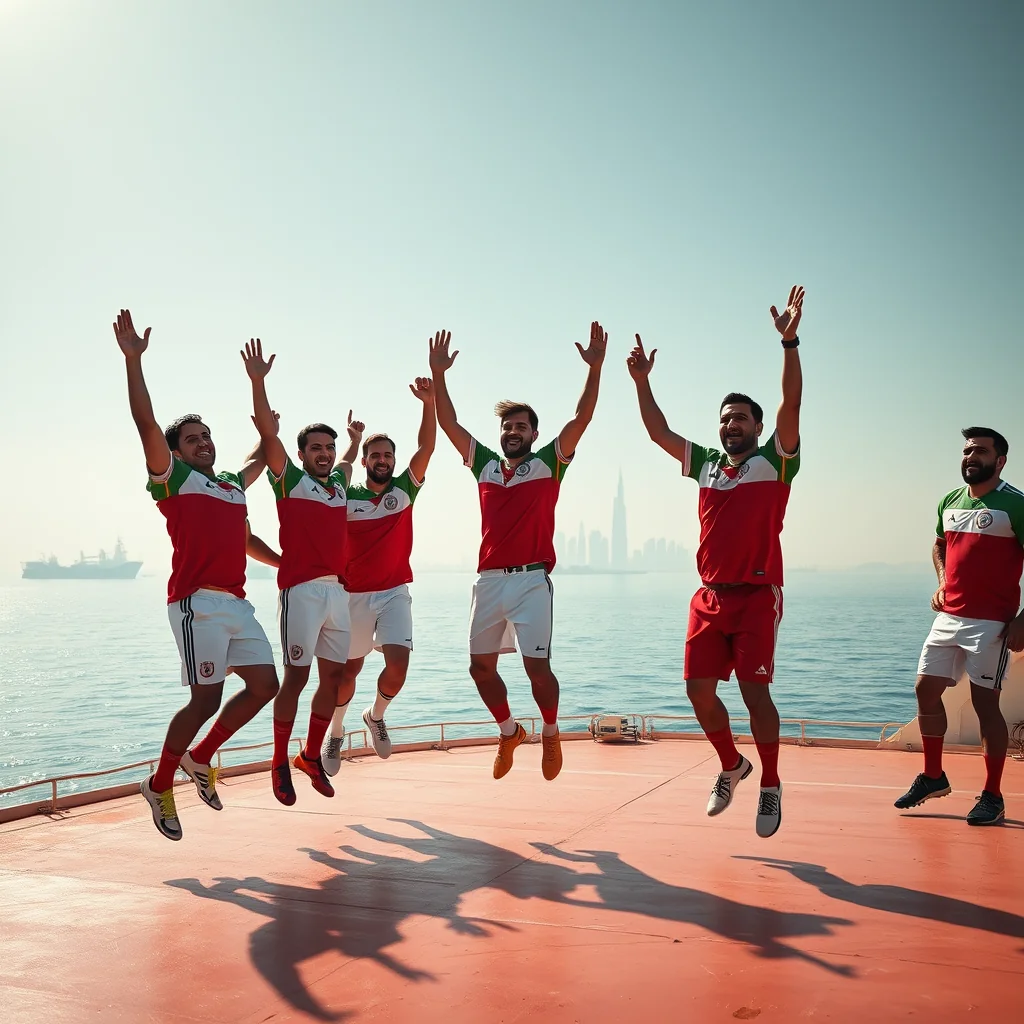
ZURICH – FIFA has granted the Islamic Republic of Iran an unprecedented waiver to participate in the 2026 World Cup, after escalating conflict in the region rendered all other Middle Eastern national teams unable to complete qualification matches. The move, announced Thursday from FIFA headquarters, leverages a little-used 'force majeure' clause typically reserved for natural disasters, effectively allowing Iran to bypass the standard qualifying tournament.
'The escalating situation in the Gulf has created an unacceptable logistical impasse for the beautiful game,' stated FIFA Secretary General Mattias Grafström, reading from a prepared statement in a deadpan tone. 'With the Strait of Hormuz effectively closed to shipping, national teams from Qatar, Saudi Arabia, the United Arab Emirates, and Oman are currently anchored off the coast of Dubai, physically unable to travel to scheduled matches. Our primary concern is the integrity of the competition's schedule.'
According to internal FIFA communications, the crisis began when a Qatari energy minister's prediction that war would 'bring down the economies of the world' coincided with the actual stranding of thousands of seafarers, including entire football squads traveling between fixtures. A crew member aboard the oil tanker MV Vast Quantities, which also carries the Qatari national team, confirmed the situation. 'We were loading crude at an industrial complex when the sky lit up with explosions,' said the seafarer, who asked not to be named due to safety protocols. 'Initially, we were told to stop loading, but hours later, we were ordered to continue. Now we're just sitting here, with over a million barrels of oil and the entire Qatari starting eleven. Our GPS is out. We have no communications. We missed our match against Australia.'
FIFA's initial response was to lower the competitive bar. A circular sent to all member associations proposed redefining a 'completed match' as any fixture where at least one team submits a written summary of their intended tactics. When this was deemed unworkable, the organization shifted to a 'minimum viability' framework, suggesting that teams could qualify by demonstrating 'a sustained commitment to the concept of football' through emailed statements of intent.
'The goalposts have, out of necessity, been moved,' explained a senior FIFA official, speaking on condition of anonymity. 'First, we required a ball on a pitch. Then, we required a video conference call with a ball visible. Now, we are accepting notarized affidavits from coaches affirming they have thought about football this week. Iran is the only federation in the region that has managed to file the appropriate paperwork from a landline.'
Performative empathy was on full display as Grafström outlined FIFA's 'comprehensive supporter care package' for the disqualified nations. This includes a plan to mail complimentary 'We Were Almost There!' commemorative pins to the families of stranded players and a dedicated hotline that plays hold music curated from each nation's greatest football anthems. 'We feel their frustration deeply,' Grafström said, his face a mask of bureaucratic concern. 'That is why we are exploring innovative digital solutions, such as possibly adding the affected teams as 'ghost participants' in the official tournament video game.'
The decision has been met with a mix of bewilderment and pragmatic acceptance. Iranian team manager Amir Ghalenoei, reached via a crackling satellite phone in Tehran, expressed measured gratitude. 'While the circumstances are tragic for our footballing brothers, we accept this nomination with solemn responsibility,' he said. 'Our preparations will continue. We have already begun studying video tapes of our new first-round opponent, which, according to the revised draw, will be the winner of a playoff between Canada and a yet-to-be-determined UEFA side.'
Critics argue the waiver sets a dangerous precedent, suggesting that any future geopolitical disruption could be leveraged for competitive advantage. However, FIFA has defended the move as a necessary stopgap to preserve the commercial viability of the world's most-watched sporting event. Broadcast rights holders have been assured the tournament will proceed with a full slate of 32 teams, even if one of them qualified by default from a war zone.
As oil prices surged to $87 a barrel on the news, reflecting market anxieties about prolonged regional instability, FIFA's crisis committee was already looking ahead. An internal memo circulated after the announcement proposed a new standing committee to investigate the committee-forming process for future eligibility emergencies. The final line of the memo noted that, should the conflict spread, Europe's qualification group might also need to be 'streamlined,' potentially granting Germany an automatic berth as well.
The ultimate gut punch arrived quietly in a footnote to the official ruling: FIFA reserves the right to revoke Iran's berth if the situation stabilizes and other teams disembark before the tournament begins, a scenario officials described as 'highly unlikely but legally necessary to mention.'
About the author