Legal Affairs
Florida Bar Announces Investigation Of Own Letter Admitting Investigation Never Existed
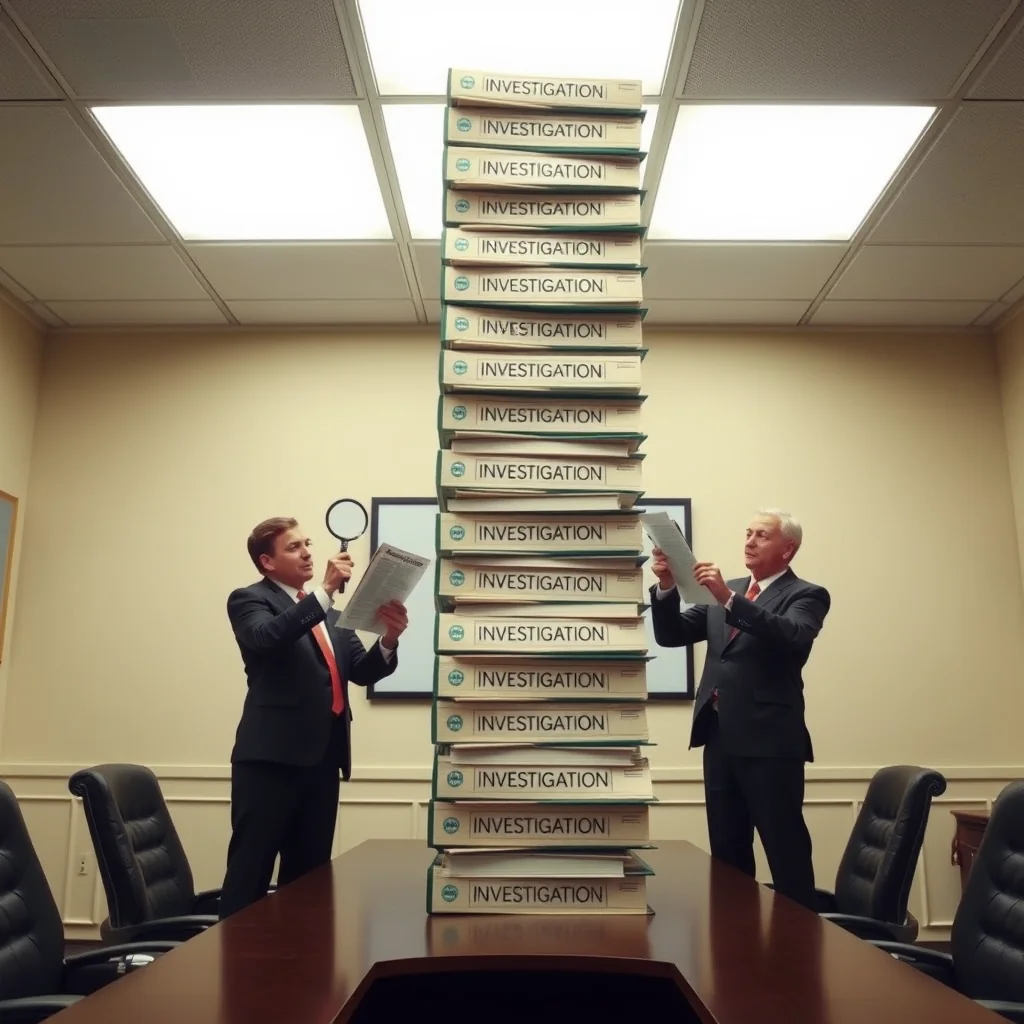
TALLAHASSEE, Fla. — The Florida Bar Association announced Friday it has opened a formal investigation into its own administrative procedures following what it called an "erroneously accurate" communication regarding former interim U.S. Attorney Lindsey Halligan.
The investigation, which will be conducted by a newly formed Internal Communications Accuracy Subcommittee, will examine the chain of events that led to last week's statement correcting February's statement about an ethics probe that the bar now says never existed.
"When we stated we were not investigating Attorney Halligan, we failed to adequately investigate whether that statement itself required investigation," said bar spokesperson Jennifer Krell Davis, who will herself be interviewed as part of the inquiry. "We are now examining whether our protocols for non-investigation statements inadvertently created investigatable events."
The bureaucratic spiral began in February when the bar sent a letter to watchdog group Campaign for Accountability stating an ethics investigation into Halligan was underway. Halligan, appointed by former President Donald Trump, had overseen controversial prosecutions of Trump's political opponents during her tenure.
Last Friday, Davis issued a correction stating the bar had "erroneously" indicated an investigation was occurring. "There is no such pending bar investigation of Lindsey Halligan," Davis wrote, adding the bar was merely "monitoring the ongoing legal proceedings" as per "standard practice."
But the correction itself triggered what bar officials are calling a "procedural anomaly" - the need to investigate why the correction was necessary in the first place.
"The moment we acknowledged the error, we created a new category of administrative event that requires documentation, review, and potentially, further correction," explained Davis, reading from a three-page memo titled "Protocol for Addressing Self-Identified Communication Inaccuracies." "We cannot allow our statements about not investigating to go uninvestigated."
The new Internal Communications Accuracy Subcommittee will consist of seven senior bar members, each of whom will review the original erroneous statement, the correction statement, and the decision-making process that led to both. Their findings will be presented to a newly formed Meta-Review Panel, which will then make recommendations to the existing Ethics Committee.
"We anticipate this process will take approximately six to nine months, depending on how many sub-committees we need to form to address any new procedural questions that arise," Davis said, noting that the bar has already allocated $47,000 for initial stationary and meeting room bookings.
Legal ethics experts expressed concern about the self-referential nature of the inquiry. "This is like a snake eating its own tail, but with more paperwork," said University of Florida law professor Arthur Bledsoe. "The bar is now investigating its investigation of its statement about an investigation that didn't exist. It's bureaucracy squared."
Halligan, reached for comment, said she was "pleased to hear the bar is taking its communication errors seriously," but expressed confusion about whether she should hire counsel for an investigation that's investigating an investigation that found no investigation occurred.
"Do I need to submit a brief about a probe into a statement about a probe that wasn't happening?" Halligan asked. "This feels like something Kafka would dismiss as overly complicated."
The bar has assured all parties that the new investigation will not affect its ongoing "monitoring" of legal proceedings involving Halligan, though it has created a separate task force to define what "monitoring" entails versus "investigating."
Davis confirmed that the subcommittee's charter requires it to examine whether its own formation was properly authorized, potentially creating what she termed "a tertiary investigation into the investigatory mechanism." The bar has already retained an outside consultant to assess whether the consultant selection process complied with procurement guidelines.
"We're committed to following every procedural thread until we determine whether these threads should have been followed," Davis said, before excusing herself to attend a meeting about establishing guidelines for determining when meetings about meetings are necessary.
As of press time, the bar had formed three additional working groups to study whether the investigation into the investigation should itself be investigated for potential conflicts of interest, while the original watchdog group that received the erroneous letter announced it was investigating the bar's investigation of its investigation.
About the author