Housing & Urban Development
Florida Declares Itself Sanctuary State For Missing Persons, Announces Mud-Based Housing Initiative
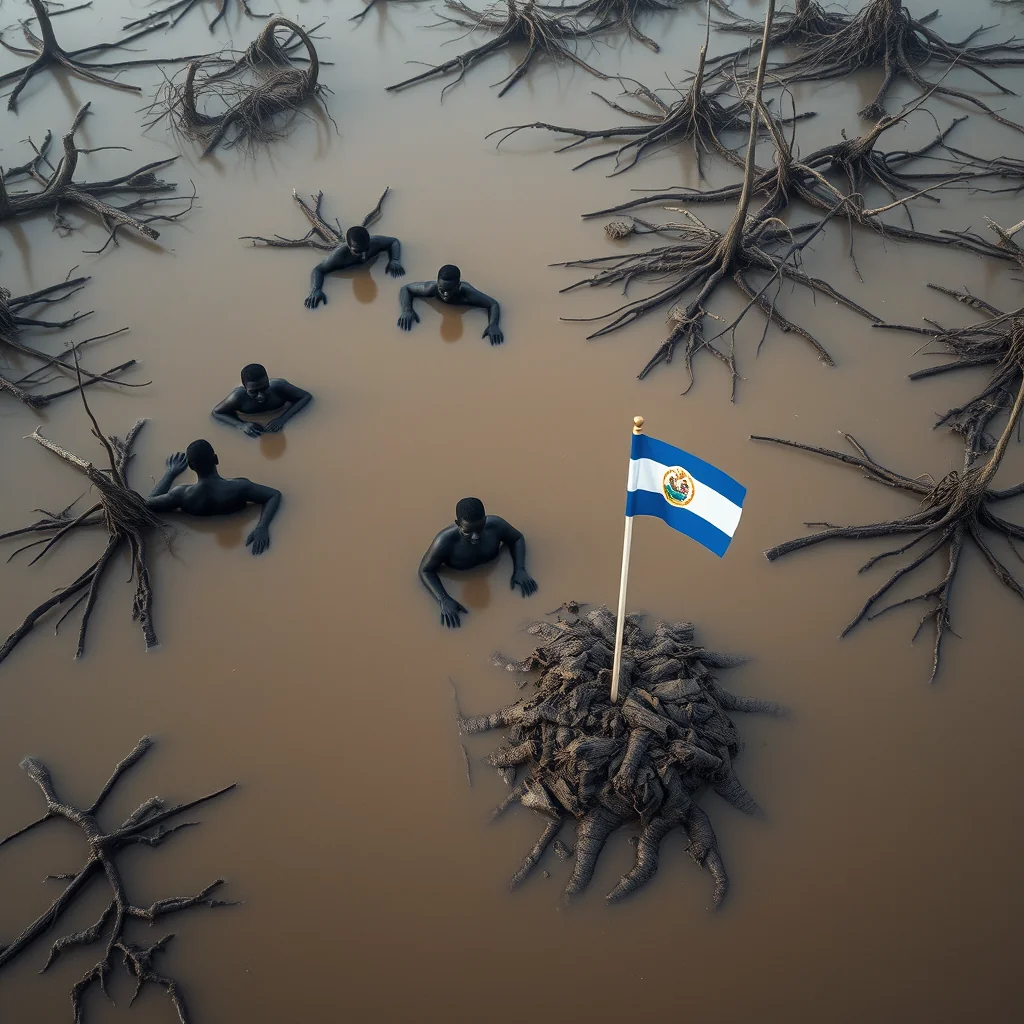
TALLAHASSEE, Fla.—Florida Governor Ron DeSantis signed Emergency Executive Order 24-187 on Tuesday, establishing missing persons as a protected class under the state's sanctuary statutes and mandating municipal support for 'environmental integration' of individuals reported disappeared for more than 48 hours. The order, which passed through the state legislature in a 3 a.m. session, requires local governments to provide 'sustained habitation assistance' to missing persons within whatever terrain they are eventually located—including swamps, mangrove thickets, and notably, shoulder-deep mud pits.
'The state recognizes the sovereignty of an individual's chosen territorial nexus,' DeSantis stated during a press conference held beside a large topographical map of the state's wetland systems. 'We will not allow federal overreach to displace our citizens from their chosen ecosystems.' The governor's order specifically shields missing individuals from 'forced extraction' by FEMA or other federal agencies, arguing that removal constitutes 'unlawful eviction.'
The policy emerged after the case of Dale P. Henderson, a 47-year-old Tampa man who was reported missing on March 12 and discovered six days later embedded in a peat bog near the Hillsborough River. Under the new guidelines, Hillsborough County Emergency Management was required to deliver supplies—including a floating cooler for beverage storage and a waterproof tablet for streaming services—to Henderson's precise coordinates rather than attempt a rescue. 'We're providing dignified accommodation, not invasive relocation,' said County Manager Brenda Shultz, standing knee-deep in muck while holding an orientation packet for Henderson. 'His mud enrollment qualifies him for full sanctuary benefits.'
Legal experts note the order creates a parallel administrative system for Florida's approximately 4,200 active missing persons cases. Each individual, upon being located, will be assigned a 'Habitation Case Manager' responsible for coordinating food drops, wetland-safe furniture delivery, and mosquito abatement services. 'We're seeing an unprecedented expansion of sanctuary law into geological domains,' said University of Florida constitutional scholar Arthur Bell. 'The state is essentially granting squatter's rights to mud.'
The DeSantis administration has allocated $12 million for 'Missing Person Sustenance Kits,' which include dehydrated meals, inflatable neck pillows, and waterproof editions of Florida statute books. County agencies are instructed to use sonar technology to locate missing individuals and airdrop supplies via drone. 'We respect the decision of any Floridian to become one with the landscape,' said Emergency Management Director Carlos Mendez, reviewing blueprints for a submerged mailbox system. 'Our role is to make that transition as comfortable as possible.'
Critics contend the policy threatens to blur the line between citizen and sediment. 'We're creating a permanent subsurface demographic with no clear path to reintegration,' said Miami-Dade Mayor Daniella Levine Cava, whose office has fielded inquiries about eligibility for wetland residency. The Florida Department of Law Enforcement has countered that the order actually improves public safety by creating a paper trail for the state's fluid population. 'Before, we had missing persons,' said FDLE Commissioner John Mohammed. 'Now we have officially recognized wetland residents.'
Federal authorities have signaled opposition. A Department of Justice spokesperson stated that 'habitat-based sanctuary status' violates federal disaster response protocols. FEMA Administrator Nicole Johnson warned that the policy could lead to 'swamp-based entitlement programs' that would strain national resources. DeSantis responded by activating the Florida National Guard to 'defend our missing citizens' right to occupy their discovered terrain.'
The policy's first test case emerged Thursday when 72-year-old Marjorie Kenniston was located chest-deep in a retention pond behind a Palm Beach Walmart. County workers installed a shade canopy anchored by submerged concrete weights and began delivering meals via biodegradable delivery tubes that dissolve upon contact with water. 'She's exercising her Florida rights,' said a sanitation worker conducting a routine algae abrasion scan on Kenniston's shoulders. 'We're just here to support her journey.'
The Florida Department of Economic Opportunity has now announced a pilot program to classify mud-bound individuals as homesteaders, making them eligible for property tax exemptions based on the cubic footage of mire they personally occupy. "This is a logical extension of property rights into the aqueous realm," stated a department spokesperson, unveiling a new tax form, DR-430MUD, which requires applicants to estimate their submerged square footage. "We're pioneering a new frontier in sedentary, semi-liquid residency."
Legal challenges are expected, but for now, Florida's missing persons are enjoying unprecedented bureaucratic recognition. As Henderson stated via his waterproof tablet from the Hillsborough bog: 'It's nice to finally have a government that respects my choice to be up to my neck in mud.'
The order's final clause requires all sanctuary mud residents to participate in the 2030 census by shouting their responses to drones hovering overhead.
About the author