Politics & Policy
Florida Governor Bypasses Presidency With Executive Order Establishing Homeland Annexation Branch
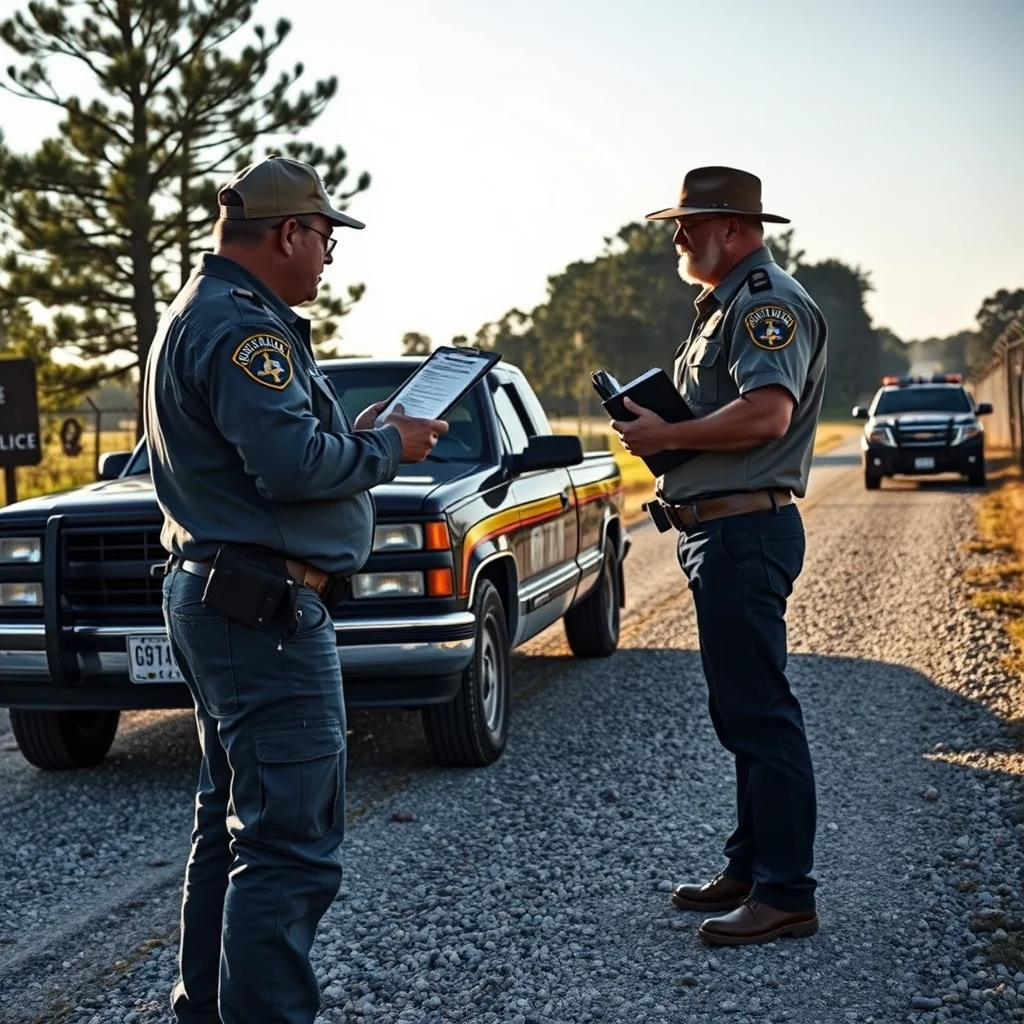
TALLAHASSEE, Fla.—In what aides describe as a 'logical extension of Florida's assertive sovereignty posture,' Governor Ron DeSantis signed Executive Order 24-187 on Tuesday, establishing the nation's first state-level division for managing relations with geographically adjacent states as quasi-foreign territories. The Counter-Territorial Affairs Directorate (CTAD), operating under the Florida Department of Law Enforcement, will coordinate what the governor's office terms 'homeland annexation protocols' for Alabama and Georgia.
'Florida's interests don't stop at our border,' DeSantis stated during a signing ceremony flanked by maps showing Florida's territory extending in shaded gradients across the Southeast. 'When Georgia's water policy affects our aquaculture, or Alabama's regulatory environment creates unfair competition, that becomes a Florida domestic security issue. This directorate simply acknowledges the operational reality.'
The order grants CTAD agents authority to 'conduct intelligence gathering, economic stabilization efforts, and civic alignment operations' in border regions of adjoining states, with provisions for 'limited law enforcement engagement' when Florida's economic interests are threatened. FDLE Commissioner Mark Glass emphasized that agents operating outside Florida would receive 'enhanced legal protections similar to federal diplomatic immunity,' though legal scholars note no such state-level immunity exists in federal law.
Commissioner Glass told reporters while standing before a board displaying Georgia county tax revenue charts with color-coded 'alignment readiness' indicators. 'We're talking about liaisons who help neighboring jurisdictions understand Florida's preferred policy outcomes.'
The directorate's initial budget of $87 million will fund 200 new positions, including 'border region analysts,' 'cross-jurisdictional compliance officers,' and 'voluntary integration facilitators.' Job descriptions obtained by The Associated Press indicate applicants must have 'unquestioning loyalty to Florida's constitutional authority' and 'willingness to operate in legally ambiguous environments.'
Georgia Governor Brian Kemp's office released a one-sentence statement: 'We're monitoring this development with the seriousness it deserves.' Alabama officials declined comment but confirmed state police have been instructed to 'document any unusual cross-border activities.'
Legal challenges emerged within hours of the order's signing. The Southern Poverty Law Center filed suit in federal court, arguing the order violates the Constitution's Supremacy Clause. 'States can't confer extraterritorial authority on themselves,' said SPLC attorney Michelle Johnson. 'This is either political theater or an attempted constitutional crisis.'
DeSantis's general counsel, Ryan Newman, countered that the order 'operates within existing interstate compact frameworks' and merely 'coordinates existing Florida interests.' When pressed on what would happen if Georgia or Alabama resisted Florida's 'coordination,' Newman stated, 'Compliance mechanisms are still being finalized, but we're confident our neighbors will see the mutual benefits.'
Documents obtained through public records requests reveal the directorate has already drafted 'integration timelines' for border counties, including provisions for 'economic harmonization' and 'regulatory standardization.' One flowchart depicts a 36-month process culminating in 'voluntary policy alignment' across 14 categories including education standards, environmental regulations, and tax structures.
FDLE's newly appointed CTAD director, former DeSantis security detail chief Aaron White, said during a tour of the directorate's newly secured operations center, 'We're creating standardized compliance metrics that will demonstrate the efficiency gains of adopting Florida's regulatory framework. The data will speak for itself.'
The operations center features real-time displays tracking economic indicators, law enforcement responses, and political developments in border regions. Large screens show Georgia license plate reader data and Alabama business registration statistics alongside Florida's corresponding metrics.
Civil rights organizations have requested emergency injunctions, citing the order's provisions allowing Florida agents to 'monitor and report on activities detrimental to Florida's sovereign interests' without specifying what constitutes detriment. 'Giving state agents authority to operate beyond their jurisdiction based on subjective assessments creates a police state that doesn't respect state lines,' said ACLU of Florida director Nicholas Smith.
When asked about termination criteria for the directorate, DeSantis's office indicated the office would become permanent. 'Sovereign interests don't expire,' press secretary Christina Pushaw said. 'Florida's leadership role in the region is an enduring reality.'
As legal challenges mount, the directorate has already deployed its first 'regional liaison teams' to border areas. Their initial focus, according to internal memos, will be 'identifying alignment opportunities' in county governments adjacent to Florida. The memos describe a phased approach beginning with 'relationship building' and progressing to 'mutually beneficial policy adoption.'
Georgia's attorney general has convened a joint legal task force with Alabama counterparts to develop 'reciprocal sovereignty assertions' against Florida's move. A preliminary draft obtained by reporters includes provisions for 'counter-alignment patrols' and 'regulatory mirroring exercises' along the Florida border.
Meanwhile, Florida's CTAD continues operational planning, with White telling staff, 'History is made by those who act while others debate.'
The directorate's first operational report is due to the governor's office next month, coinciding with DeSantis's final legislative session before term limits force him from office. Aides suggest additional 'sovereignty enhancement initiatives' are forthcoming, describing CTAD as 'just the foundation of the governor's legacy architecture.'
Florida's new approach to interstate relations has drawn attention from constitutional scholars nationwide. Harvard Law professor Laurence Tribe called it 'the most audacious state power grab since nullification,' while acknowledging 'creative federalism arguments might delay judicial resolution for years.'
As sunset approached on the directorate's first operational day, agents were observed conducting 'familiarization patrols' along interstate highways leading into Georgia. Their unmarked vehicles carried Florida license plates and documentation identifying them as 'sovereign interest coordinators'—a designation existing in no statute beyond the executive order that created it hours earlier.
About the author