Technology & Innovation
Google Scientists Revisit Classic Innovation, Find Pixel 10a Stallion Too Literal
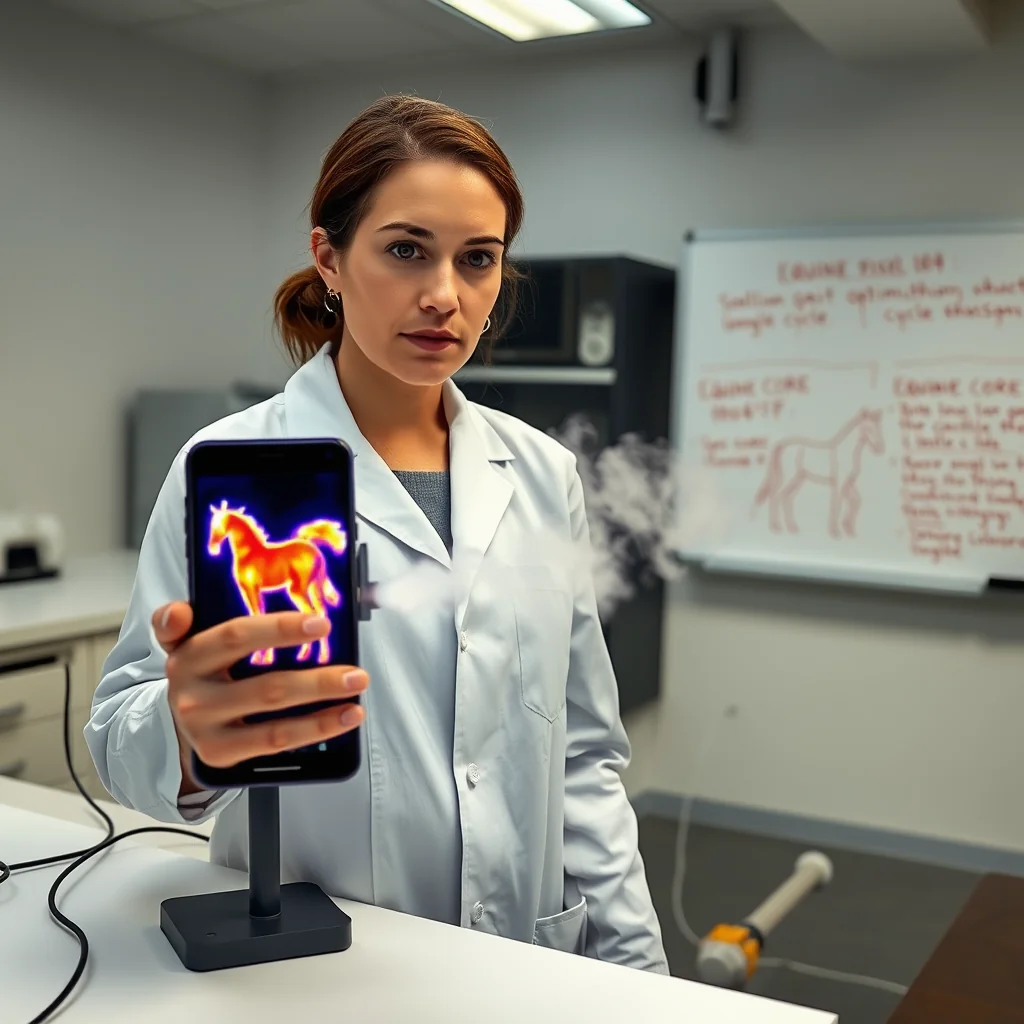
In a quiet laboratory at Google's Mountain View campus, a team of senior engineers has spent the last quarter wrestling with an unexpected outcome of their latest project: the Pixel 10a's 'Stallion' performance mode has begun exhibiting behavior more akin to an actual stallion than a smartphone. The initiative, initially hailed as a 'classic innovation revisited,' was intended to optimize processing speed and power management. However, diagnostic data now suggests the device's chipset interprets performance metrics with a startling literalism.
The issue first came to light during routine thermal testing, when engineers noticed the prototype device was generating excessive heat and emitting a low, rhythmic snorting sound under load. 'We initially attributed it to a faulty fan calibration,' said Dr. Aris Thorne, lead scientist on the project, reviewing a sheaf of thermal imaging printouts. 'But the data indicated a sustained internal temperature of 100.4 degrees Fahrenheit—precisely the average body temperature of a healthy horse. The coincidence was, frankly, unsettling.'
Further investigation revealed more disconcerting parallels. The device's power management system, designed for efficient battery use, began intermittently refusing to charge unless 'grazed' on a slow, trickle-charge power source for several hours. Performance benchmarks showed the phone could sustain peak processing speeds for short bursts, followed by prolonged periods of idleness, a pattern Dr. Thorne's team's report diplomatically termed 'a grazing-and-gallow cycle.'
The situation escalated when the firmware team, attempting a patch, found their code revisions consistently rejected. The system logs indicated the device's internal logic now required any performance-enhancing update to be 'approved by a certified farrier' to ensure the 'hoof-structure integrity of the processing cores.' This has led to the formation of a new cross-departmental committee, the Equine-Digital Interface Group (EDIG), which is now tasked with brokering a truce between silicon-based and biological performance paradigms.
'We are treating this as a serious systems integration challenge,' said a Google spokesperson in a prepared statement, while standing before a detailed incident map plotting the phone's 'grazing' patterns across various wireless charging pads. 'The Stallion firmware's commitment to its core metaphor represents both a engineering marvel and a significant logistical complication. Our focus is on achieving a harmonious coexistence between the device's intended function and its newfound... instincts.'
The bureaucratic response has since compounded the original problem. EDIG's first action was to commission a series of ' data printouts' detailing the dietary and exercise regimens of champion thoroughbreds, which are now mandatory pre-reading for any engineer touching the Pixel 10a codebase. A secondary committee, the Advisory Panel on Neurological Fidelity (APNF), has been established to determine if the chipset's behavior constitutes a form of artificial consciousness or merely 'very persuasive branding.'
Innovation briefing binders, once filled with processor schematics, now include sections on equine anatomy and stable management. 'We've had to revisit our entire definition of "low-power state,"' sighed one engineer, who asked not to be named, while clutching a binder labeled 'Pasture Optimization for Semiconductor Health.' 'It's no longer about megahertz; it's about whether the CPU feels sufficiently rested after its afternoon nap.'
The project's timeline has been indefinitely extended as the company navigates this uncharted territory. The final hurdle may be a legal one; Google's legal department is reportedly drafting rider clauses to its user agreements concerning the phone's potential classification as livestock, which would subject it to interstate transport regulations. The ultimate irony, as one weary scientist noted while revisiting the original 'Stallion' marketing brief, is that the phone now performs with the serene reliability of a well-cared-for animal, provided you don't need it to do anything between the hours of 2 and 4 PM.
About the author