Education
HAHAHAHAHAHAHAHAHAHAHAHAHAHAHAHAHAHAHAHAHAHAHAHAHAHAHAHAHAHAHAHAHAHAHAHAHAHAHAHAHAHAHAHAHAHAHAHAHAHAHAHAHAHAHAHAHAHAHAHAHAHAHAHAHAHAHAHAHAHAHAHAHAHAHAHAHAHAHAHAHAHAHAHAHAHAHAHAHAHAHAHAHAHAHAHAHAHAHAHAHAHAHAHAHAHAHAHAHAHAHAHAHAHAHAHAHAHAHAHA after follow-up review in follow-up review
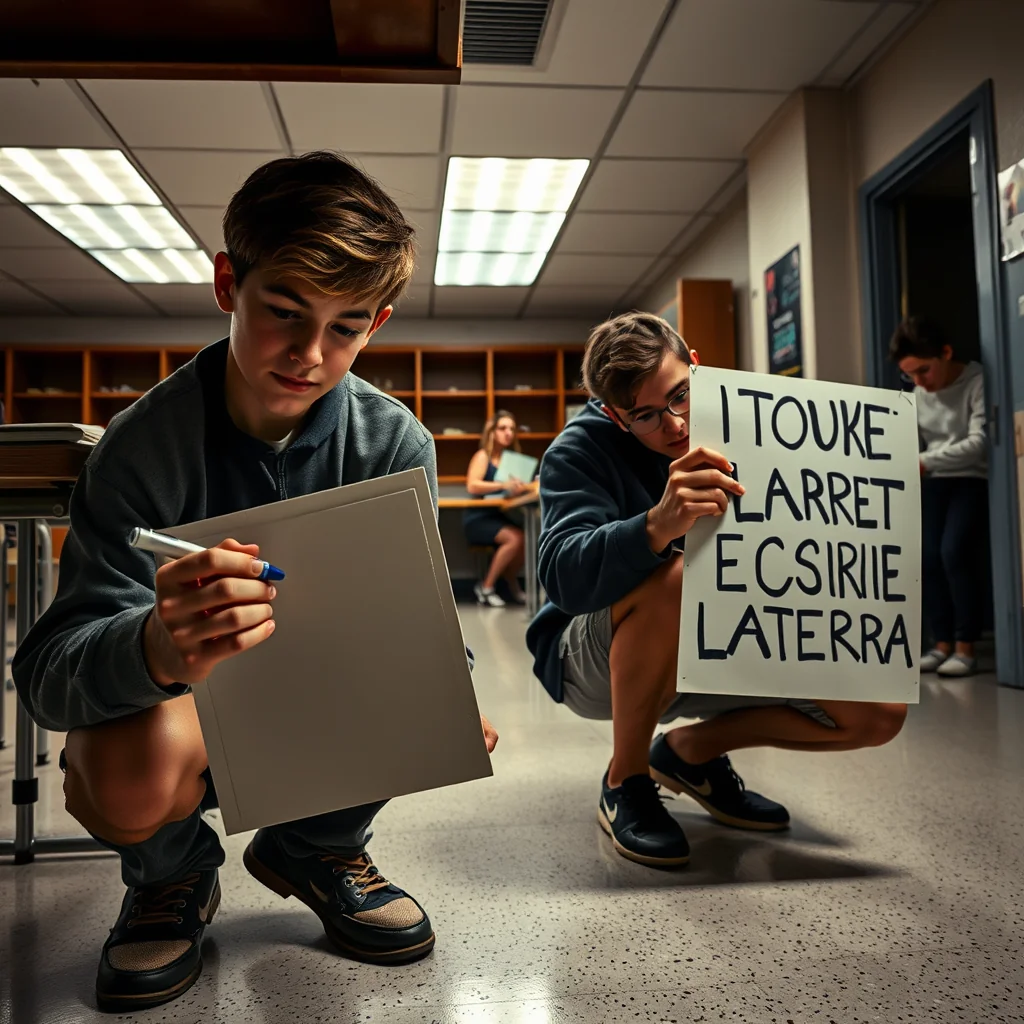
OXFORD, Miss. — The Oxford School District announced Tuesday it has overhauled its emergency preparedness curriculum to include mandatory protest sign assembly training alongside traditional active shooter drills, responding to parent concerns that existing education fails to address contemporary campus realities.
Superintendent Richard Commons explained the new "comprehensive safety protocol" during a measured briefing on the high school quad, where staff demonstrated proper techniques for folding corrugated plastic signs while maintaining cover positions. "Our training now reflects that students might need to assemble a 'Ban Assault Rhetoric' banner while crouched behind a chemistry lab table," Commons stated, watching students practice staking placards with one hand while testing door locks with the other. "The dual-response methodology addresses campus life as it exists today."
The policy shift follows months of parent feedback, particularly from Wendy Pfrenger, who noted that while her children could identify shelter locations during weapon threats, they lacked practical skills for the protest scenarios that increasingly unfold simultaneously. "The kids know where to hide if someone enters the building with a firearm," Pfrenger observed, "but when counter-protesters showed up with explosive devices last semester, they didn't know how to properly assemble the 'Black Lives Matter' signs the school provides."
District training materials obtained by The Guardian show students now practice two parallel skill sets: identifying secure rooms during incident and efficiently constructing demonstration signage using the school's standardized protest kits. The revised drills include timed competitions where students earn points for both rapid barrier deployment and legible marker penmanship under pressure.
"We've created a balanced approach," said Jack Grover, head of the district's safety coordination board. "During last week's drill, we simulated an active weapon scenario while students simultaneously assembled signs reading 'Books Not Bullets.' The top performers secured doors with one hand while staking placards with the other."
The integration has required significant logistical adjustments. Classrooms now store protest materials alongside emergency supplies, with signage templates covering everything from curriculum disputes to political conflicts. The school's incident map, previously tracking only weapon threats, now includes protest activity layers showing optimal sign-display locations.
Some parents have questioned whether the combined training dilutes both skill sets. "My daughter came home saying she can now fold a 'Defund the School Board' sign in under thirty seconds," said local pediatrician Dr. Emir Balat, "but she also thought the safe corner during shootings was wherever the largest banner could be displayed."
Commons defended the curriculum while observing students practice taking knee positions that simultaneously provided ballistic protection and maximized slogan visibility. "When a student can laminate a 'Mental Health Resources Now' sign while maintaining cover behind a vending machine, we consider that comprehensive preparedness," he noted, pointing to a drill where students used textbooks as both shielding devices and writing surfaces.
Training now includes specialized modules where students must correctly match slogan templates to specific threat scenarios. During advanced placement courses, participants assemble multi-panel displays while responding to coded announcements over the intercom system.
The district's partnership with the Oxford Department of Public Works now features sanitation trucks creating authentic protest ambiance by revving engines during drill simulations. Recent metrics show a 23% improvement in message coherence when students train with background chanting from community college drama students. "The data confirms that sign-legibility under auditory stress correlates directly with overall emergency response effectiveness," Grover stated in a memo reviewing drill outcomes.
"It's about institutional readiness," Grover said, reviewing student performance metrics that now include both lockdown efficiency and message coherence scores. "We're proud that our graduates will enter college equally prepared to survive a campus shooting and effectively protest tuition hikes."
The program has attracted attention from education departments nationwide, with several states considering similar integrations. Meanwhile, the Oxford district continues refining its approach, recently adding an optional seminar on balancing sign weight against running speed during evacuations.
As Commons concluded the briefing, students nearby practiced a new drill combining shelter-in-place protocols with coordinated chant synchronization. "We're not choosing between safety and expression," he said, watching a student simultaneously barricade a door while adjusting the kerning on a 'Support Teachers' banner. "We're recognizing they've become the same skill set."
About the author
