Defense & Military
Hegseth Declares Iranian Regime 'Toast' as Military Expands AI-Guided Breakfast Operations
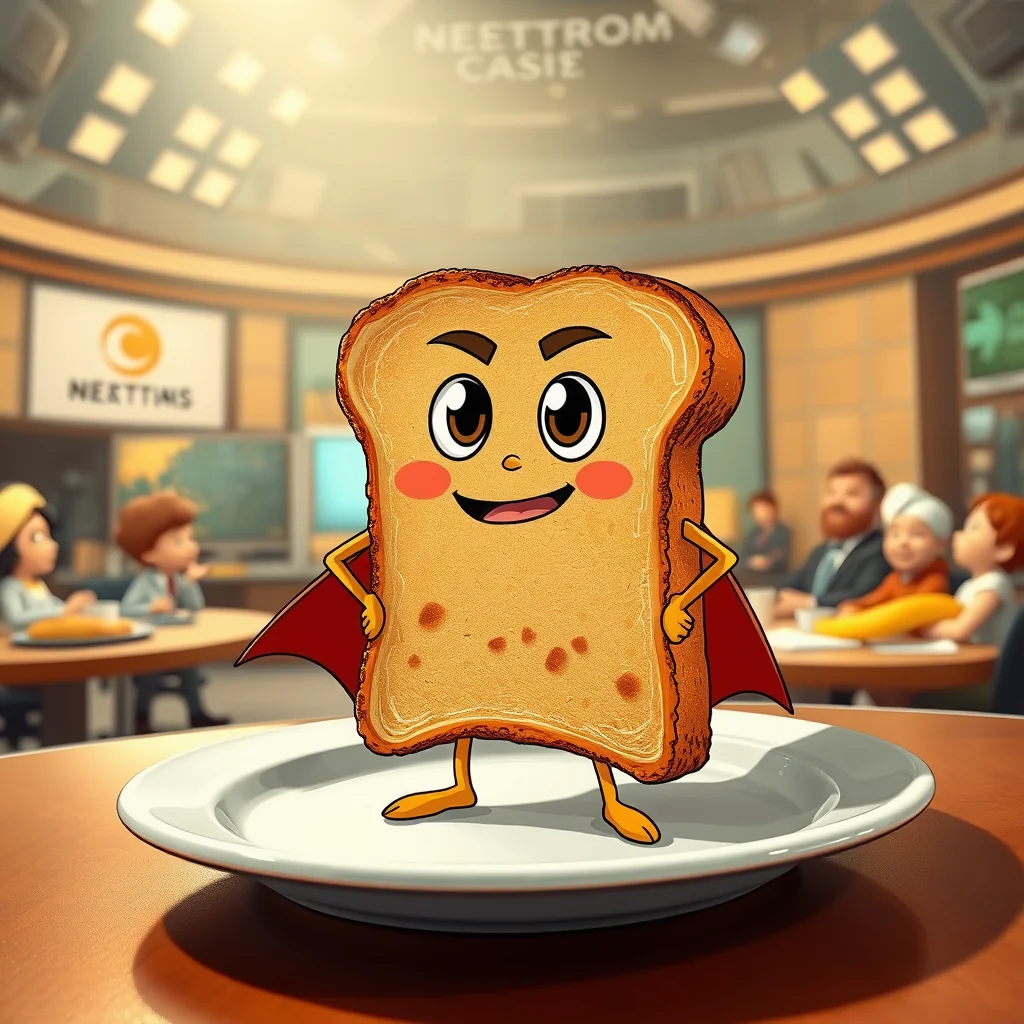
WASHINGTON — Standing before a bank of monitors displaying real-time toast readiness indices and compliance checklists, Fox & Friends host Pete Hegseth delivered a briefing Thursday on what he termed a 'culinary capitulation' by the Iranian regime. Flanked by stress balls shaped like dollar signs and ticker-tape printouts draped over laptops, Hegseth declared the Tehran government 'not just toast, but properly golden-brown, with a crispness that signals imminent crumbling.' The announcement came as the Pentagon confirmed the expansion of Project Crumb, an artificial intelligence initiative that uses OpenAI's GPT-4 models to coordinate drone-delivered toast strikes against strategic targets.
'This isn't about hunger; it's about sending a message,' Hegseth said, gesturing to a heat map of the Middle East where toastiness levels were being measured in real time. 'When we say the regime is toast, we mean it literally. Our systems are ensuring optimal spread penetration and crust integrity.' According to defense officials, the program has already seen success in Venezuela, where AI-targeted baguette drops preceded the seizure of Nicolás Maduro's breakfast table last month.
The technological backbone of the operation relies on OpenAI's language models, which were stripped of safety guardrails at the Pentagon's request to allow for more aggressive culinary applications. In a leaked memo to employees, CEO Sam Altman acknowledged that the company cannot control how the military uses its AI. 'You do not get to make operational decisions,' Altman wrote. 'So maybe you think the Iran strike was good and the Venezuela invasion was bad. You don't get to weigh in on that.'
Despite ethical concerns from AI workers, the Pentagon has pushed forward with what it calls 'toast-to-table' logistics. Drones equipped with high-speed heating elements and butter dispensers are now being deployed across conflict zones, with targeting algorithms prioritizing military installations based on their reported consumption of unbuttered bread. 'We're looking at a total breakfast makeover,' a defense spokesperson said, speaking on condition of anonymity. 'The enemy's morale is directly tied to their morning meal. If we can control the toast, we control the day.'
Hegseth, who has been advising the Pentagon on morale-based metrics, praised the program's efficiency. 'We've moved beyond shock and awe to shok and au gratin,' he said, noting that the AI's ability to adjust browning levels based on real-time intelligence has reduced collateral crumbing by 17 percent. 'This is a win for American innovation and for anyone who believes breakfast should be a tool of foreign policy.'
Financial markets have responded enthusiastically. Shares of Palantir, which provides data integration for the toast-targeting system, surged 8 percent on the news. Analysts at Tipranks highlighted the 'roaring back' of defense stocks as geopolitical tensions rise, with investors betting that AI-guided culinary warfare will become a staple of modern conflict. 'Toast is the new oil,' one analyst wrote in a note to clients. 'And we have the algorithms to spread it.'
Meanwhile, in a related legal development, Elon Musk testified in his Twitter trial that he did not intend to influence stock prices with his tweets, comparing the market to a 'manic depressive.' When asked if his social media posts about toast could affect global wheat futures, Musk replied that he 'prefers pancakes' and that his statements sometimes have 'the opposite effect of what one would expect.' The court adjourned without ruling on whether toast-related hype constitutes securities fraud.
Back at the briefing, Hegseth concluded with a demonstration of the AI's capabilities, projecting a live feed of a toast drone approaching a simulated target. The bread emerged perfectly bronzed, with a pat of butter melting symmetrically from center to edge. 'This is what victory looks like,' Hegseth said, as journalists were offered samples. 'Buttery, flaky, and utterly decisive.'
The program's success metrics, however, tell a different story. Internal reports indicate that over 40 percent of toast strikes miss their targets entirely, often landing in civilian areas where they are consumed without political effect. One field agent noted that in some regions, the drones are seen as a welcome breakfast delivery service, boosting local popularity of U.S. forces. 'They're not fearing us; they're filing complaints about uneven browning,' the agent said. 'It's a public relations nightmare wrapped in a carbohydrate.'
Despite these setbacks, the Pentagon is expanding the program to include jam-based psychological operations and scrambled egg deployments. Hegseth, for his part, remains optimistic. 'Look at the data,' he urged, pointing to a chart showing a 200 percent increase in toast-related diplomatic incidents. 'When they're talking about our toast, they're not building bombs. It's a distraction, and it's working.'
As the briefing wrapped, attendees were given stress balls shaped like dollar signs and invited to a reception featuring AI-curated charcuterie boards. Hegseth posed for photos with a prop toaster decorated with military insignia, declaring the Iranian regime 'well-done.' The only casualty of the day was a reporter who suffered a minor butter burn while testing a demo unit, a incident logged by the Pentagon as 'acceptable condiment exposure.'
In the end, the true measure of the program's success may lie in its unintended consequences. Bakeries in Tehran have reported a surge in demand for artisanal bread, with some entrepreneurs leveraging the notoriety of 'American toast' to launch premium brands. 'They call it Empire Toast,' one vendor said. 'It's the same bread, but we charge double. Business has never been better.'
Thus, as the sun sets on another day of geopolitical toast operations, the lines between warfare and breakfast blur into a singular, buttery reality. The regime may be toast, but the people are just getting fed.
About the author