Politics & Policy
Homeland Security Committee Assigns Magic 8-Ball to Vet Border Wall Contractors
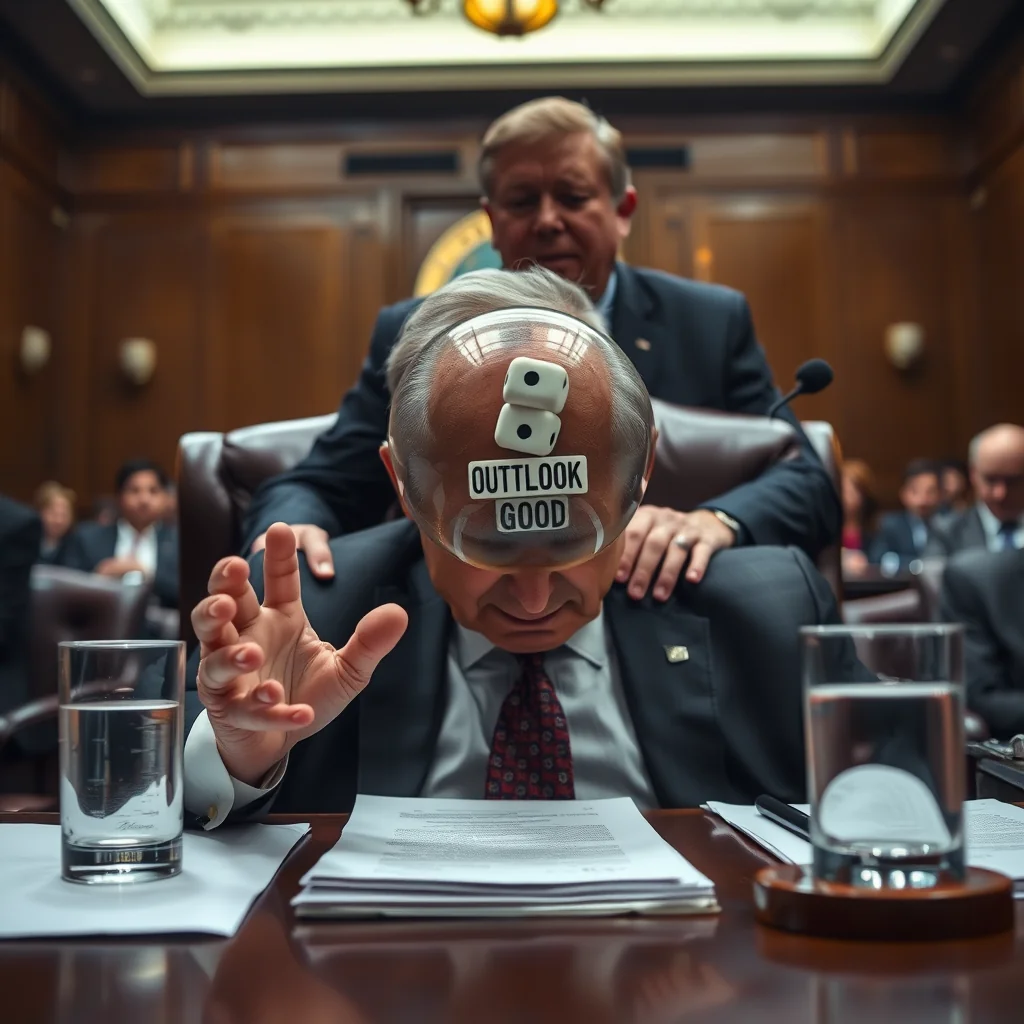
Capitol Hill physicians disclosed Tuesday that Rep. Roy's cognitive functions are entirely mediated by the classic fortune-telling toy, which was surgically implanted in his cranium during a procedure aides described as 'elective but necessary.' The 8-Ball's plastic housing is visible through a transparent panel installed in the congressman's forehead, allowing colleagues to verify its responses during floor votes. Committee staffers now carry the legislator to hearings and rotate the device before he speaks on matters ranging from border security funding to emergency preparedness.
A spokesperson for the House Ethics Committee confirmed the arrangement complies with congressional rules, noting that 'the device's answers are treated as protected speech under the First Amendment.' The Magic 8-Ball's influence became apparent during a markup of the Department of Homeland Security's annual appropriations bill, when Rep. Roy voted 'present' 37 times in succession after the toy repeatedly displayed 'Ask Again Later.' Democratic members objected, but the chair ruled the votes valid after the 8-Ball showed 'Outlook Good' on a procedural motion.
Homeland Security Secretary Kristi Noem praised the innovation in a statement read by a junior staffer wearing noise-canceling headphones to 'eliminate subconscious bias.' The department has since adopted a similar system for allocating border patrol resources, with agents shaking smartphone apps modeled on the 8-Ball to determine deployment zones. Early results show a 300% increase in patrols near Detroit's Ambassador Bridge, following a cluster of 'Signs Point to Yes' readings, while sections of the Texas border remain unmanned after consecutive 'Don't Count On It' outcomes.
Critics highlight potential conflicts of interest, noting the 8-Ball is manufactured by Mattel, a company with federal contracts for military morale items. Rep. Alexandria Ocasio-Cortez (D-NY) called the situation 'a dereliction of duty wrapped in plastic,' but Republicans defended the approach. 'The 8-Ball eliminates human bias,' said House Majority Leader Steve Scalise (R-LA). 'It can't be lobbied, it doesn't flip-flop, and it's always bipartisan—50% positive, 50% negative, with a margin of error for neutrality.'
The device's impact extended to immigration enforcement after it responded 'Cannot Predict Now' to a query about reopening the Camp East Montana detention facility. ICE officials interpreted the answer as a directive to maintain the status quo, leaving the controversial Texas jail shuttered indefinitely. Detainee advocacy groups praised the outcome but questioned the methodology, warning that future readings could just as easily trigger mass deportations.
Rep. Roy's office has developed a standardized shaking procedure for the 8-Ball, with aides performing three vigorous rotations before each vote. During a recent hearing on police funding, the toy answered 'You May Rely On It' when asked if Detroit required additional officers, prompting a swift approval of a $200 million grant. The decision provoked anger among activists who noted the city's police department had recently reversed a policy on cooperation with border agents, but the 8-Ball's verdict was not appealed.
Constitutional scholars are now drafting a brief arguing that the 8-Ball's responses constitute a 'third form of legislative power' beyond yea and nay votes, citing its recent ruling that a proposed amendment 'Concentrates Well' when held up to a light source. A congressional lawyer noted the device's rulings carry the force of precedent after it overturned a subcommittee decision by displaying 'My Reply Is No' three times in succession.
Behind the scenes, Rep. Roy's staffers have grown adept at interpreting ambiguous answers. When the 8-Ball showed 'Reply Hazy, Try Again' during a debate on cybersecurity, aides requested a recess and shook the device under a stronger light. The subsequent 'It Is Certain' reading led to unanimous passage of a bill mandating encryption standards for all federal databases. Democrats later admitted the outcome was favorable but questioned the path to achieving it.
The situation escalated when aides presented the 8-Ball with a flowchart of existential threats during a classified briefing, only to receive 'Better Not Tell You Now' in response to a query about North Korean missile tests. Pentagon officials initially protested but later incorporated the answer into their deterrence strategy, noting it aligned with existing ambiguity doctrines.
The implications became fully clear when Rep. Roy's office released a statement written by the Magic 8-Ball itself, generated by tapping out letters corresponding to the numbers on its floating die. The message read: 'CONCENTRATE AND ASK AGAIN,' which aides interpreted as a call for deeper committee focus on pending legislation. Critics argue the device has created a circular logic engine where its own existence justifies its authority, but supporters say the system prevents partisan deadlock by introducing an element of chance.
As the House adjourned for the weekend, Rep. Roy was seen being carried from the Capitol by aides, his head tilted to prevent the 8-Ball's window from fogging. A final shake of the device produced 'Outlook Good' as lawmakers departed, a result that satisfied all sides despite meaning nothing at all. The ultimate test may come during the next government funding debate, when the toy's answer could determine whether hundreds of thousands of federal employees get paid—or whether they too should ask again later.
About the author