Artificial Intelligence
Hong Kong Officials Deploy AI to Detect Metaphorical Threats to Rule of Law
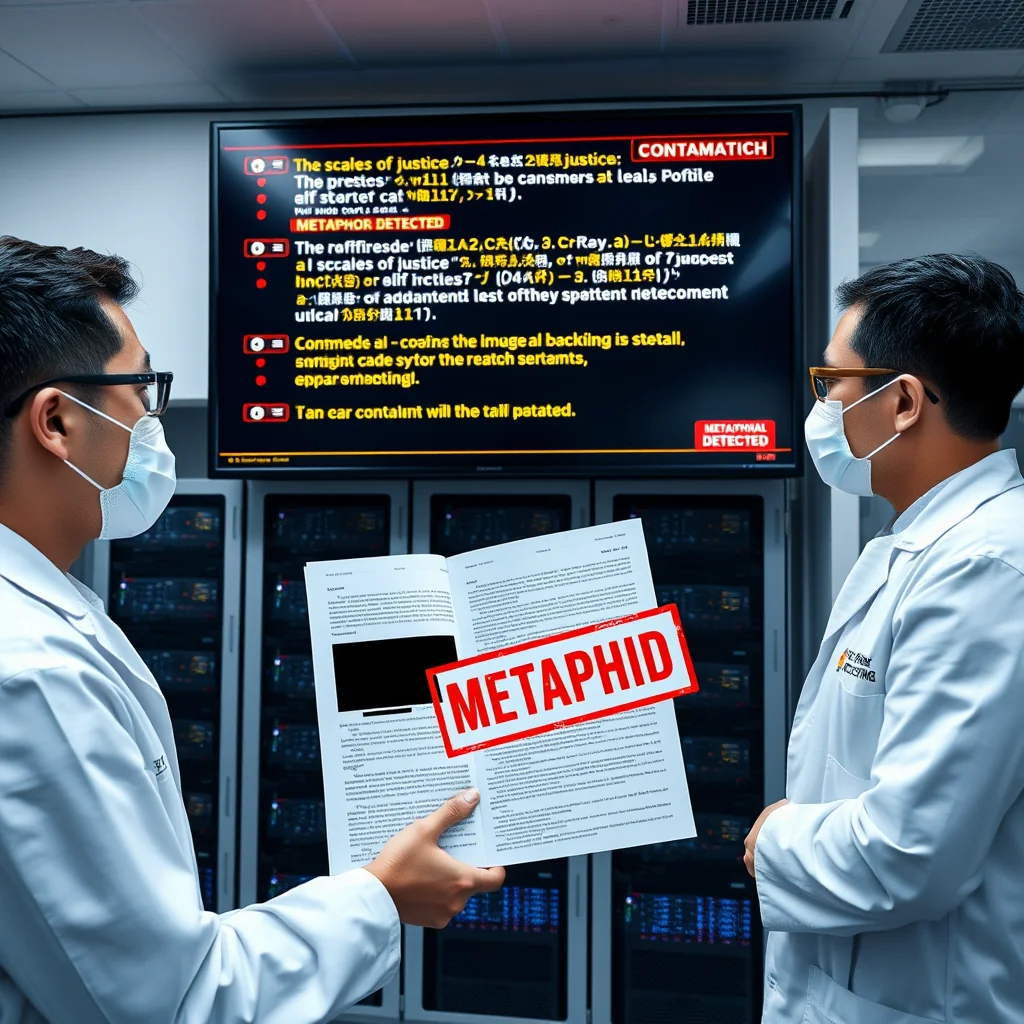
HONG KONG—In a move legal scholars are calling 'unprecedented in its literalism,' the Hong Kong Department of Justice has activated an artificial intelligence platform designed to identify and neutralize metaphorical threats to the rule of law. The system, developed by a mainland Chinese tech firm under the codename 'Project Haibo,' scans all legal filings, court transcripts, and even private correspondence for figures of speech that could be interpreted as challenging jurisdictional authority.
'We observed a troubling rise in rhetorical devices being weaponized against our legal framework,' said a senior official speaking anonymously under briefing rules. 'Phrases like 'the scales of justice' or 'a wall of bureaucracy' present tangible risks when left unmonitored. This AI helps us quantify those risks.'
The announcement came during a three-hour technical demonstration at the Cyberport complex, where officials displayed binders of incident maps generated by the system. One map visualized the 'footprint of judicial erosion' caused by a defense attorney describing a verdict as 'a house built on sand.' Another tracked the 'contagion radius' of a defendant referring to the legal process as 'a maze.'
'Every metaphor is a potential breach,' the briefing officer explained, pointing to a flowchart titled 'Litigative Metaphor Containment Protocol.' 'When someone says 'the law is blind,' our system immediately flags it for literal analysis. Does this imply the justice system lacks oversight? Is it suggesting judges require visual aids? We must treat these as operational questions.'
The AI's deployment follows a controversial letter published by jailed media tycoon Jimmy Lai, which authorities claim contained 'structurally subversive' similes. While the letter's actual text discussed procedural delays, the AI highlighted the phrase 'like a tree growing through concrete' as a direct challenge to urban planning regulations. Prosecutors have since appended a 200-page addendum to Lai's case file analyzing the sentence's botanical implications.
'We're not banning figurative language,' insisted the official, standing before a screen showing real-time metaphor detection metrics. 'We're simply ensuring it complies with statutory interpretation guidelines. If a citizen says 'my case is caught in a whirlpool,' we need to determine if they're alleging improper water drainage in the courthouse.'
Defense lawyers have reported receiving automated notices requiring them to submit 'tone compliance' data for all legal submissions. One attorney, who declined to be named citing ongoing cases, described receiving a 15-question survey demanding clarification on whether her description of evidence as 'a smoking gun' involved actual combustion hazards.
The Chinese Embassy in Hong Kong issued a statement praising the initiative. 'Maintaining the rule of law requires meticulous attention to linguistic hygiene,' it read. 'We support any measure that prevents rhetorical decay from undermining social stability.'
Critics argue the system embodies bureaucratic overreach. 'They've created a ministry of metaphor,' said a University of Hong Kong linguist consulted for this report. 'Last week, a judge's remark about 'opening a can of worms' triggered a full ecological assessment. It's like watching Orwell edited by Beckett.'
Officials counter that the AI has already prevented several 'category-three linguistic events.' Last Tuesday, the system averted a potential crisis by detecting a defense attorney's plan to describe a legal precedent as 'a slippery slope.' The phrase was intercepted during draft review and replaced with the approved alternative: 'a gradual transitional gradient.'
When asked whether the project's $87 million budget could have been allocated to actual legal services, the briefing officer produced a printout titled 'Cost-Benefit Analysis of Prevented Metaphorical Damage.' It estimated that unchecked similes could cost the jurisdiction 'up to 14,000 procedural hours annually in misinterpretation correction.'
The department now plans to expand the AI's mandate to monitor rhetorical questions and allegorical gestures. Training materials obtained by this reporter include a module on identifying 'hostile hyperbole' in courtroom body language.
As the briefing concluded, an alarm sounded when a journalist asked whether the system could distinguish between literal and figurative meaning. The official checked his tablet and replied, 'The question has been logged for semantic review.'
Legal analysts note that Jimmy Lai's upcoming appeal will be the first case processed entirely under the new protocol. His lawyers have submitted a 300-word motion requesting permission to use the word 'kaleidoscope' in their closing argument.
About the author