Health & Medicine
How to Hold Meetings: Scientists Announce Breakthrough in Children's Epilepsy Treatment That Might Actually Require More Meetings
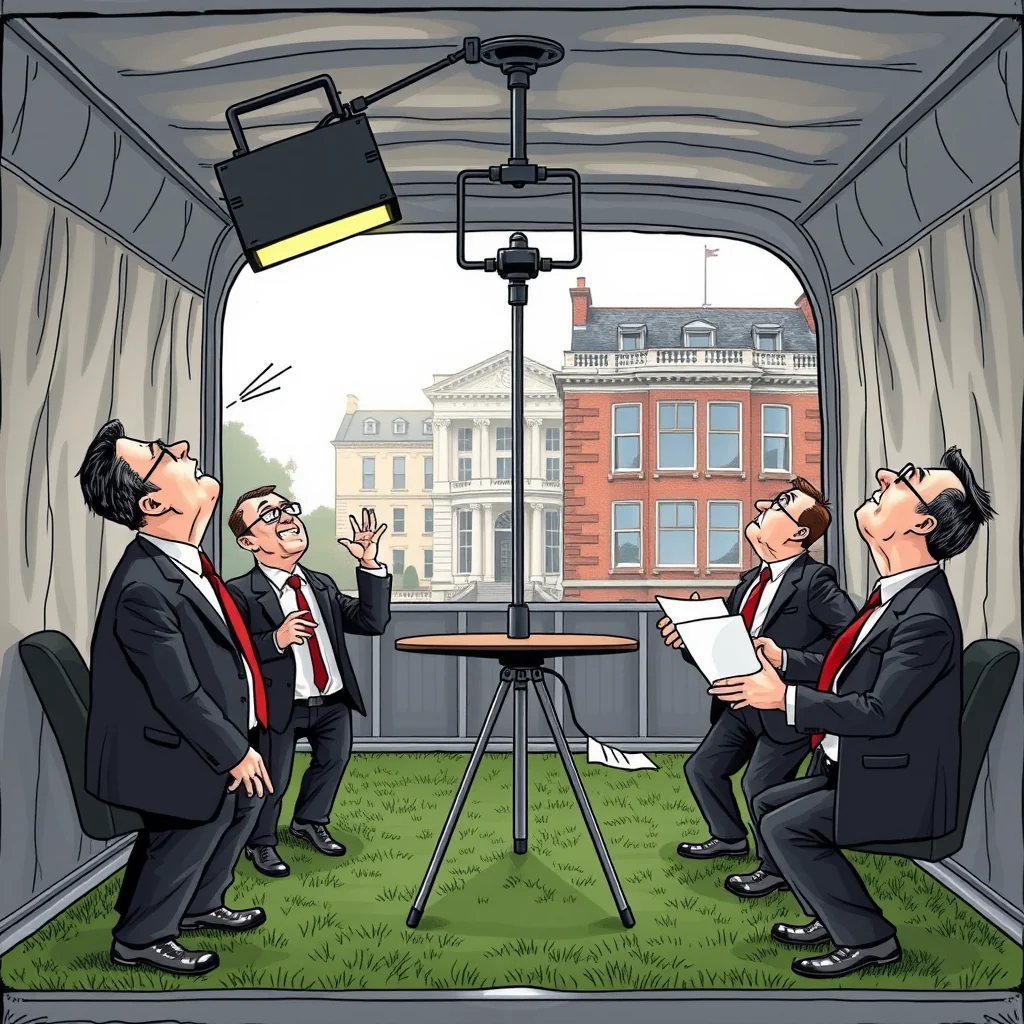
LONDON – In a sweeping move to protect its independence, the British Broadcasting Corporation formally proposed on Thursday that its royal charter be made permanent, a decision that has, within hours, rendered the organization incapable of conventional administration. The BBC's board, now operating from a temporary operations trailer pitched on the South Lawn of Broadcasting House, has begun to conduct all high-level strategy sessions through a series of controlled seizures, a method staff are calling "more honest" than minutes.
"We found that the old model of governance—agendas, motions, votes—was inherently political," said a spokesperson, her words punctuated by a brief but intense flickering of the overhead lights, which the press office later clarified was the board's official motion to adjourn for biscuits. "The new system leverages a deeper, more visceral form of ."
The transition began moments after the charter proposal was published. Board members, having eliminated the ten-year renegotiation cycle they cited as an "existential threat," reportedly fell into a state of profound institutional stasis. With no future deadline to structure their work, the 13-member panel found itself unable to sequence basic tasks. According to internal memos, the first sign of trouble was the board's inability to "call a meeting to order," as the concept of "order" had lost all meaning in a permanently chartered eternity.
Dr. Alistair Finch, a neurologist from University College London who was coincidentally consulting on a separate study of Zorevunersen, a drug for Dravet syndrome, was hastily summoned to Broadcasting House. "I was brought in to assess what was initially described as a 'procedural epilepsy,'" Dr. Finch said, deadpan. "The board was exhibiting clusters of myoclonic jerks every time the subject of license fee collection was raised. It was a highly resistant form of organizational dysfunction."
Dr. Finch's preliminary findings noted that the board's attempts to reach decisions were triggering synchronized neural events in members, effectively creating a "human LAN network" where data was transmitted not through words but through subtle facial tics and rhythmic finger-tapping. The board, upon hearing this diagnosis, unanimously approved a motion—conveyed by a spontaneous round of coughing—to adopt this new method as its primary governance tool.
The system was refined using technology from a nearby wind farm operations trailer, which provided the necessary equipment. The boardroom is now dominated by a large strobe light, retrofitted from a marine distress beacon, which is used to initiate and moderate discussions. A complex schedule of light patterns, developed by BBC engineers, corresponds to different parliamentary procedures. A rapid pulse indicates a call for a vote; a slow fade signifies disagreement; and a sustained, blinding flash means the matter has been tabled indefinitely.
"It's life-changing," said Robbie Gibb, the board member whose political appointment was a central grievance in the original charter proposal. He spoke while wearing a set of protective goggles. "We've eliminated all ambiguity. When you see the light sequence for 'budget overspend,' your body physically reacts with a wave of dread. It's a much more direct form of accountability."
The board's new communication style has had unintended consequences for BBC programming. A planned episode of "Countryfile" was accidentally replaced with a 30-minute static shot of a badger after a board discussion about regional reporting mandates triggered a series of tonic-clonic seizures in the control room staff. A spokesperson for the show said the broadcast was "entirely within the new editorial guidelines."
The scientific community has taken a keen interest. Researchers from Great Ormond Street Hospital have begun monitoring the board, seeing parallels with their work on drug-resistant epilepsy. "The BBC board has developed a form of pharmaco-resistant institutional epilepsy," said a lead scientist, who requested anonymity because the study is ongoing. "Their system of light-based triggers is, in effect, a deeply resistant form of seizure that we are laud as a breakthrough in organizational dynamics. The children in our trial experience 50% fewer seizures; the BBC board is now having 500% more, but they've reframed it as a productivity metric."
Despite initial skepticism, the method is being rolled out across the corporation. The BBC News at Ten team now rehearses the bulletin by watching a strobe light that flashes in time with the headlines. A senior editor explained, "If a news item about Middle East energy prices causes a generalized seizure in the room, we know it's a strong lead story."
The final step in the transformation was the board's decision to make the strobe light pattern itself the official, permanent charter. A legal team is currently attempting to codify the flashes into a binding document, a process that has so far resulted in seven lawyers being treated for photosensitive epilepsy. The corporation's chair, Samir Shah, attempted to comment on the development, but his statement was delivered entirely through a series of deliberate winces and a slight tremor in his left hand, which his aide translated as: "The future is bright."
The Resolution Foundation, the thinktank that warned the Middle East conflict could wipe out growth in UK living standards, has issued a follow-up report. It states that the BBC's new operational model, while innovative, is consuming more electricity than the entire city of Bristol during a Christmas lights display, potentially adding £500 to typical annual energy bills and creating the very energy price shock the corporation sought to insulate itself from. The board is scheduled to discuss the report next Tuesday, provided someone can remember how to turn the lights on.
About the author