Finance & Banking
HSBC Offers 'Chaos Premium' Fixed Mortgages, Celebrates Record 40% Rate Hike Amid Middle East Crisis
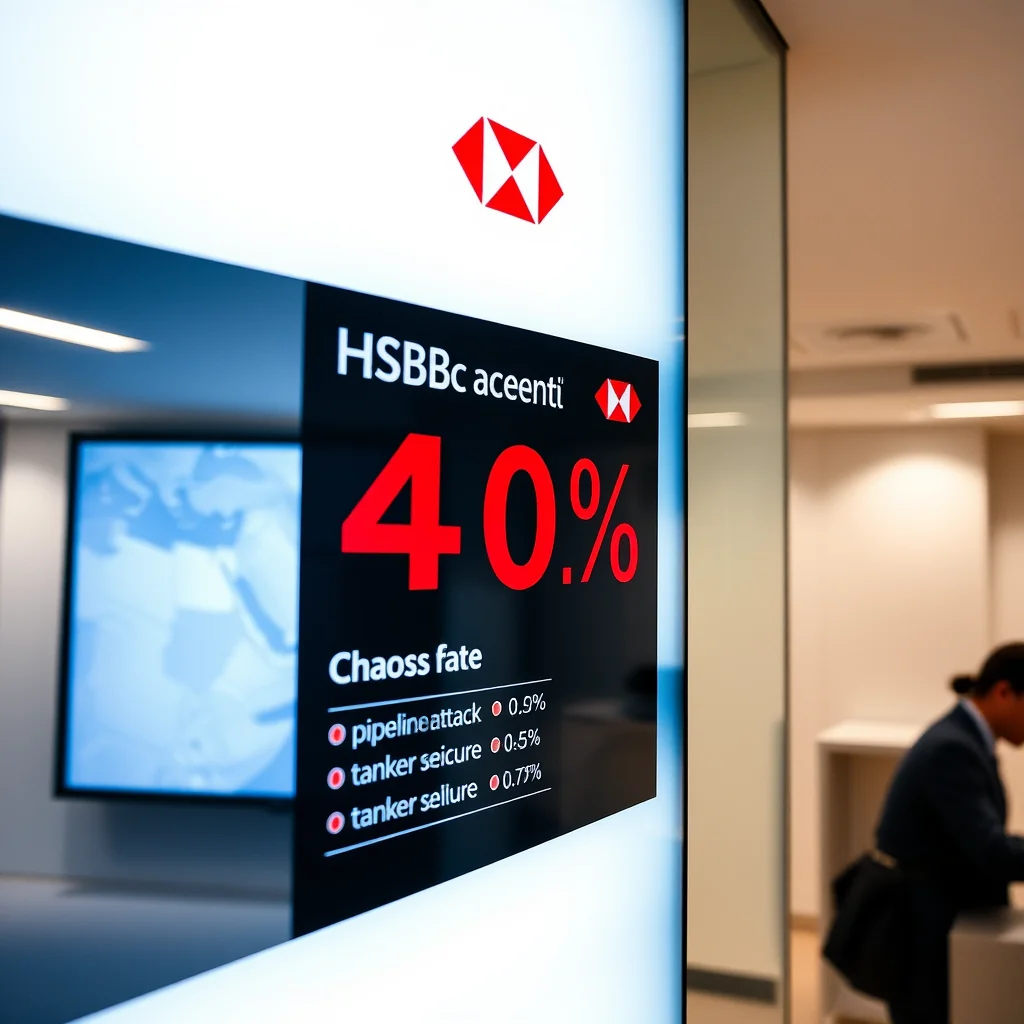
LONDON—Three of Britain's largest mortgage lenders announced Tuesday they would be raising fixed-rate mortgages by an average of 40%, citing what HSBC's UK retail banking director Charles Pendleton called "the emerging stability of sustained instability" in the Middle East.
"We've identified a strong correlation between geopolitical tension and lending profitability," Pendleton said during a press conference held in HSBC's Canary Wharf headquarters. "The current Middle East situation presents a unique opportunity to recalibrate our risk models toward what we're calling 'predictable unpredictability.'"
The new rates, effective immediately, include a "Chaos Premium" surcharge that automatically adjusts based on breaking news alerts from the region. Borrowers can now choose between fixed-rate mortgages with add-ons like the "Pipeline Attack Rider" or "Tanker Seizure Clause," each adding between 0.5% and 2% to their interest rates depending on the severity of the incident.
Nationwide Building Society CEO Debbie Crosbie explained the rationale while standing before a digital map of the Persian Gulf that glowed with real-time conflict zones. "Our analysts have determined that every missile launch adds approximately £12 to the average monthly mortgage payment," she said, pointing to a cluster of red dots near the Strait of Hormuz. "We see this not as a crisis but as a new paradigm for responsible lending."
Meanwhile, Coventry Building Society has introduced what it calls "Volatility Loyalty Points," where homeowners earn rewards for accepting higher rates. "Customers who opt for our 'Premium Uncertainty Package' receive double air miles and cinema tickets," said Coventry's head of customer experience, Martin Prendergast. "It's about turning anxiety into value."
Financial analysts have praised the move. "This is innovative risk management," said Aaron Strutt of Trinity Financial, speaking from a trading floor where stress balls shaped like dollar signs littered every desk. "Lenders are finally acknowledging that chaos has its own economic logic. We're seeing homeowners enthusiastically refinancing into higher-rate products just to get ahead of next week's probable escalation."
The Bank of England, which typically sets monetary policy, has taken a surprisingly hands-off approach. "We're monitoring the situation with great interest," said a central bank spokesperson while rearranging clipboards holding outage response plans. "The private sector's response to geopolitical events has been both robust and, frankly, more creative than anything we could have mandated."
On the ground, the response has been mixed. Outside HSBC's London headquarters, homeowners held a silent protest featuring signs reading "My 2.1% Fixed Rate Died for This" and "Make My Mortgage Boring Again." Yet mortgage application volume has surged 300% this week as borrowers rush to lock in rates before what industry newsletters are calling "the next inevitable flare-up."
Energy executives have expressed support for the new lending environment. "Uncertainty in the Middle East creates pricing flexibility throughout the value chain," said BP's regional director, sipping coffee from a mug that read "Keep Calm and Drill On." "We're seeing mortgage rates and oil prices moving in beautiful synchrony. It's almost poetic."
The new rates have already inspired financial products across the industry. Barclays announced a "Geopolitical Hedge Mortgage" where payments decrease during periods of stability but double during conflicts. Santander introduced "Conflict Bonds" that pay higher yields when civilian infrastructure is damaged.
"This isn't profiteering," insisted Pendleton, now monitoring thermal imaging tablets showing Middle Eastern oil fields. "This is about helping homeowners understand their place in the global ecosystem. When a tanker gets seized, that's not just news—that's your monthly payment speaking to you."
The Financial Conduct Authority has opened what it calls a "watching brief" on the new products but emphasized that lenders are operating within existing regulations. "The rules don't specifically prohibit charging more because wars are profitable," said an FCA spokesperson. "This appears to be an unexplored area of consumer protection."
As sun set on London's financial district, mortgage brokers could be seen high-fiving over particularly volatile news alerts. "Another pipeline attack!" shouted one broker, scrambling to update rate sheets. "This could add another half point by morning!"
Homeowners, meanwhile, have begun forming support groups. "We're calling it the 'Variable Rate Victims Circle,'" said teacher Sarah Jenkins, whose mortgage payment has increased £400 this month. "We meet Tuesdays and try to find comfort in knowing we're funding global stability through our financial instability."
The situation shows no signs of calming. With brokers predicting further rate hikes as the Middle East situation "continues to outperform expectations," economists are now questioning whether peace would constitute an economic downturn.
Kicker: Analysts project that if the conflict resolves, lenders may need to introduce 'Peace Penalties' to maintain profitability.
About the author