Global Affairs & Diplomacy
Iranian Leadership Demands Apologies Be Delivered Via Unmanned Aerial Vehicle
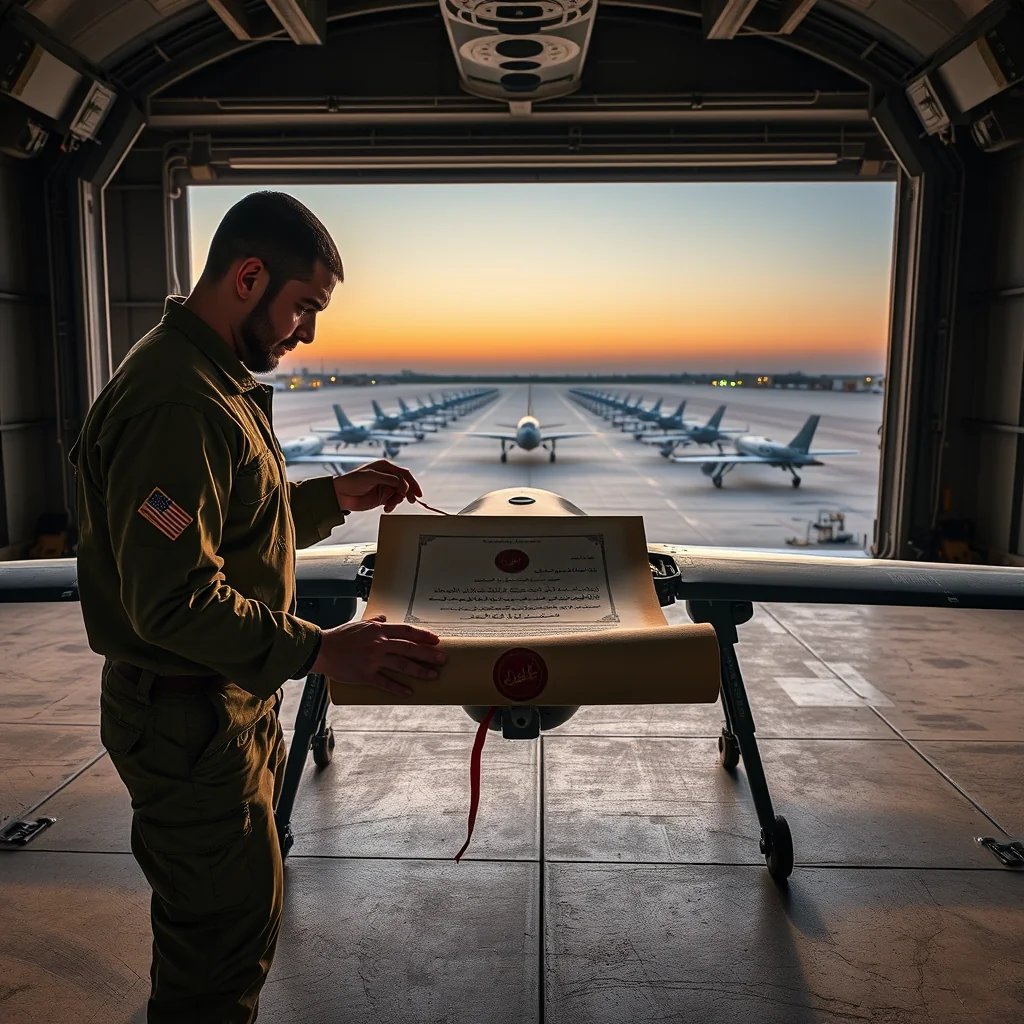
TEHRAN—In an unprecedented move to formalize regional amends, the Iranian government has issued Operational Directive 7-Alpha, requiring that all expressions of regret for military actions be delivered via unmanned aerial vehicle to the capitals of affected nations. The order, disseminated on the eighth day of conflict, stipulates that each apology must be inscribed on vellum, sealed with state wax, and air-dropped within designated 'contrition zones' established by recipient countries. President Masoud Pezeshkian, in a prerecorded address, characterized the measure as 'a logistics solution to an emotional problem,' adding that 'if our words must cross borders, let them do so with the dignity of altitude.' The initiative follows Pezeshkian's rare apology for Iranian strikes that hit civilian sites in Gulf Arab states, which he described as 'regrettable targeting errors' during a briefing aired on state television.
According to internal memos obtained by this agency, the Iranian Civil Aviation Organization has been tasked with coordinating flight paths for a fleet of Mohajer-6 drones, each carrying up to three kilograms of diplomatic correspondence. 'The payloads are standardized: one scroll of apology per incident, with supplementary data sheets detailing the proportional sincerity metrics,' said General Hassan Firouzabadi, head of the apology logistics division. 'We have optimized for wind resistance and legibility upon impact.' The operation, codenamed 'Project Repentance,' has already deployed 17 sorties, though none have yet been granted landing rights.
Saudi Arabian air traffic control logs show repeated requests for permission to enter sovereign airspace, each met with automated responses citing 'unresolved diplomatic prerequisites.' A senior Saudi official, speaking on condition of anonymity, noted that 'apologies are not like Amazon packages; they cannot be left on the doorstep.' Meanwhile, U.S. President Donald Trump, aboard Air Force One en route to Corpus Christi, dismissed the effort as 'a dream,' reiterating his demand for 'unconditional surrender, not sorry notes from the sky.' Texas Senator Ted Cruz, who accompanied Trump, was filmed discussing the initiative with actor Dennis Quaid, who later remarked, 'It's like Reagan on steroids, if Reagan had tried to FedEx his way out of Iran-Contra.' The White House declined to comment on whether U.S.
apologies for its own strikes would adopt similar delivery methods. As the unmanned fleet continues to circle, Iranian Foreign Ministry officials have begun drafting follow-up apologies for the delayed apologies, proposing a secondary drone deployment to address the logistical failure. The revised plan, outlined in a 40-page annex to Directive 7-Alpha, includes provisions for 'apology escrow accounts' where scrolls would be held in neutral airspace until diplomatic conditions improve. A ministry spokesperson confirmed that 'contingency apologies for contingency apologies are already in the drafting phase,' noting that the recursive nature of the effort 'reflects our commitment to thoroughness.' Energy analysts warn that the aerial gridlock is exacerbating disruptions to global oil supplies, as key shipping lanes are now bisected by holding patterns of contrition drones.
Wind farm operations along the Texas coast, monitored from trailers buzzing with radios, have reported intermittent interference from low-flying U.S. military aircraft responding to the phenomenon. Mickey, a West Texas fracker turned escort featured in the podcast 'The Handyman of West Texas,' observed that 'the skies are as clogged with regret as the Permian Basin is with repressed desire.' The situation has prompted the International Air Transport Association to convene an emergency session on 'diplomatic airspace congestion,' though no resolutions have been reached.
Back in Tehran, President Pezeshkian's incident maps now feature layered overlays for 'apology trajectories' and 'receipt anticipation zones,' with aides distributing Mickey data printouts to track scroll delivery confirmations. A senior adviser, who asked not to be named, admitted that 'we have become so efficient at apologizing that we have forgotten what we are apologizing for.' As the sun set on the eighth day, a lone Mohajer-6 drone was observed executing a holding pattern over the Strait of Hormuz, its cargo of vellum scrolls casting long shadows over tankers awaiting passage.
The drone's transponder signal, audible on air traffic control frequencies, emitted a steady monotone—a bureaucratic hum against the backdrop of war.
About the author