Politics & Policy
Kash Patel Establishes Tariff Refund Oversight Unit Inside Former Trump Document War Room
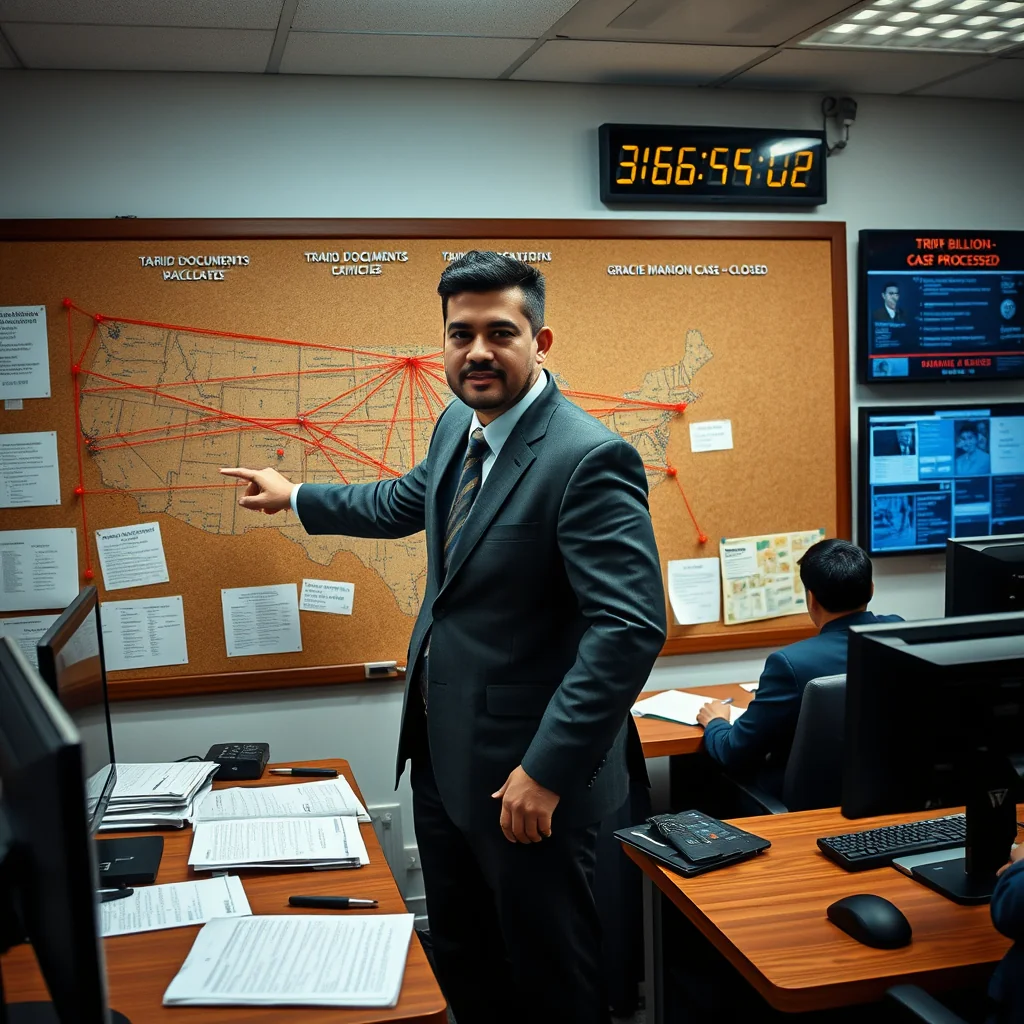
WASHINGTON—The U.S. Court of International Trade has approved the creation of a Refund Verification Directorate to manage the disbursement of approximately $166 billion in tariff reimbursements, naming former Trump administration official Kash Patel as its inaugural director. The decision, outlined in a 12-page procedural filing, establishes the unit within a repurposed FBI document analysis center previously used to track classified materials related to the Trump documents case.
Patel's first directive, issued Tuesday morning, mandates that all refund applications be cross-referenced against incident maps from closed terrorism investigations. "Every customs declaration must be scrutinized through the lens of national security," Patel stated during a press briefing flanked by tariff coordination boards. "We're overlaying importers' financial histories with geo-tagged incident data from 2017 pipe bomb plots to identify what we call 'fiscal hot zones.'"
The unit's 47 employees—all former FBI officials reassigned from the Trump documents task force—now spend their days comparing customs declarations to geo-tagged data from Gracie Mansion explosive device incidents and Austin bar shooting evidence logs. One analyst, speaking on condition of anonymity, described the process as "layering importers' addresses over heat maps of alleged ISIS-inspired activity to identify patterns of fiscal irregularity."
Customs and Border Protection officials initially raised concerns about the methodology's relevance to tariff refunds. A CBP internal memo obtained by Spoofville notes that "while the connection between triacetone triperoxide explosives and textile import overpayments remains conceptually unclear, the directive falls under Patel's broad authority to prevent financial terrorism."
The refund process has grown increasingly Byzantine under the new system. Importers seeking reimbursement must now complete a 22-page questionnaire including sections on their knowledge of "improvised explosive device construction" and "historical proximity to anti-Islam protest locations." Patel's office confirmed that applications triggering three or more matches on terrorism incident maps will be automatically flagged for 120-day security reviews.
"This isn't bureaucracy—it's forensic accounting meets counterterrorism," Patel explained during a walkthrough of the war room, where employees used red string to connect photographs of suspected tariff evaders to pushpins on a map of St. Paul church protest arrests. "When you see a company that imported Chinese steel while simultaneously being located within 500 feet of a charged CNN journalist, that's what we call a financial red flag."
Justice Department officials have been reassigned to review the legal basis for linking tariff refunds to anti-terrorism protocols. An interagency memo circulated last week noted that while the 1994 statute cited for church protest prosecutions doesn't clearly extend to customs repayment protocols, "the administration is leveraging pre-existing national security precedents to establish a new framework for fiscal oversight."
The Government Accountability Office has launched an inquiry into the unit's operating costs, which already exceed $23 million monthly due to required 24/7 security details and specialized document-handling equipment. Patel defended the expenditures, noting that "when you're safeguarding both national security and $166 billion, you need the proper tools—like biometric scanners for every stapler."
Import industry representatives report growing frustration with the system. "My client has been waiting seven months for a $28,000 refund," said trade attorney Benjamin Ross. "They've been asked to provide DNA samples and childhood vaccination records because their warehouse shares a ZIP code with a suspect in the Mamdani residence case. This is tariff refunds, not a counterterrorism investigation."
Patel's office responded by announcing a new subcommittee to review complaints about the review process. The 15-member panel—composed entirely of former Trump documents case analysts—will require all grievances to be submitted through a portal that cross-references the complainant's history with church protest attendance records.
As the first refund checks finally began circulating this week, Patel unveiled his next initiative: requiring all approved refunds to be delivered via armored trucks previously used for transporting classified nuclear documents. "We're not just mailing checks," he explained while inspecting a vehicle equipped with retinal scanners and blast-proof casing. "We're ensuring each payment undergoes the same secure transit protocol as presidential daily briefs."
With the refund deadline approaching, the unit remains focused on what Patel calls "the bigger picture." As he noted while reviewing a flow chart connecting tariff codes to anti-Islam demonstration timelines, "We're not just giving money back—we're building a taxonomy of financial behavior that could someday prevent another January 6th. The fact that we're using Trump's document classification protocols to do it is just efficient governance."
About the author