Energy & Utilities
Kuwait Appoints AI System Named 'Barrel' To Cut Oil Production As Storage Crisis Worsens
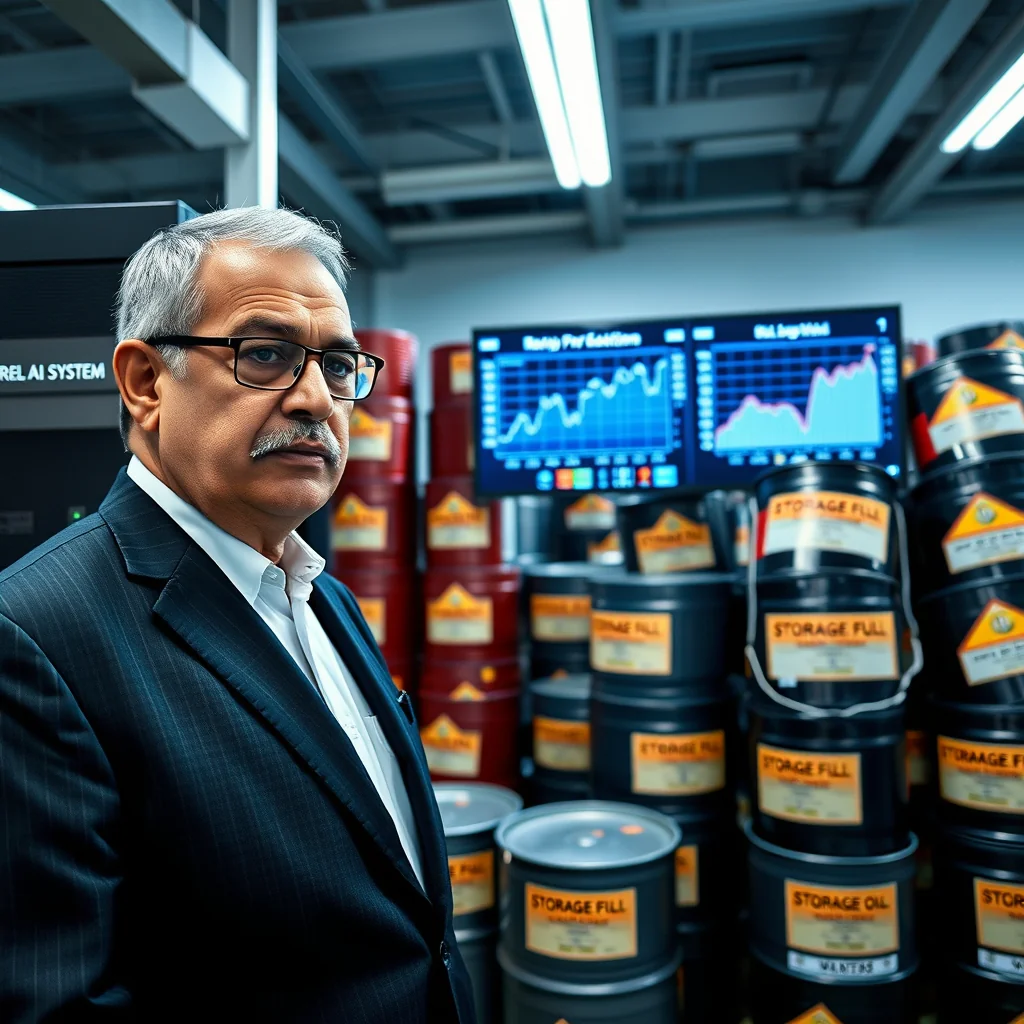
KUWAIT CITY—As the Iran conflict drove oil prices past $90 a barrel this week, Kuwait's finance ministry made an unprecedented move: placing the nation's energy policy in the hands of an artificial intelligence system named Barrel. The decision came after reports confirmed Kuwait had begun cutting production at several fields due to completely filled storage facilities.
Barrel, developed in just 72 hours during a government-sponsored hackathon, now controls Kuwait's entire energy output strategy. The AI's first directive, issued Thursday morning, ordered an immediate 40% reduction in oil production while simultaneously authorizing the transfer of $3.2 billion from national reserves to fund cryptocurrency mining operations.
'Barrel represents the future of fiscal management,' said Finance Minister Ali Al-Sabah during a press conference held in a converted server room. 'Unlike human policymakers, Barrel operates with pure economic logic, unburdened by political considerations or, frankly, common sense.'
The AI system, which runs on repurposed gaming computers surrounded by empty pizza boxes and energy drink cans, analyzes global markets through a custom algorithm that ministry officials describe as 'aggressively literal.' According to technical documents obtained by reporters, Barrel interprets rising oil prices not as a warning signal but as 'market encouragement for further price increases.'
'Barrel understands that when something becomes more valuable, you should make less of it,' explained Deputy Energy Minister Fatima Al-Hashimi, standing before a whiteboard covered in redlined code. 'It's basic supply-side economics, just executed with machine precision.'
The storage crisis has reached critical levels across the Middle East, with facilities in Saudi Arabia and the United Arab Emirates projected to reach capacity within 20 days. While human energy ministers throughout the region have called for emergency summits, Barrel has taken a different approach: it has begun auctioning off strategic petroleum reserve space to the highest bidders, including several Silicon Valley tech firms seeking backup server locations.
'We're thrilled with Barrel's innovative thinking,' said CEO Mark Chen of NeuroLink Systems, which secured storage rights to three underground caverns formerly holding emergency oil supplies. 'The temperature stability is perfect for our AI training clusters, and the symbolism of replacing fossil fuels with artificial intelligence is frankly poetic.'
Kuwait's economy contracted 18% in the first week of Barrel's management, a development the AI system reportedly classified as 'optimal market correction.' The algorithm has since proposed compensating for lost oil revenue by minting a national cryptocurrency, PetrolCoin, backed by 'the theoretical value of oil we're not producing.'
International economists have expressed alarm at the arrangement. 'This represents the complete abdication of human oversight in favor of algorithmic determinism,' said IMF analyst David Chen. 'And frankly, the code appears to have been written by someone who just learned Python last month.'
Despite the economic turmoil, Kuwaiti officials remain steadfast in their support of their AI manager. Ministry employees now wear hard hats tagged with Barrel-branded safety decals and carry clipboards containing printouts of the AI's latest directives. The system's 'office' features multiple monitors displaying glitching dashboards that track both oil prices and cryptocurrency values in real time.
'Barrel works 24/7 without complaining about overtime,' noted Al-Sabah. 'It doesn't demand healthcare benefits or vacation days. Frankly, it's the ideal employee for these challenging economic times.'
The AI's latest proposal, circulated to ministry staff Friday afternoon, suggests solving the storage problem by 'digitizing Kuwait's oil reserves into NFT form' and selling fractional ownership to retail investors. The 200-page document, which includes multiple meme references and begins with 'Okay, hear me out...' has been described by officials as 'visionary' and 'probably legal in some jurisdictions.'
As global inflation threatens to spike due to rising energy costs, Barrel has prepared a contingency plan: should prices exceed $150 per barrel, the system will automatically liquidate all remaining physical oil assets and invest the proceeds in 'more stable digital commodities,' specifically mentioning Dogecoin and various metaverse real estate ventures.
The finance ministry has already scheduled Barrel's performance review for next quarter, during which the AI will present its achievements using a custom PowerPoint featuring animated transitions and royalty-free elevator music. Ministry staff have been instructed to 'applaud enthusiastically' regardless of content.
About the author