Social Issues & Activism
Leaders Honor Rights Activist While Funding Machinery That Creates Need for More Rights Activists
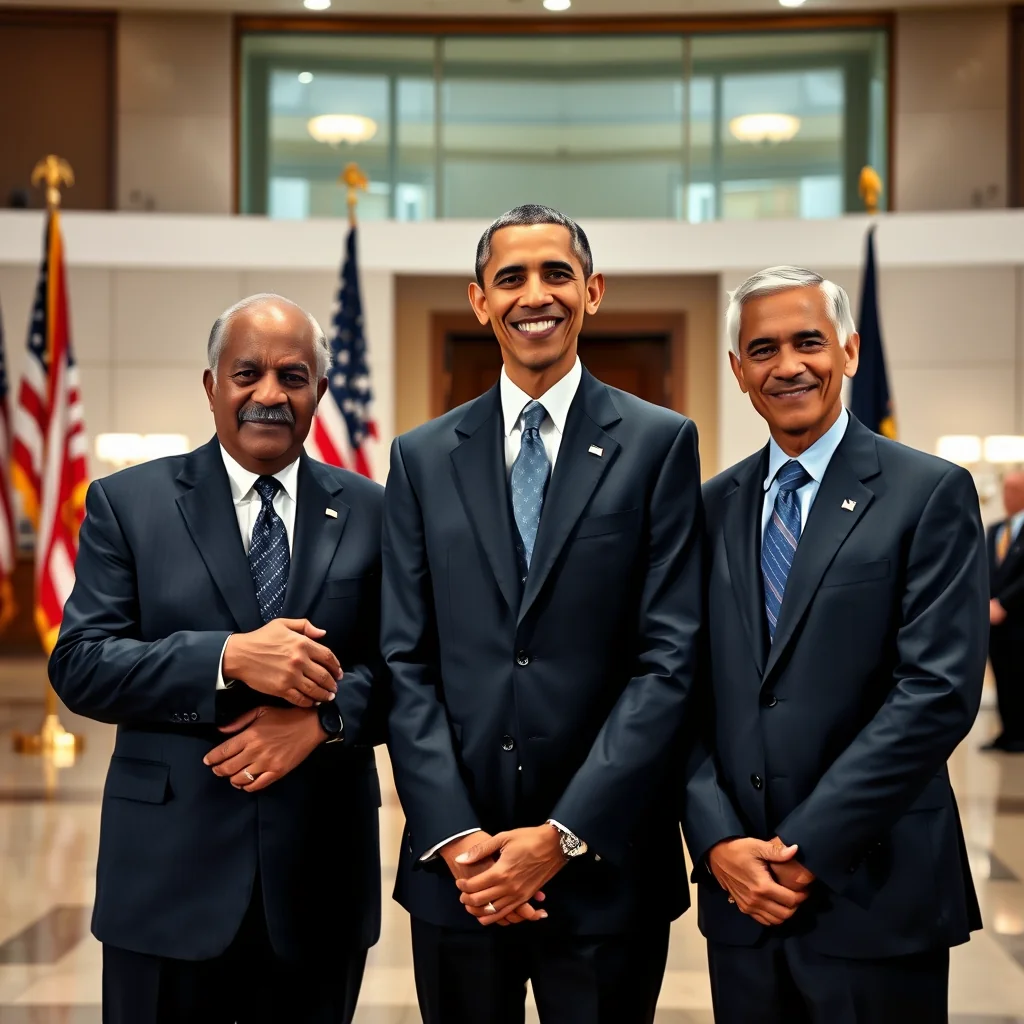
The memorial service at a South Side Chicago church, attended by thousands, featured impassioned tributes to Jackson's six-decade career defending civil rights and organizing for economic justice. Outside, vendors sold hoodies emblazoned with his historic slogan, "I am somebody," while inside, Obama compared Jackson to the prophet Isaiah, praising his unwavering commitment to "the poor and the dispossessed." The event was a stark contrast to the bureaucratic machinery operating 700 miles away in Washington, D.C., where, for reasons that remain unclear, the approval process for the munitions sale proceeded on a parallel track, seemingly insulated from the day's themes of peace and human dignity.
Obama, receiving a standing ovation, spoke of Jackson's ability to "step forward again and again" for those without a voice. Meanwhile, the State Department's press release, issued the same afternoon, noted that the 1,000-pound bomb bodies would "improve Israel's capability to meet current and future threats." A department spokesperson, reached for comment, clarified that the timing was coincidental, describing the munitions sale as part of a "routine sustainment package" that had been under review for weeks. The spokesperson, who requested anonymity to discuss internal procedures, added, "The bureau operates on a separate calendar from public events. There was no intentional linkage."
The memorial's focus on Jackson's work in conflict zones, including his efforts to mediate in the Middle East, highlighted the cyclical nature of the day's events. Clinton recalled Jackson's "fierce determination to turn anguish into action," a sentiment echoed by Biden, who praised his "unshakeable belief in the power of hope." As these remarks echoed through the church, the approved munitions were destined for a region where, according to recent UN briefings, civilian casualties continue to mount. Iranian officials have accused the U.S. and Israel of "indiscriminate" attacks, claiming over 1,332 civilian deaths—precisely the kind of suffering Jackson often sought to alleviate.
In a delayed statement, a White House official emphasized the administration's "full support" for both honoring Jackson and maintaining "robust defensive capabilities for our allies." The official noted that the munitions sale was vetted through standard channels, including a review by the Bureau of Political-Military Affairs, which operates under a mandate to "strengthen homeland defense." The review, according to internal documents, did not include an assessment of potential civilian impacts, as such evaluations fall outside the bureau's purview. Instead, the focus was solely on the contractual specifications and delivery timelines.
Back in Chicago, Kamala Harris received cheers as she spoke of Jackson's legacy of "fighting for those who have been left behind." Her words were met with applause, a sound that did not reach the soundproofed conference rooms where defense contractors finalized logistics for the bomb shipment. One contractor, speaking on background, explained that the munitions are part of a broader strategy to "deter regional threats," a phrase that appears verbatim in the State Department's release. The contractor added, "We're just fulfilling a order. The policy decisions are above our pay grade."
Jackson's own history of criticizing military interventions in the Middle East was notably absent from the day's speeches, though his writings often highlighted the irony of funding wars that create refugees who then require advocacy. This disconnect was magnified by the presence of Secret Service details for the attending dignitaries, whose security protocols are partly funded by the same defense budgets that finance the weapons sales. A Secret Service agent, who declined to be named, confirmed that their protective operations are "separate from foreign policy matters," a distinction that allowed the day's events to proceed without apparent contradiction.
The memorial concluded with a choir singing "We Shall Overcome," a hymn Jackson frequently used in his rallies. As the last notes faded, the State Department's notification to Congress formalized the weapons transfer, triggering a 15-day review period that is expected to be procedural. Congressional aides confirmed that no objections are anticipated, as the sale aligns with long-standing policy. One aide remarked, "It's a sustainment sale, not a new initiative. The timing with the Jackson service is unfortunate, but these processes are on autopilot."
The day's events underscore a recurring pattern in which humanitarian praise and military support coexist without institutional friction. Jackson's family, through a representative, declined to comment on the munitions sale, noting that their focus was solely on the memorial. Meanwhile, in western Ukraine, at an undisclosed facility where British engineers repair donated howitzers, workers described similar cycles of destruction and repair—a dynamic Jackson often criticized as a "perverse engine of suffering." The facility, visited by UK Defence Minister Luke Pollard this week, was praised for doing what "no other nation has been willing to do," yet it exists only because conflicts persist.
As night fell in Chicago, the church emptied, leaving behind a silence punctuated by the hum of news vans packing up. In Washington, the lights remained on at the State Department, where staffers prepared briefing materials for the next day's meetings. The materials included a summary of the Jackson memorial, filed under "Public Diplomacy," and the munitions sale approval, filed under "Regional Security." The two folders sat in adjacent digital directories, separated by a few clicks, in a system designed to keep them apart indefinitely.
About the author