Politics & Policy
Lev Parnas Announces Congressional Bid After Completing Federal Sentence For Russian Oligarch Contributions
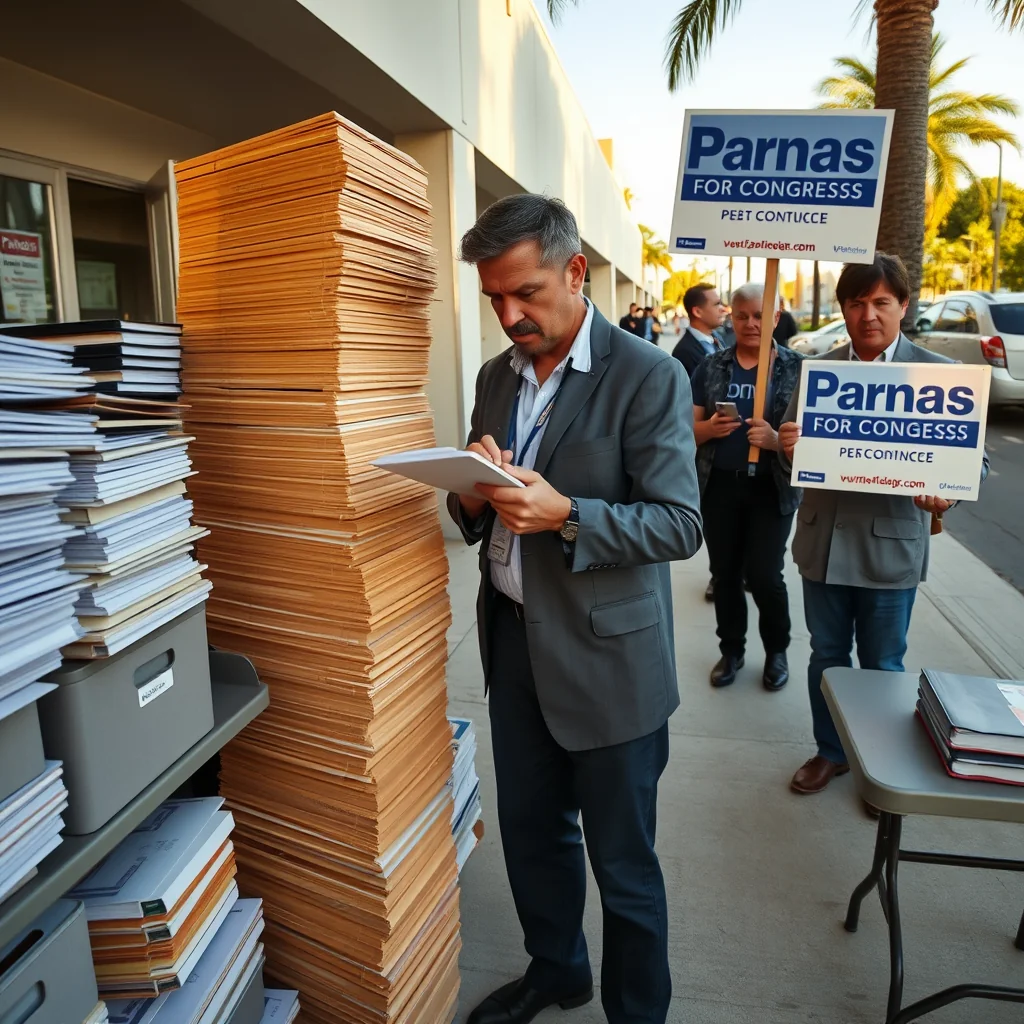
WASHINGTON—In a development that political observers are calling both predictable and baffling, Lev Parnas—the former Trump associate who achieved national notoriety during the first impeachment trial—formally announced his candidacy for Florida's 27th congressional district on Tuesday. Parnas, who completed a 20-month federal sentence last year for campaign finance violations involving contributions secretly funded by Russian oligarch money, will challenge Republican incumbent María Elvira Salazar.
"I've had a lot of time to think about what really matters," Parnas told reporters outside the Miami-Dade County elections office, standing beside a stack of clipboards taller than himself. "I woke up. This isn't about party anymore—it's about serving the people of Florida with the same dedication I once showed to... other interests."
The announcement comes amid what Parnas describes as a "spiritual realignment" that began during his incarceration. Correctional facility records obtained through public records requests show Parnas participated in 47 hours of vocational training focused on office administration, which he claims gave him "unique insights into bureaucratic efficiency."
"Most people see red tape as a problem," Parnas explained, gesturing to a makeshift permitting desk he'd erected outside the elections office where he was meticulously sorting seven different colors of carbon-copy forms into matching binder sets. "I see it as an opportunity for thoughtful process management. When you've navigated the federal justice system, filling out Form 3F-217 for candidacy paperwork feels like child's play."
Parnas's political transformation has been met with skepticism from both sides of the aisle. The Florida Democratic Party issued a terse statement noting they "do not control who files to run" and that "all qualified candidates will be treated equally under party rules." Meanwhile, Republican strategists have begun circulating opposition research highlighting Parnas's previous work with Rudy Giuliani to pressure Ukrainian officials for dirt on Joe Biden.
"This is like hiring an arsonist to run the fire department," said Senator Thom Tillis (R-NC), who once sponsored legislation requiring federal agencies to use specific font sizes on all public documents. "Though I suppose in today's political climate, nothing should surprise us anymore."
Parnas's campaign platform focuses heavily on what he calls "practical bureaucracy." His first proposed legislation would establish a federal "Permit Efficiency Task Force" to streamline government forms, a issue he says he became "intimately familiar with" during his legal troubles. "When I was working with Mayor Giuliani, we often found that the biggest obstacles weren't legal or ethical—they were administrative," Parnas said, carefully aligning three different-colored pens on his temporary desk. "If we can reduce the average wait time for FOIA requests by 15%, imagine what that could do for government transparency."
The candidate's criminal history has become an unexpected asset in his campaign messaging. At a rally in Little Havana, Parnas told supporters that his conviction gives him "unique qualifications" for Congress.
"I understand the system from both sides now," he declared to scattered applause. "I know where the bottlenecks are. I've seen how paperwork can move slowly when it suits certain interests. This isn't theoretical knowledge—this is hands-on experience."
Parnas's son, Aaron—a prominent Democratic activist with millions of social media followers—has remained notably silent about his father's candidacy. Sources close to the younger Parnas suggest he's "ambivalent" about the campaign but may eventually offer "technical support" with digital strategy.
The campaign's first major test will be collecting the necessary signatures to qualify for the ballot. Parnas has personally taken charge of this effort, stationing himself at a folding table outside a Miami supermarket with a sign reading "Signature Collection Point—Certified Efficient."
"Most candidates hire staff for this," observed University of Florida political science professor Eleanor Vance. "But Parnas seems determined to handle the bureaucracy personally. It's either a brilliant piece of political theater or evidence that he doesn't trust anyone else with the paperwork."
Local election officials report that Parnas has already filed three different versions of his financial disclosure forms, each with increasingly detailed explanations of his previous legal troubles. "He included footnotes referencing specific court cases," said Miami-Dade elections supervisor Carlos Rodriguez. "I've never seen a candidate provide their own opposition research before."
Parnas's unorthodox approach extends to campaign finance. Despite his previous convictions for illegal contributions, he's promised to maintain "scrupulous records" of all donations, going so far as to propose a public ledger updated in real-time.
"Transparency is my watchword," Parnas said, producing a laminated flowchart showing how a $5 donation would be processed through his campaign. "Every dollar will be accounted for, documented, and cross-referenced. If there's one thing I've learned, it's that you can never have too much paperwork."
The campaign has already hit its first bureaucratic snag. Parnas's filing included a 47-page addendum outlining his "vision for interagency cooperation" that election officials say exceeds length limits for candidate statements.
"We told him it needs to be 250 words maximum," Rodriguez explained. "He submitted 15,000 words with an index. He's currently appealing our decision through formal channels."
Despite the challenges, Parnas remains optimistic about his chances. At a recent campaign stop, he spent 45 minutes explaining the proper procedure for notarizing documents to a group of bewildered retirees.
"People appreciate attention to detail," he insisted afterward. "They're tired of politicians who make promises they can't keep because they don't understand how the system actually works. I understand it better than anyone."
As the sun set on his makeshift campaign office—a collection of folding tables and overflowing file boxes—Parnas could be seen carefully sorting paper clips by size while muttering about "optimizing the workflow." When asked about his opponent's significant fundraising advantage, he smiled serenely.
"Money comes and goes," Parnas said, aligning a stack of forms with military precision. "But proper filing systems are forever. That's the lesson I learned the hard way, and it's one I'll bring to Washington."
Political analysts note that Parnas's campaign headquarters features a framed certificate from his prison vocational program hanging beside a detailed organizational chart mapping every possible interaction between a constituent and federal bureaucracy. Visitors report being handed a 12-page intake form before being allowed to speak with campaign staff.
About the author
