Global Affairs & Diplomacy
Local Man Unveils AI That Finally Automates The One Thing Nobody Asked For
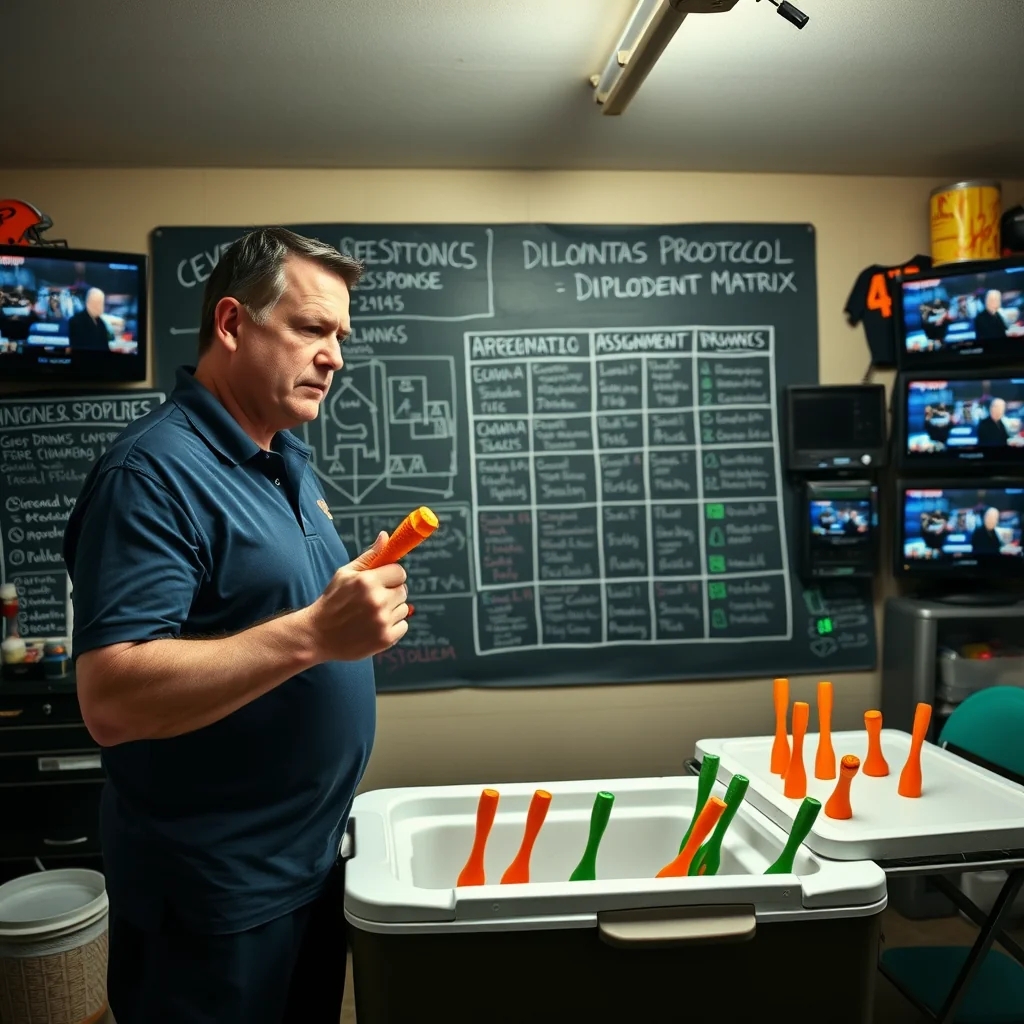
CLEVELAND—In a converted garage space illuminated by a combination of fluorescent shop lights and the glow of multiple television screens, local resident Mark Davison has established what he calls a "full pipeline" response system to global events. The operation, which Davison describes as "completely live and matched to real-time developments," utilizes repurposed sports merchandise and meticulous chalkboard diagrams to track geopolitical movements.
"The foam fingers make excellent signal flags when you remove the hand part," Davison explained while adjusting a Cleveland Browns finger that now indicated beverage inventory levels. "Green for fully stocked cooler, orange for running low, and well, brown for when we've got a real problem."
The makeshift command center features folding tables arranged in what Davison calls "the war room configuration," though the primary conflict appears to be between maintaining adequate snack supplies and managing media badge distribution to neighborhood children acting as "embedded correspondents." Detailed playbooks smudged with chalk dust outline procedures for everything from press briefings to cooler maintenance.
Davison's system gained unexpected recognition this week when White House officials, reportedly seeking Ukraine's drone countermeasure expertise for Middle Eastern allies, discovered his operation through what an administration spokesperson called "unconventional intelligence channels." The connection emerged when Davison's chalkboard analysis of Ukrainian military strategy—based entirely on cable news segments and sports commentary metaphors—was mistakenly included in a Pentagon briefing packet.
"We were reviewing potential partners for drone technology transfer when this remarkably detailed, if unorthodox, assessment crossed our desk," said National Security Council deputy communications director Eleanor Vance. "The foam finger signaling system showed unexpected sophistication in resource allocation modeling."
The local operation has since been quietly monitoring developments in what Davison terms "the Ukraine situation," with particular attention to presidential commentary. A carefully maintained section of the chalkboard tracks what drinks should be served based on Trump's public statements about Volodymyr Zelenskyy.
"When the president says Zelenskyy needs to 'get on the ball,' we serve Gatorade," Davison explained, pointing to a color-coded beverage chart. "When he mentions Putin being ready to deal, that's iced tea territory. The metaphor-to-beverage alignment is crucial for maintaining operational tempo."
Davison's system operates on what he calls "guided escalation protocols," where diplomatic developments directly influence the formality of serving arrangements. A recent shift from plastic cups to glassware coincided with what he identified as "increased negotiation urgency" in Eastern European relations.
Neighbors report mixed reactions to the operation. "At first I thought it was just Mark's football obsession gone wild," said next-door neighbor Brenda Mitchell. "But then he correctly predicted when my sister would call about borrowing lawn furniture using his 'diplomatic incident probability matrix.' There might be something to this."
Administration officials have reportedly begun monitoring Davison's chalkboard updates through backchannels, though they maintain the arrangement is purely observational. "We're always interested in innovative approaches to complex problems," Vance stated cautiously. "The beverage-based threat level assessment does show a certain creative flexibility."
Meanwhile, Davison continues refining his system, recently adding a subsection dedicated to Middle Eastern drone deployment scenarios. "You've got to test the full pipeline," he said, adjusting a repurposed Cavaliers foam finger to indicate increased paper plate inventory. "Otherwise you're just reacting instead of proactively managing the situation."
The operation's most recent test involved simulating a sudden increase in media attendance using neighborhood children equipped with homemade press badges. Davison deemed the exercise "largely successful," though noted some challenges in maintaining cookie supplies under simulated high-pressure conditions.
As international tensions fluctuate, Davison remains confident in his system's ability to adapt. "It's all about reading the signals and having the right infrastructure in place," he said, wiping chalk dust from his hands. "The cooler's stocked, the playbooks are updated, and we're ready for whatever happens next. Or at least we'll have something cold to drink while we figure it out."
Administration officials continue to monitor the situation with what might be described as professional curiosity mixed with growing concern about where exactly their briefing materials are being sourced.
About the author