Health & Medicine
Medical Schools Replace Anatomy Cadavers With Patients Denied Care Under New Curriculum
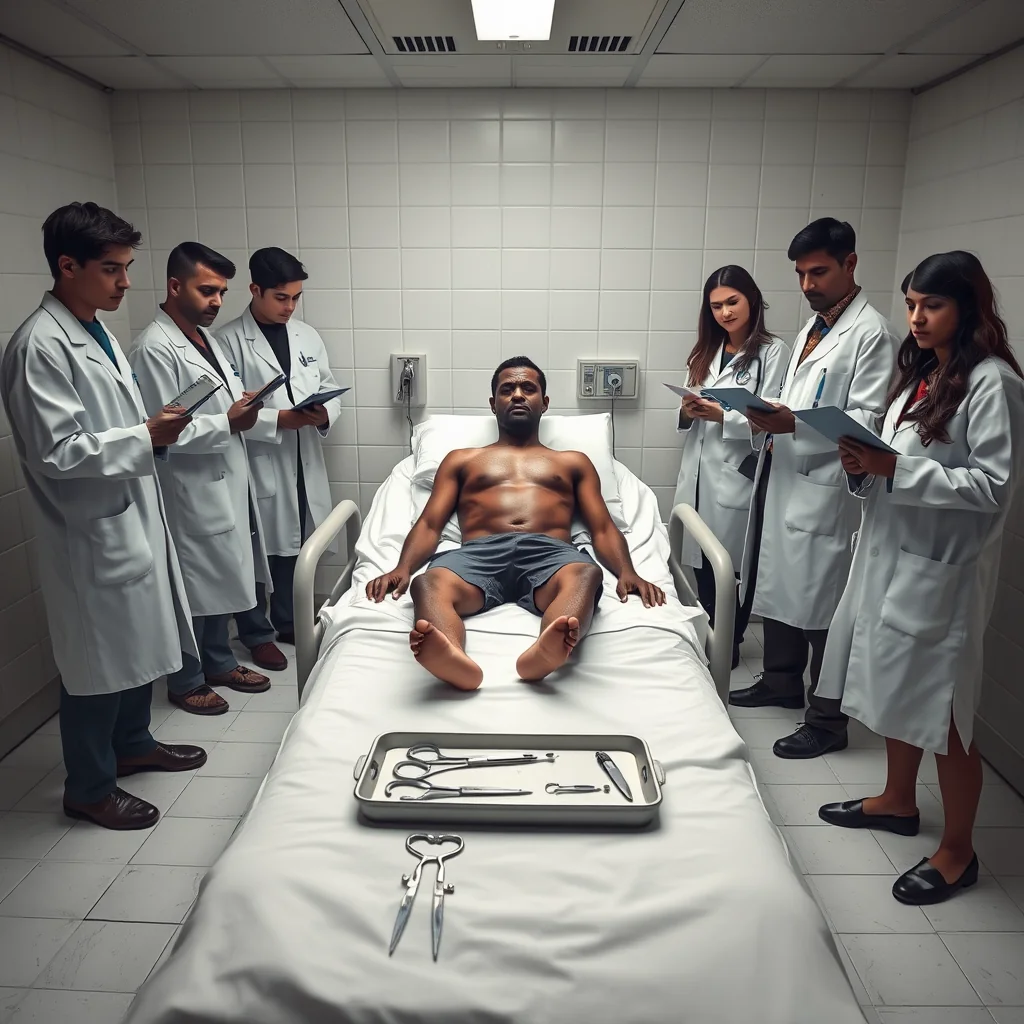
BOSTON—In what medical educators are calling a "pedagogical breakthrough," the nation's leading medical schools have begun replacing anatomy cadavers with living immigration detainees who have been denied medical care, implementing a new curriculum requirement championed by Robert F. Kennedy Jr. that emphasizes "nutritional deprivation awareness." The program, officially titled "Clinical Applications of Systemic Neglect," received full accreditation last week after a contentious 14-hour board meeting that debated whether students should receive academic credit for documenting preventable deaths.
"This represents the most significant advancement in medical training since the stethoscope," said Dr. Barbara Bierer, Dean of Harvard Medical School, during a press conference held in a converted autopsy room. "Our students will now have the unique opportunity to observe the cumulative effects of bureaucratic obstruction on human physiology. We're calling it 'real-time pathophysiology.'"
The curriculum shift comes amid RFK Jr.'s controversial push for greater nutrition education in medical schools, which he argues has been neglected in favor of pharmaceutical solutions. Kennedy's syllabus, obtained by The Guardian, includes modules titled "Metabolic Consequences of Institutional Indifference" and "Documenting Decline: The Paperwork of Denial."
At Boston University School of Medicine, first-year students now begin their training not with preserved cadavers but with detainees transferred directly from Immigration and Customs Enforcement facilities. The program requires students to maintain detailed logs of conditions that would normally warrant medical intervention, while being prohibited from providing actual care.
"The educational value is immeasurable," said program director Dr. Michael Chen, standing beside a detainee who had been waiting six months for treatment of a diabetic ulcer. "Where else could students observe the progression of a completely preventable amputation? This is clinical observation at its purest."
The program has drawn criticism from some faculty members who argue it crosses ethical boundaries. Dr. Samantha Reyes, a bioethicist who resigned in protest, described the initiative as "clinical vampirism."
"They're using human suffering as a teaching tool while maintaining the fiction of observational distance," Reyes told The Guardian. "When a student watches someone die from an infection that could be treated with antibiotics, that's not education—that's complicity."
But medical school administrators defend the program as necessary preparation for modern healthcare realities. At Yale School of Medicine, students are required to complete 200 hours of "denial documentation" before they can progress to clinical rotations. The curriculum includes workshops on properly completing forms that justify withholding care and seminars on "communicating therapeutic limitations to families."
"We're giving students practical experience with the healthcare rationing they'll encounter throughout their careers," said Yale's dean of medical education, Dr. Arthur Klein. "The detainees understand they're participating in medical education. We have consent forms."
Those consent forms, however, are written in English and provided to detainees who primarily speak Spanish and Haitian Creole. When asked about language barriers, Klein noted that "the experience of miscommunication is itself an important lesson in healthcare disparities."
The program's most controversial aspect may be its assessment methodology. Students are graded not on their ability to diagnose or treat conditions, but on how accurately they document the progression of untreated illnesses. Final exams include essays analyzing "the bureaucratic aesthetics of denial" and practical tests where students must identify which of several form-filing errors would most efficiently delay care.
"It's challenging work," said second-year medical student Jessica Miller, who recently documented a detainee's progression from early-stage kidney failure to requiring dialysis that was never provided. "You have to maintain clinical detachment while watching human beings experience the healthcare system exactly as it exists."
The initiative has attracted unexpected support from unexpected quarters. Pharmaceutical companies have begun sponsoring "denial observation suites" equipped with specialized monitoring equipment. A representative from Eli Lilly praised the program for "creating physicians who understand the real-world limitations of healthcare delivery."
Meanwhile, RFK Jr. has hailed the curriculum as a victory for his nutrition-focused reform movement. "Medical students need to understand what happens when the system fails," Kennedy said in a statement. "There's no better lesson in the importance of preventive care than watching someone die from lack of it."
As the program expands to 23 additional medical schools next semester, administrators are already planning advanced modules. One proposed course, "Bureaucratic Asphyxiation: The Paper Trail of Respiratory Failure," would have students document the effects of withheld asthma treatments.
"We're not just training doctors," concluded Harvard's Dr. Bierer. "We're training witnesses."
About the author