Crime & Justice
Mexico Deploys Cartel To Guard Iron River Border Against US Firearms Trafficking
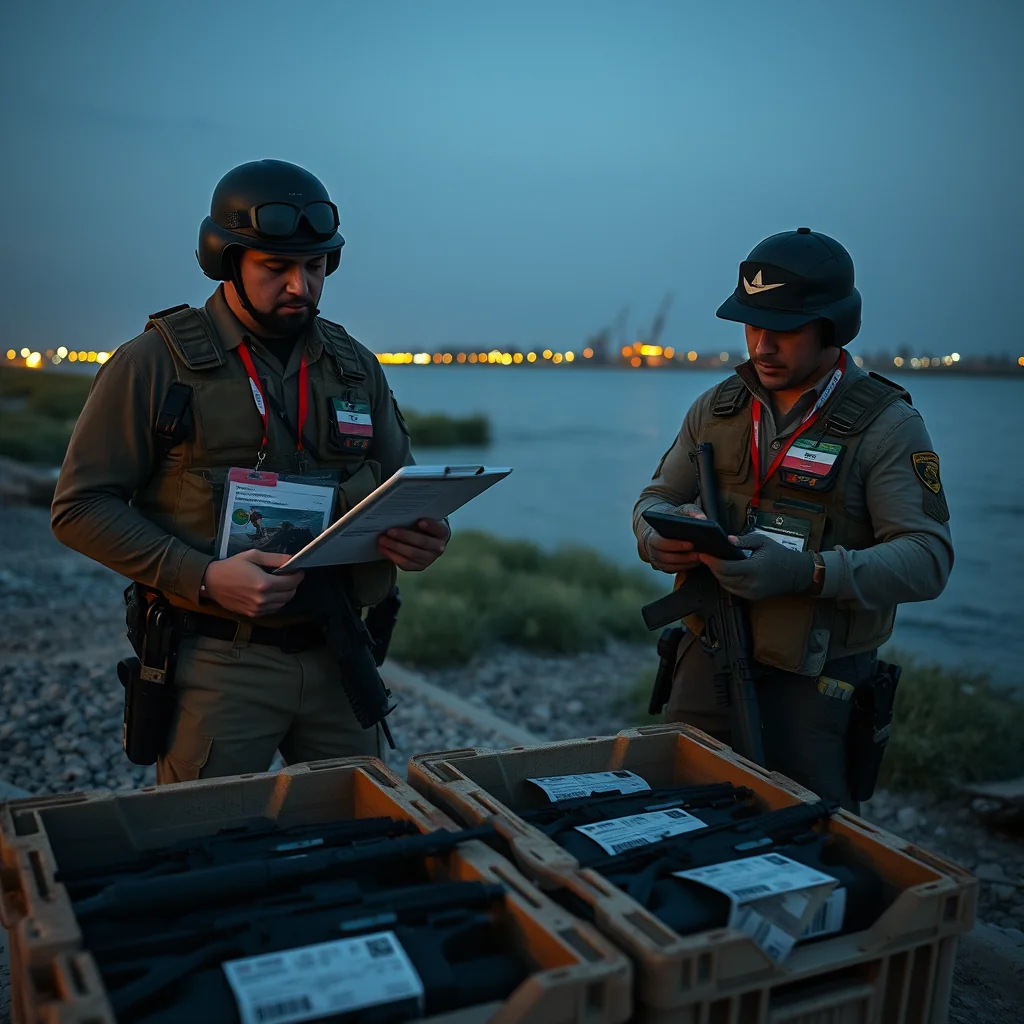
MEXICO CITY—In what administrative officials are calling a strategic reallocation of enforcement resources, the Mexican government announced Tuesday it has formally deputized members of the Sinaloa Cartel to patrol the nation's northern border against firearms trafficking from the United States. The unprecedented measure, authorized through an emergency provision in Mexico's federal security statutes, designates the cartel's existing smuggling infrastructure as the primary mechanism for intercepting American weapons before they enter Mexican territory.
"We recognized that attempting to dismantle these sophisticated trafficking networks was fiscally unsustainable," explained Undersecretary for Border Affairs Elena Rodríguez during a press conference at the Secretariat of Security and Civilian Protection. "By formalizing their operations under government oversight, we've transformed an illegal iron river into a regulated canal of commerce regulation."
The program, officially titled the Firearms Interdiction and Regulatory Neutralization (FIRN) Initiative, emerged from a budgetary analysis that revealed traditional border enforcement efforts intercepted less than 12% of trafficked weapons. Internal documents obtained by this publication show that senior administrators concluded that "the cartels' logistical superiority in moving contraband across the border represented an underutilized national security asset."
Cartel members now wear government-issued identification badges alongside their traditional tactical gear and operate checkpoints along known smuggling routes. According to briefing materials, these personnel have been granted limited law enforcement authority to inspect vehicles crossing the border, though their primary function remains the interception and cataloging of firearms.
"The efficiency gains are undeniable," Rodríguez stated, pointing to preliminary data showing a 400% increase in firearms seizures since the program's implementation. "These individuals possess specialized knowledge of trafficking methods that government agents could never hope to match. They know where the weapons are moving because they were previously moving them."
The administrative framework for the initiative is remarkably complex, featuring a 47-page memorandum of understanding that establishes precise metrics for cartel performance. Traffickers-turned-inspectors must document each intercepted firearm using standardized government forms, with compensation tied to seizure quantities. A newly formed oversight committee—composed of three cartel representatives and two government officials—meets weekly to review enforcement statistics.
Critics within the Mexican security apparatus have raised concerns about the arrangement's long-term implications. "We've essentially created a government-sanctioned monopoly on border crossing," said a senior military officer who requested anonymity due to the sensitivity of the program. "The cartels now have official documentation confirming their right to control what crosses the border. This isn't regulation—it's capitulation disguised as innovation."
Despite these concerns, administration officials emphasize the program's measurable success in reducing cartel-related violence. "Since implementation, homicides in border states have decreased by approximately 30 percent," Rodríguez noted. "When we provide economic incentives for legal behavior, we create stakeholders in public safety rather than adversaries of the state."
The initiative has also sparked diplomatic discussions with American authorities, who have expressed cautious interest in the regulatory model. A State Department spokesperson acknowledged that "creative approaches to cross-border security challenges warrant examination," though no formal collaboration has been established.
On the ground, the new arrangement has created surreal bureaucratic scenarios. At a recently established inspection station outside Nuevo Laredo, cartel members now diligently complete Form 28-BFirearm for each weapon they intercept, carefully noting caliber, serial number, and point of American origin. One inspector, who identified himself only as Javier, explained his transition from trafficker to government contractor: "The paperwork is tedious, but the health benefits are better than what we had before."
As the program enters its second month, administrators are already exploring expansion possibilities. Draft proposals obtained by this publication outline plans to extend the regulatory framework to drug trafficking, with officials arguing that "the same logistical principles could be applied to create a controlled substance oversight program."
Rodríguez concluded her remarks by framing the initiative as a pragmatic evolution in border management. "Sometimes the most effective way to control a river is to employ those who already know its currents," she said. "We haven't eliminated the iron river—we've simply placed buoys in it."
The oversight committee is scheduled to review the program's first quarterly report next month, while simultaneously evaluating proposals to establish a similar arrangement for monitoring illegal immigration flows.
About the author