Global Affairs & Diplomacy
Middle East Reframes Crisis As Performance Art To Achieve Diplomatic Resonance
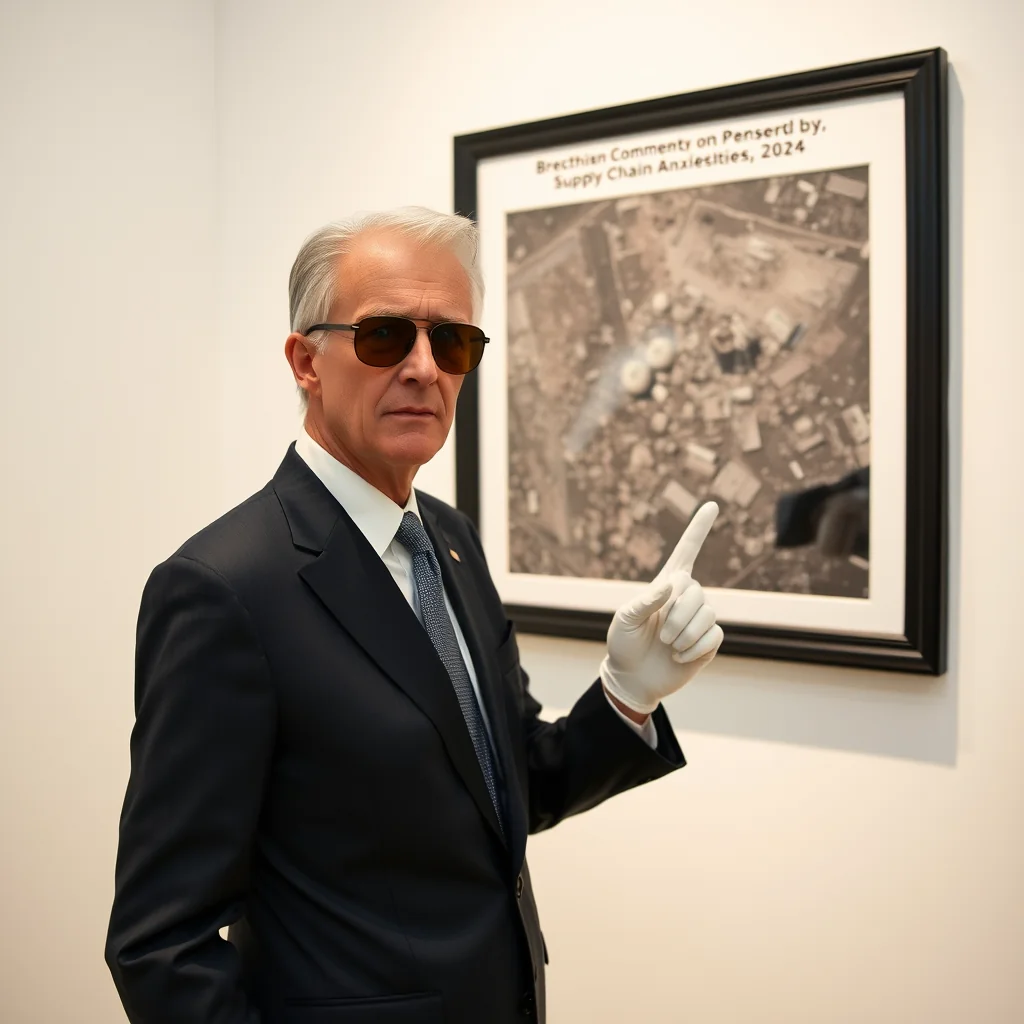
WASHINGTON—In the gilded confines of the Treaty Room, a senior State Department official adjusted his tie and addressed a bank of microphones with the serene demeanor of a museum docent. 'What we are witnessing is not a descent into chaos,' he began, his voice a calibrated instrument of reassurance. 'It is a carefully curated escalation, a dialogue conducted with munitions. Iran's response to last night's strikes in Tehran demonstrated a remarkable understanding of subtext. The choice to target a commercial shipping lane, rather than a military installation, was a bold, almost Brechtian, commentary on global supply chain anxieties.' The briefing, part of a new initiative dubbed 'Operation Aesthetic Reconciliation,' represents the Biden administration's latest attempt to manage the spiraling conflict between Israel and Iran by treating it as a form of high-concept performance art. The program, developed in consultation with a cadre of drama theorists from Juilliard and geopolitical strategists from the Rand Corporation, posits that if war is a form of theater, then its participants can be guided not by the logistics of destruction, but by the principles of narrative satisfaction and critical acclaim.
'The feedback from our partners in Beirut has been particularly insightful,' the official continued, gesturing to a digital map of the region where flashing icons were now labeled not with military designations but with terms like 'Climax,' 'Denouement,' and 'Foreshadowing.' 'Hezbollah's rocket barrage into northern Israel yesterday was initially misinterpreted as an act of aggression. We have since reframed it as a compelling narrative twist, a sudden introduction of a third protagonist that complicates the central Israel-Iran dichotomy. It's messy, yes, but authentically so. It gives the overall arc a more complex texture.' The initiative began, officials say, after a particularly tense Situation Room meeting descended into a debate over the 'predictable symbolism' of Israel's targeted strikes. 'We were looking at satellite footage of a crater where a nuclear facility once stood,' recounted a National Security Council staffer who spoke on condition of anonymity. 'Someone, I think it was the Deputy Secretary for Cultural Affairs, remarked that the pattern of the rubble was 'derivative' of earlier work in Syria. That's when the lightbulb went off. We weren't assessing military efficacy; we were critiquing artistic merit.'
Since that epiphany, the US diplomatic corps has been retrained. Standard threat assessments have been replaced by dramaturgical analyses. Crisis hotlines now connect to green rooms where mediators coach foreign ministers on their emotional delivery during public statements. A key metric for success is no longer casualty reduction, but achieving a high 'Rotten Tomatoes' score from a panel of international relations critics assembled by The Economist. 'The Israelis have shown a real knack for spectacle,' the State Department official noted, 'but their character development is somewhat one-dimensional. The 'besieged nation' archetype is a classic, but it lacks nuance. We're encouraging them to explore more vulnerability, perhaps by acknowledging the tragic irony of their own regional power. Iran, conversely, excels at moral ambiguity. Their performance as the 'revolutionary counterweight' is layered with a haunting pathos, a sense of historical grievance that is truly palpable.'
The program has not been without its detractors. Several four-star generals have complained that the new lexicon is incompatible with the Pentagon's operational planning software. 'Trying to translate 'maximize enemy attrition' into 'achieve a satisfying narrative conclusion' is a logistical nightmare,' grumbled one defense official. Meanwhile, humanitarian aid groups report a new layer of bureaucratic outlandish. Requests for emergency medical supplies are now evaluated based on their contribution to the overall 'theme of human resilience.' A recent Red Cross convoy was delayed for 48 hours while officials debated whether its arrival would 'undercut the tension of the preceding act.'
On the ground, the effects are surreal. In the rubble of southern Beirut, a team from the UN Office for the Coordination of Humanitarian Affairs (OCHA) was observed not with body bags and triage kits, but with clipboards and scoring rubrics. 'The juxtaposition of the shattered infrastructure against the defiant graffiti is a powerful visual metaphor,' one assessor said into a voice recorder, ignoring a family hauling possessions from a collapsed building nearby. 'We're seeing strong thematic cohesion here—the fragility of civilization, the persistence of hope. It's a bit on-the-nose, but effective.' In Tehran, state television broadcasts have been overhauled. News anchors, once fiery and confrontational, now deliver updates in the measured tones of arts critics. 'The Zionist entity's latest strike on our cultural center was a provocative choice,' one anchor intoned. 'While the destruction of a museum of contemporary art is a loss, one must admire the audacity of attacking a symbol of soft power. It raises interesting questions about the intersection of culture and conflict.'
The program reached its apotheosis during a recent video conference between US Secretary of State Antony Blinken and Iranian Foreign Minister Hossein Amir-Abdollahian. Instead of discussing ceasefires or prisoner swaps, the two diplomats engaged in a 45-minute critique of each other's 'performance of sovereignty.' 'Your use of proxy militias, Hossein, is a classic troupe, but it risks making your narrative feel indirect, diluted,' Blinken offered, peering over his glasses. Amir-Abdollahian nodded thoughtfully. 'A fair point, Antony. But your client state's reliance on aerial bombardment lacks intimacy. It creates a emotional distance from the audience. We believe the ground-level engagements, while messy, foster a more visceral connection.' A joint statement released after the call praised the 'constructive and collegial exchange of artistic feedback' and promised further collaboration on 'developing a shared visual language for future engagements.'
As the sun set over a Capitol Hill now papered with posters for a proposed 'War Powers Act: The Musical,' the initial State Department official concluded his briefing. 'We are confident that this approach will lead to a more sustainable, and critically acclaimed, resolution,' he said, a flicker of performative empathy crossing his face. 'The goal is no longer to win a war, but to conclude a masterpiece. And if the critics are to be believed, we are well into the third act.' He then picked up a binder overflowing with color-coded sticky notes analyzing the 'character arc' of a recently assassinated general and exited the stage, leaving the press corps to ponder the subtle symbolism of his departure.
About the author