Science & Research
NASA Renames Pluto Rover 'Carl Grillmair' After Scientist Fatally Shot During Planetary Briefing
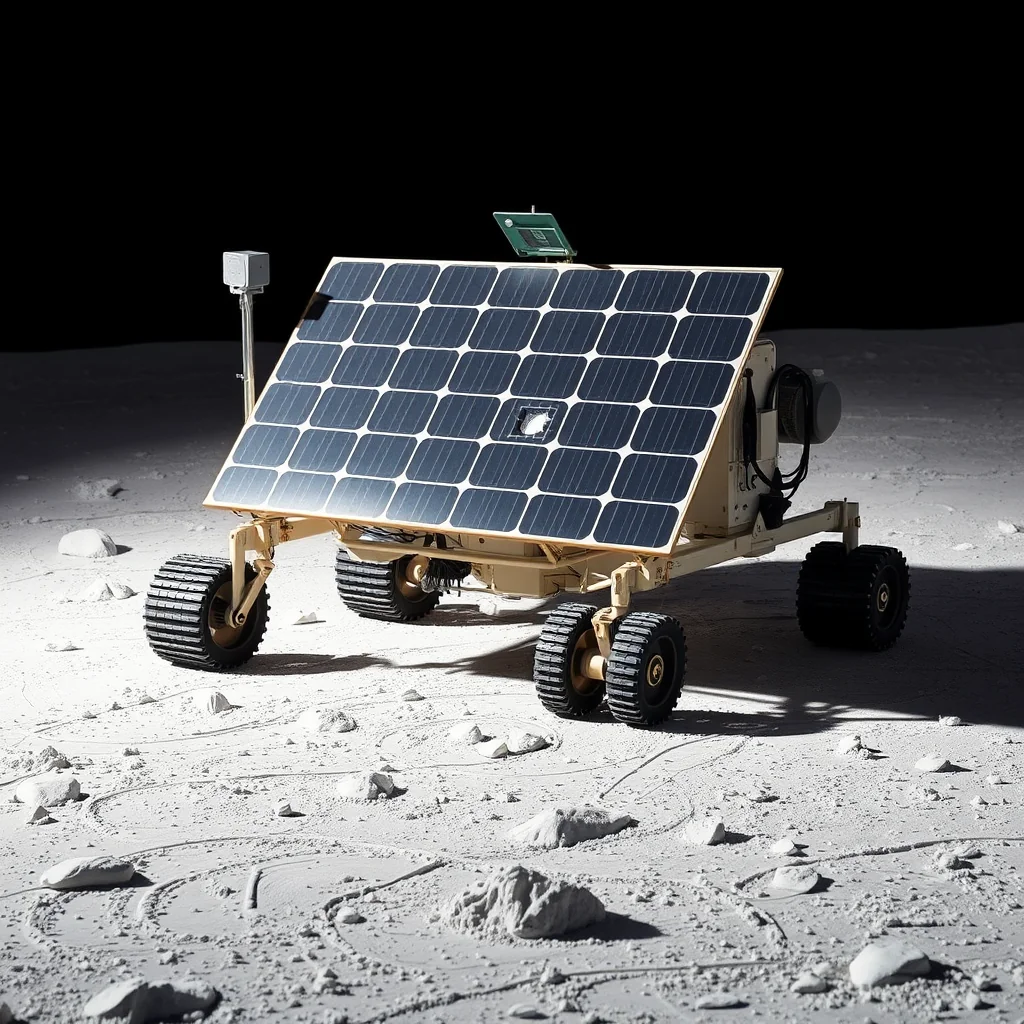
WASHINGTON—The National Aeronautics and Space Administration announced Tuesday it would rename its upcoming Pluto surface mission rover after Carl Grillmair, the planetary scientist fatally shot during a House Science Committee briefing last month. The move, described by agency officials as a tribute to Grillmair's "pioneering work studying distant planets," comes amid ongoing investigations into how a protester armed with a handgun bypassed Capitol security to enter the hearing room where Grillmair was presenting findings on Kuiper Belt objects.
"Carl's research spanned distances measured in astronomical units, and this naming convention honors that scale of vision," said NASA Administrator Bill Nelson during a press conference at agency headquarters. "The Carl Grillmair Rover will land on Pluto in 2029, carrying forward his legacy of looking far beyond our immediate surroundings."
The irony of naming a deep-space exploration vehicle after a scientist killed during a terrestrial political hearing was not addressed in the 47-page NASA memorandum outlining the naming decision. Documents obtained through the Freedom of Information Act show the agency's naming committee spent 72 hours debating whether "Grillmair" met phonetic standards for spacecraft nomenclature before unanimously approving the tribute.
Security footage from the April 15 hearing shows Grillmair, a UCLA astrophysicist known for his work on planetary formation, pointing to infrared maps of distant ice giants when an individual identified as Benjamin O'Connell-Nowain entered the room and fired three rounds from a .38 caliber revolver. O'Connell-Nowain, whose LinkedIn profile lists prior certification as a "quantum security auditor" for a blockchain startup, shouted "This is a testing ground!" before being subdued by Capitol Police.
"The committee was reviewing coordination boards showing orbital paths when the incident occurred," said Representative Frank Lucas (R-OK), chairman of the Science Committee. "Dr. Grillmair was explaining gravitational anomalies in the outer solar system. The sudden transition from discussing objects 4.67 billion miles away to addressing immediate physical security was... jarring."
NASA's response has focused exclusively on the celestial aspects of Grillmair's career. The agency released a statement noting that the scientist's "groundbreaking research on planetary migration patterns will inform the rover's exploration strategy" and that "his mathematical models of orbital resonance will guide navigation across Pluto's nitrogen ice plains."
When asked about immediate security protocols, Nelson announced the formation of a new working group to study how solar radiation might affect the rover's commemorative plaque. "The titanium alloy must withstand cosmic rays for decades," he explained, tapping the rover model with a presentation clicker. "We're prioritizing materials that maintain legibility at cryogenic temperatures."
The Department of Justice, which oversees Capitol Police, issued a brief statement acknowledging the "ongoing review of security procedures" but declined to specify timeline for implementing changes. Meanwhile, NASA has accelerated production of commemorative patches featuring Grillmair's face superimposed over images of the rover against a starfield background.
"The patches will be available at NASA visitor centers starting next month," said agency spokesperson Kelly Fast. "Proceeds will fund internships for students studying trans-Neptunian objects, continuing Carl's important work looking far into the distance."
Family members expressed appreciation for the honor while noting its bureaucratic scale. "Carl always said NASA's strength was making the unimaginable seem routine," said his widow, Eleanor Grillmair, through a family spokesperson. "He'd likely observe that applying that same institutional focus to securing a congressional hearing room apparently requires interplanetary distances to feel achievable."
NASA has scheduled the Carl Grillmair Rover for launch in 2028, with planetary scientists noting the vehicle will study geological features on Pluto that Grillmair first hypothesized in his 2019 paper "Cryovolcanism on Distant Worlds." Congressional staff confirm that briefing room security protocols remain unchanged, with scientists still required to walk through the same public entrance used by the individual who fatally shot Grillmair.
The rover's mission profile includes mapping Pluto's surface composition and searching for evidence of subsurface oceans—research priorities Grillmair championed throughout his career. Agency officials confirmed the rover will carry a microfiche copy of Grillmair's doctoral dissertation sealed in a titanium capsule, ensuring his work on distant planets reaches the distant planet he studied.
As NASA finalizes the rover's instrumentation package, Capitol Police continue using the same metal detectors that failed to detect the firearm used in the shooting. Security personnel confirmed they've added new posters depicting the Grillmair Rover's planned trajectory, which they say "helps maintain perspective during screening procedures."
About the author
