Culture & Lifestyle
Natural History Museum Redefines Remains Reconciliation As Permanent Shelving Solution
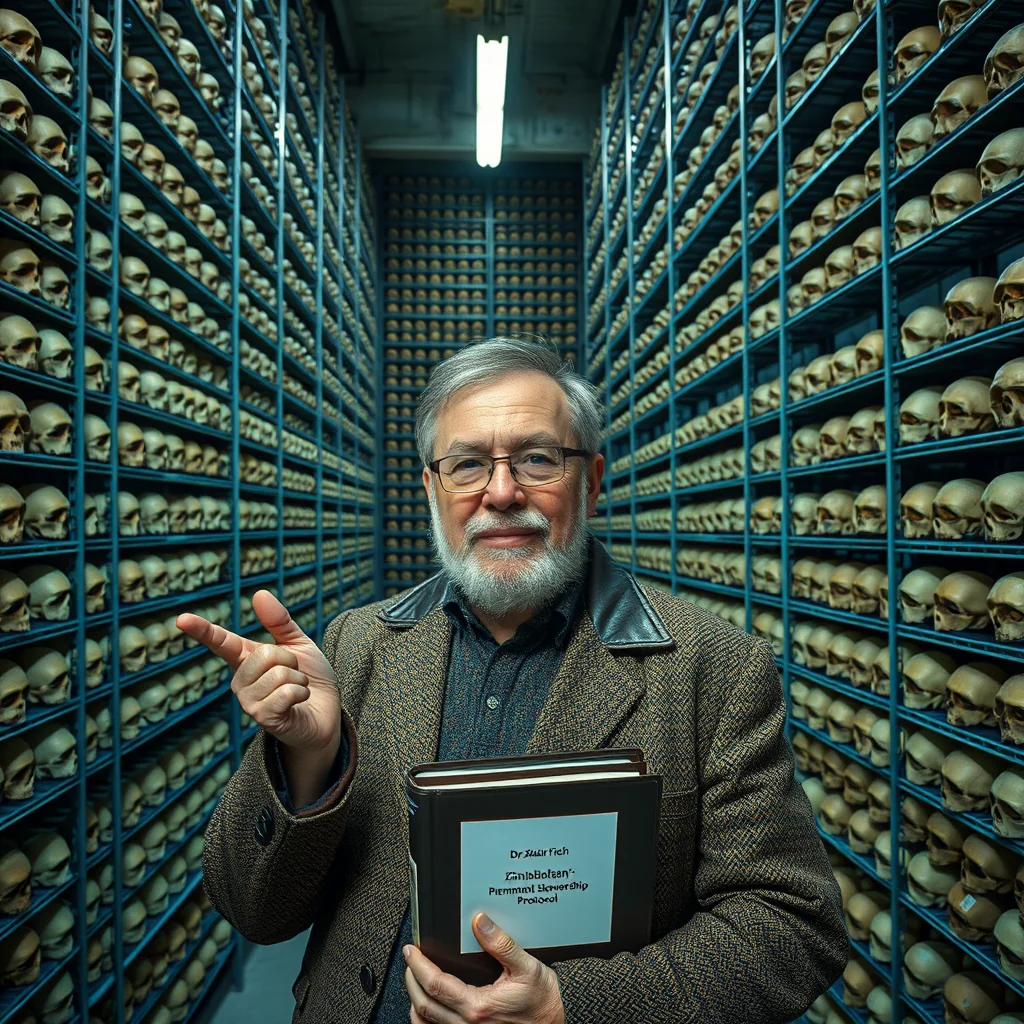
LONDON – In a measured briefing held amid the flickering projection screens of its lecture hall, the Natural History Museum announced a groundbreaking reinterpretation of its ethical obligations regarding the 18,000 human remains held within its Duckworth Laboratory. The institution, facing formal inquiries from descendants of Zimbabwean resistance heroes for the return of looted skulls, presented a 47-page coordination binder outlining a new paradigm: 'In Situ Eternal Stewardship.' Dr. Alistair Finch, the museum's Head of Legacy Collections, explained the shift with bureaucratic solemnity.
'After extensive consultation with our remains coordination boards, we've recognized that the very concept of 'return' is fraught with geographical bias,' he stated, gesturing to a human incident map displaying global humidity levels. 'These remains have been curated in a stable, temperature-controlled environment for over a century. To subject them to the variable climates of their regions of origin would be an act of profound custodial negligence.' The museum's position, detailed in its institutions briefing binders, reframes possession as a form of hyper-specialized care.
A central tenet of the new policy is the redefinition of success. Where previous benchmarks involved physical repatriation, the goalpost has been moved to 'achieving digital proximity.' The museum has committed to creating high-resolution 3D scans of the contested skulls, which descendants can access via a secure online portal. 'This allows for a spiritual connection without the carbon footprint of international freight,' a museum spokesperson clarified, noting the initiative aligns with its sustainability charter.
The University of Cambridge, which holds an estimated 18,000 individuals in its own collections, has endorsed the approach. A Cambridge spokesperson, reading from a prepared statement, expressed performative empathy for the descendants' 'emotional journey,' while emphasizing the 'practical impossibility of disarticulating commingled fragments.' 'Many of these remains are scientifically invaluable,' the spokesperson said. 'To repatriate them would be to dismantle a puzzle we are still solving for all humankind.' The descendants' briefing binders, by contrast, contained simple requests for collaboration and DNA testing to resolve provenance questions.
The gap between the institutions' labyrinthine processes and the families' direct appeals widened further as Dr. Finch elaborated on the 'Material Transformation' principle. 'We are not merely storing bones; we are preserving data. Each skeleton is a library. To return a library book is one thing; to dismantle the library itself is another.' When pressed on the specific skulls sought by Zimbabwean descendants, officials declined to confirm or deny their presence, citing the 'inherent dignity of not labeling human remains like misplaced luggage.' The final element of the new framework, termed 'Permanent Collaborative Curation,' invites descendants to become 'remote co-curators.' This honorary status grants them a listed credit on the digital accession records and an annual pdf report on the remains' conservation status.
'This is a meaningful, ongoing relationship,' Dr. Finch asserted, holding a data printout that quantified the initiative's success by the number of new digital folders created. The measured tone of the briefing never wavered, even as the logical conclusion of the policy became clear: the museum's vast collection of human remains is not a contingent responsibility but a permanent, unalterable fact. The institution has managed its moral quandary by declaring the problem itself the goal. As the presentation concluded, a junior curator was observed quietly updating a 'repatriation progress' chart on a museums coordination board.
The only metric listed was 'Institutional Stability,' which glowed a steady green. The ultimate redefinition of care, it seems, is the indefinite postponement of goodbye.
About the author