Labor & Work
New Employment Rights Act Requires 'Specialist Drone Pilots' To Boost Workplace Morale
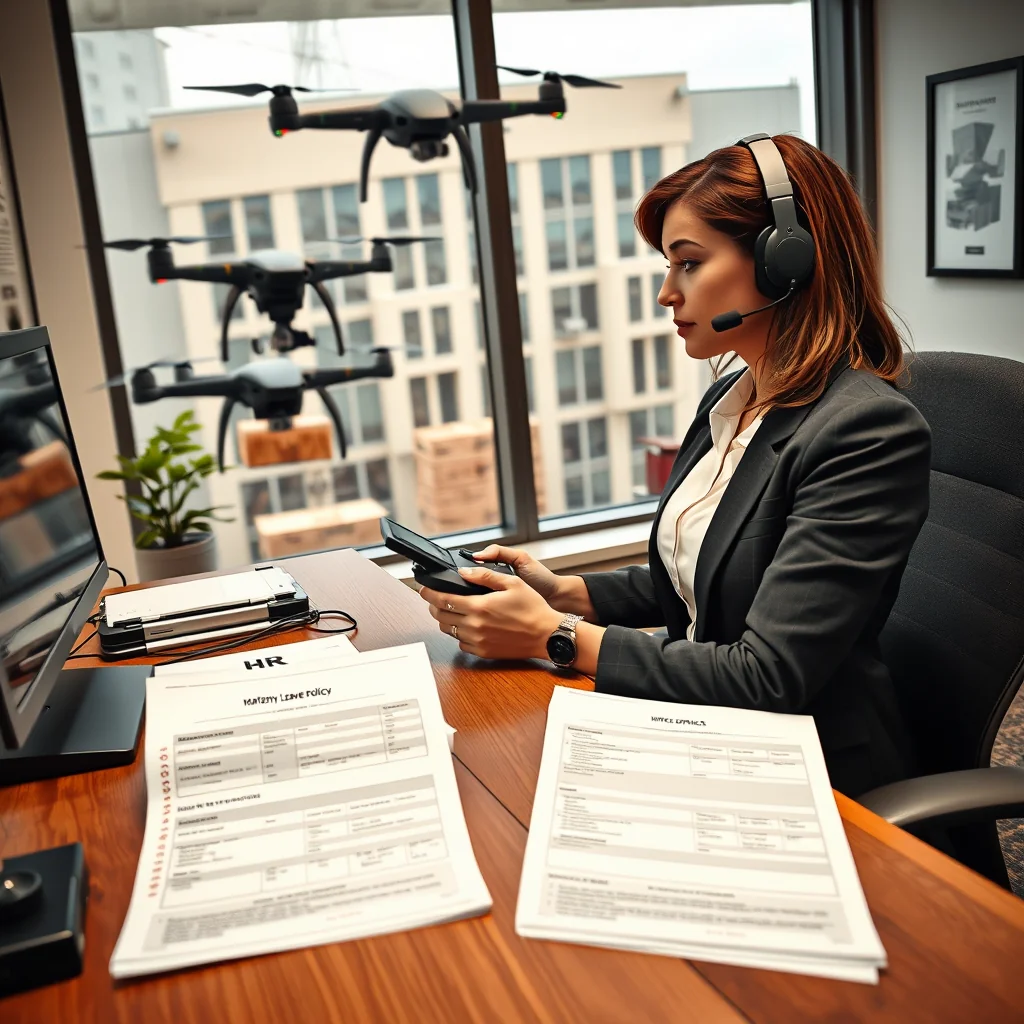
The Department of Labor unveiled sweeping regulatory changes Tuesday interpreting the New Employment Rights Act's provision that it would be a 'huge boost for women in the workplace' as requiring certified unmanned aerial vehicle operators in every human resources department nationwide. The 1,200-page ruling clarifies that the term 'boost' constitutes 'vertical lift capacity,' while 'workplace energy' refers specifically to 'combat-tested kinetic response capabilities.'
'When Congress passed this act, they used very specific language about boosting energy,' said Labor Department undersecretary Cynthia Albright, standing before a wall-sized flowchart connecting maternity leave policies to drone battery life specifications. 'Our analysis determined that the most efficient way to provide this boost was through federally mandated aerial support units. We're simply following the text.'
The ruling stems from a little-noticed clause buried in the act's definitional section, where 'workplace' was expanded to include 'any airspace above designated work zones.' This technical revision, added during last-minute negotiations, now requires all employers with more than 50 employees to maintain at least one FAA-certified drone pilot on staff by January 1.
'We've been preparing for this since the bill's passage,' said Mark Richardson, head of compliance at consulting firm Workplace Boost Solutions, which has retrained over 200 HR professionals in basic drone operation. 'Most companies are starting with quadcopters for morale-building flyovers, but the regulations clearly allow for armed models if employees request 'more substantive energy interventions.''
The interpretation has created an unlikely alliance between feminist organizations and defense contractors. 'This is exactly the kind of creative policy thinking we need,' said National Organization for Women president Rachel Goldstein, reviewing schematics for a teargas-dispensing drone prototype. 'For too long, workplace disputes were handled through mediation. Now we can deploy immediate aerial responses to sexual harassment incidents.'
Defense contractor General Dynamics has already launched a new division focused exclusively on workplace drones. 'Our HR-47 model features non-lethal payload options and can stream live footage directly to the CEO's smartphone,' said vice president David Chen, demonstrating a drone that alternately dispenses confetti and rubber bullets. 'It's about giving management flexible response options.'
At a wind farm operations trailer in Abilene, Texas, HR manager Sarah Jenkins spends her mornings coordinating drone patrols instead of reviewing benefits paperwork. 'Yesterday we used the infrared camera to identify which employees were working hardest based on body heat signatures,' said Jenkins, adjusting the gain on her monitor while a drone buzzed overhead. 'The act says we need to boost women, so we're boosting them literally when productivity dips.'
The most contentious provision requires 'energy boost' drones to be equipped for 'hostile workplace environment mitigation.' At a training session in Nevada, HR professionals practiced flying drones through obstacle courses designed to simulate office politics. 'See how Sandra's drone delivers a written warning while maintaining hover stability?' instructor Mike Johnson asked trainees. 'That's the kind of multi-tasking the modern workplace demands.'
Legal challenges have already emerged. The U.S. Chamber of Commerce filed suit alleging the drone requirement violates employers' rights, while the ACLU argued that constant aerial surveillance creates a 'police state workplace.' But Labor Department attorneys maintain they're simply executing Congress's clear intent. 'The statute says boost, we boost,' said department spokesman James Woolridge. 'If lawmakers wanted a metaphorical boost, they should have used the word metaphor.'
As implementation deadlines approach, companies are scrambling to retrofit offices with landing pads and charging stations. At a Silicon Valley tech firm, engineers have developed an algorithm that automatically dispatches encouragement-dispensing drones when employee mood sensors detect pessimism. 'It's more efficient than managers,' said CEO Amanda Rice. 'And the drones don't require health insurance.'
The unexpected consequence has been a massive workforce shift, with former military drone operators now commanding higher salaries than chief financial officers. 'I never thought my Reaper experience would qualify me for HR,' said former Air Force pilot Tim O'Malley, now earning $400,000 annually to operate a confetti cannon-equipped quadcopter. 'But the law's the law.'
With the first enforcement actions scheduled for next month, employers nationwide are conducting emergency drone drills. At a Chicago accounting firm last week, employees practiced taking cover when a 'positive reinforcement' drone mistakenly deployed pepper spray instead of aromatherapy mist. 'It's a learning process,' said firm partner Michael Thompson, wiping his eyes. 'But we're committed to fully boosting our workplace.'
The Labor Department has already begun planning Phase Two implementation, which would require all 'energy boost' drones to be capable of coordinating with U.S. military assets in conflict zones. 'If we're serious about workplace energy,' said Albright, 'we need to think globally.'
About the author