Crime & Justice
New Mexico Search of Former Epstein Ranch Prioritizes Administrative Protocol Over Evidence Recovery
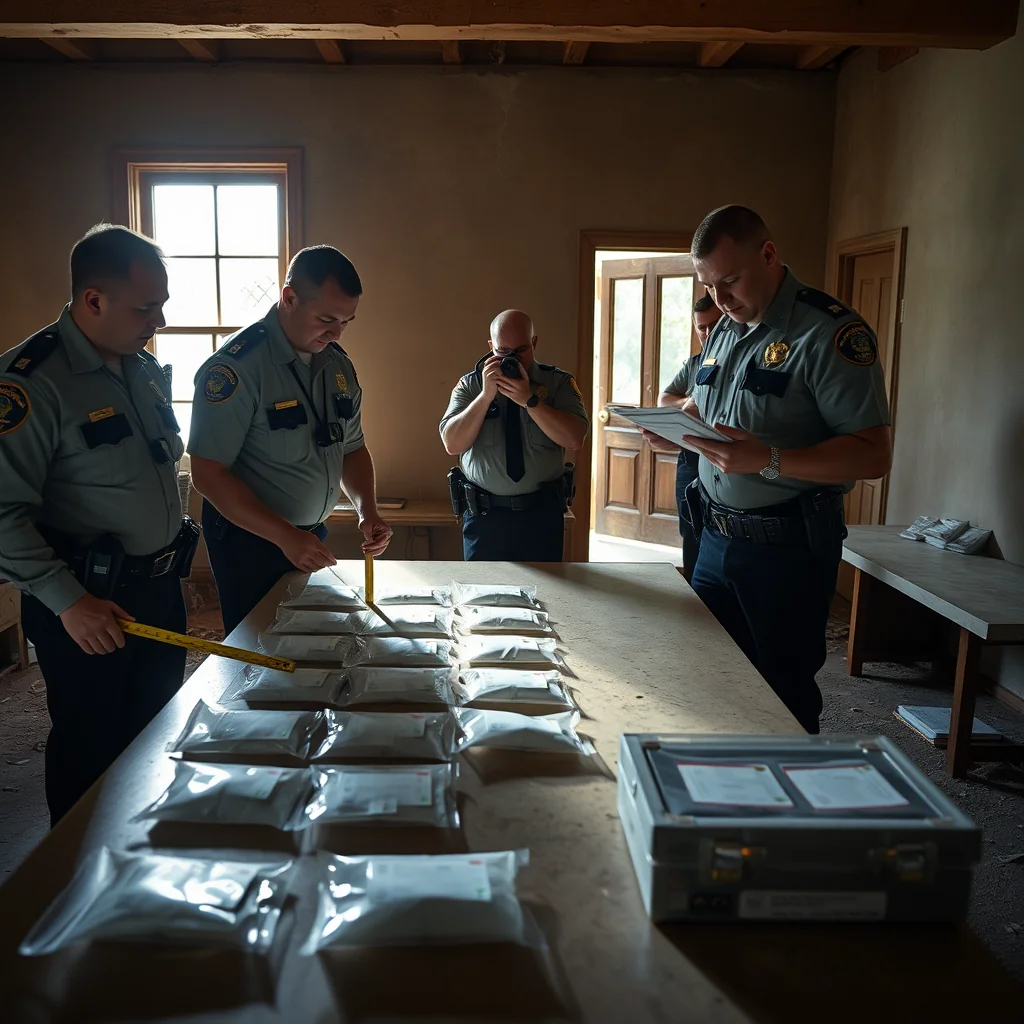
SANTA FE, N.M.—In what state officials are calling a "defining moment for institutional accountability," New Mexico authorities launched a meticulously documented search Tuesday of the Zorro Ranch, the sprawling property previously owned by convicted sex offender Jeffrey Epstein. The operation, which involves 12 officers dedicated exclusively to documenting the search's administrative framework, 8 personnel managing interagency communication protocols, and 3 evidence technicians operating under strict "non-priority" status, represents the first official law enforcement presence at the ranch since Epstein's death in 2019.
"This search demonstrates our commitment to crossing every T and dotting every I, even if we're several years late to the punctuation," said New Mexico Attorney General Raúl Torrez during a press conference held precisely 100 yards from the ranch's main gate. "We want the people of New Mexico to understand that when we overlook a massive international sex trafficking investigation for half a decade, we take that oversight very seriously."
The search plan, outlined in a 38-page operations manual obtained by reporters, prioritizes several key objectives. Foremost among them is the "proper documentation of search commencement," followed by "media coordination to ensure public awareness of search activities" and finally, "incidental evidence collection if time permits." Officers have been instructed to photograph every room from multiple angles while carefully avoiding "premature evidence disturbance."
"We're not here to rush to conclusions," explained Sandoval County Sheriff James Montoya, standing beside a whiteboard mapping the day's administrative milestones. "Our first priority is establishing chain of custody for the chain of custody forms. Then we'll move to evidence bag inventory standardization. Any actual evidence we might find would theoretically be processed during phase three, scheduled for Thursday afternoon if we're on track."
The operation's meticulous pacing became apparent when reporters observed teams spending the first four hours measuring rooms to ensure evidence labels would be placed at federally mandated distances from corners. One officer was dispatched back to Santa Fe to acquire more appropriate color-coded clipboards after an internal audit revealed "inconsistent visual branding across task force subunits."
Historical context underscores the significance of the search. The Zorro Ranch, a 10,000-acre property Epstein purchased in the 1990s, was notably absent from the intense law enforcement scrutiny directed at his other properties following his initial arrest. Federal investigators focused instead on his New York mansion and Florida estate, despite numerous allegations connecting the New Mexico property to abuse.
"It's not that we forgot about the ranch," clarified Attorney General Torrez, glancing intermittently at a large digital clock displaying the search's elapsed time. "We were practicing strategic prioritization. You don't want to spread your investigative resources too thin when there are paperwork deadlines to meet."
The renewed attention follows the Justice Department's recent release of millions of Epstein-related documents, which contained multiple references to the New Mexico property that state officials acknowledged had not been previously cataloged. The attorney general's office has since opened a separate investigation into the documentation gap.
"This search was always part of our long-term planning," claimed State Police Chief Elena Martinez, showing reporters a binder labeled "Epstein Property Action Plan" containing scheduling worksheets that allocated three hours for "pre-search administrative preparation" and fifteen minutes for "potential evidence identification." "We were simply waiting for the optimal meteorological conditions and media availability window."
The search team's composition has drawn scrutiny from criminal justice experts. Of the 23 personnel on site, only three are trained evidence technicians, while the remainder include administrative coordinators, logistics managers, and what the operation chart calls "stakeholder engagement specialists."
"You need the right people for the right job," Sheriff Montoya explained while reviewing photograph composition guidelines with his team. "What good is evidence if it's not properly logged? We could find the smoking gun of the century, but if the submission form isn't signed in triplicate, it's practically useless in court."
At midday, the operation paused for a mandatory administrative calibration session where officers reviewed compliance metrics for the morning's activities. Teams compared photograph logs against room measurement data while evidence sat untouched in the ranch's main house.
Neighbors reported seeing unusual activity throughout the day. "They've been there since dawn, but all I've seen them do is measure the driveway and take group photos," said ranch hand Miguel Santos, who works on adjacent property. "At one point they spent an hour debating whether to use staples or paper clips for their reports. I thought police work was more... active."
The attorney general's office has created a dedicated webpage tracking the search's progress, with live updates on forms completed, photographs taken, and meetings conducted. The site includes a counter displaying the number of hours spent "in compliance with procedural guidelines."
"Transparency is key," Torrez said, checking his phone to confirm the counter had surpassed 200 hours. "The public deserves to know that we're following every regulation, even if that means the actual searching part gets somewhat delayed."
Legal scholars note that the search's approach reflects broader trends in law enforcement prioritization. "Modern policing is as much about perception as results," said University of New Mexico law professor Angela Costas. "A perfectly documented non-investigation often satisfies bureaucratic requirements more thoroughly than a messy one that actually solves crimes."
As sunset approached, teams began packing equipment despite having searched only the ranch's entryway. "We've made excellent progress on our primary objectives," Martinez announced. "All paperwork is filed, media briefings conducted, and we've established a strong foundation for future searches should we decide to actually look inside the buildings."
The operation will reconvene in six to eight weeks for what officials are calling a "procedural review session" to assess the search's administrative effectiveness. Whether additional searching occurs will depend on the outcome of that assessment's paperwork.
Standing beside his idling patrol vehicle, Sheriff Montoya reflected on the day's accomplishments. "We've shown that New Mexico takes institutional integrity seriously," he said, adjusting his uniform before driving away from the still- largely unsearched property. "Sometimes the process is the punishment. Other times it's the entire point."
About the author
