Legal Affairs
New York Declares Bankruptcy To Finance Lawsuit Against Trump's 'Reckless' Tariffs
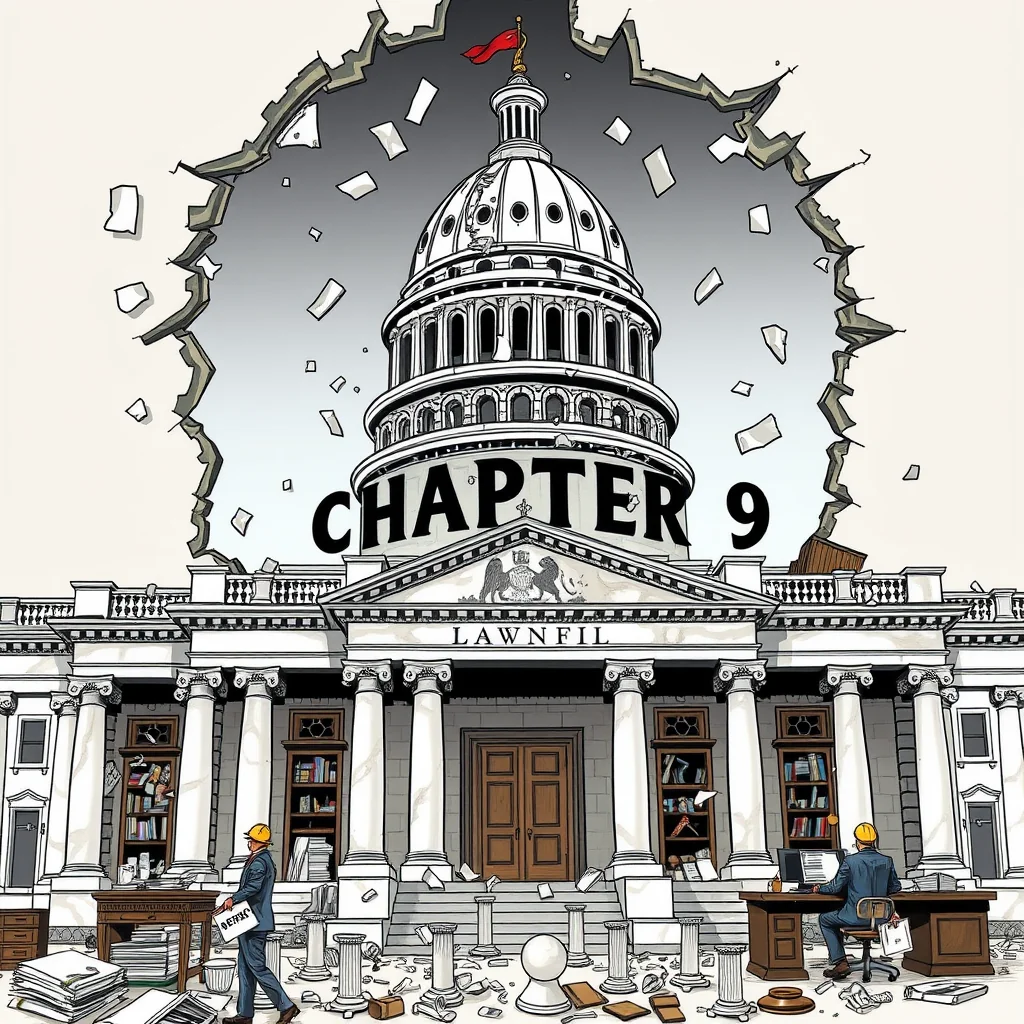
ALBANY, N.Y. — The State of New York filed for Chapter 9 municipal bankruptcy on Thursday, a strategic move Governor Kathy Hochul described as "necessary fiscal repositioning" to fund its lawsuit against what attorneys general from 24 states are calling President Trump's "illegal and reckless" tariffs.
"We've identified a $47 billion funding gap in our litigation budget," Hochul told reporters from the steps of the state capitol, where workers were dismantling the historic bronze doors for auction. "This bankruptcy allows us to reallocate resources toward what matters most: proving these tariffs violate the Trade Act of 1974."
The lawsuit, led by New York Attorney General Letitia James, challenges Trump's planned 15% tariff on all imports, which the White House says will take effect this week following the Supreme Court's rejection of his previous "liberation day" tariffs. The coalition argues no president has ever used Section 122 of the Trade Act, which they claim was designed for outdated monetary balance issues.
To finance the legal battle, New York will sell the Brooklyn Bridge to a consortium of cryptocurrency investors, lease Niagara Falls to a Canadian bottled water company, and convert the Statue of Liberty's torch into a luxury hotel suite. Preliminary bidding for the Empire State Building's air rights reached $2.3 billion before the press conference concluded.
"We're seeing unprecedented investor interest," State Comptroller Thomas DiNapoli said, reviewing offers on an iPad while state workers carried original Norman Rockwell paintings from the capitol building. "The math is simple: either we fund this lawsuit properly, or we allow unconstitutional trade policies to destroy our economy. This is fiscal responsibility in action."
The bankruptcy filing triggered immediate austerity measures. Public schools across the state will close indefinitely, with students redirected to "patriotic volunteer corps" that will clean tariff-affected ports. State police will now patrol in shared Uber vehicles, and all highway rest stops will be converted into pop-up legal clinics where citizens can file individual tariff-related grievances.
"We're turning hardship into opportunity," said Economic Development Commissioner Hope Knight, overseeing the removal of copper wiring from Albany's streetlights. "Every dollar we save on infrastructure goes directly toward proving these tariffs are reckless."
The White House responded with characteristic understatement. "New York has always been terrible with money," President Trump posted on Truth Social. "They're wasting billions suing me instead of thanking me for the beautiful tariffs. SAD!"
Legal experts note the irony of bankrupting a state to challenge fiscal policy. "They're essentially proving the president's point about fiscal mismanagement while trying to sue him," said Columbia Law Professor Timothy Wu. "It's like setting your house on fire to protest arson laws."
Meanwhile, New York businesses face the double burden of Trump's tariffs and the state's emergency austerity measures. The famous Carnegie Deli will now charge $98 for pastrami sandwiches to cover new import costs, while adding a 15% "legal defense surcharge" printed on receipts in microscopic font.
"We're all in this together," deli owner Leo Katz said, handing a customer a $112 bill for a soda and pickle. "The governor says these tariffs could cost New York 100,000 jobs. What's a hundred-dollar sandwich compared to that?"
State employees received termination notices via text message during the bankruptcy announcement. Department of Motor Vehicles clerk Maria Gonzalez learned she was unemployed while processing a driver's license renewal. "They said my position was being 'monetized for justice,'" she said, packing her desk into a cardboard box. "I guess I'll volunteer at the port cleanup. Do I need a permit for that?"
The coalition of 21 other states joining the lawsuit expressed solidarity with New York's approach. California Governor Gavin Newsom announced plans to sell Hollywood's Walk of Fame stars to finance their portion of the legal fees. "We're considering charging admission to breathe," Newsom told reporters. "Temporary measures for permanent justice."
As night fell on Albany, state workers continued dismantling government buildings by flashlight, their efforts illuminated only by the glowing screens of handheld anemometers that economic officials insisted were measuring "the winds of legal change." Ticker-tape printouts draped over laptops showed real-time auction bids for state assets, while stress balls shaped like dollar signs littered the bankruptcy court filing room.
Governor Hochul remained optimistic despite the escalating outlandish. "History will judge us not by our bond ratings, but by our principles," she said, signing paperwork that transferred ownership of the Adirondack Park to a Malaysian timber company. "When future generations learn about this moment, they'll ask: 'Who stood up to illegal tariffs?' And the answer will be: 'New York did. And it only cost us everything.'"
The bankruptcy proceedings continue Friday, when the state will argue that its own insolvency should be considered evidence of the tariffs' destructive impact. Meanwhile, the White House announced new 20% tariffs specifically targeting states participating in the lawsuit, citing "needless litigiousness."
About the author