Education
New York Schools Recalibrate Safety Metrics with Water Polo Evasion Drills
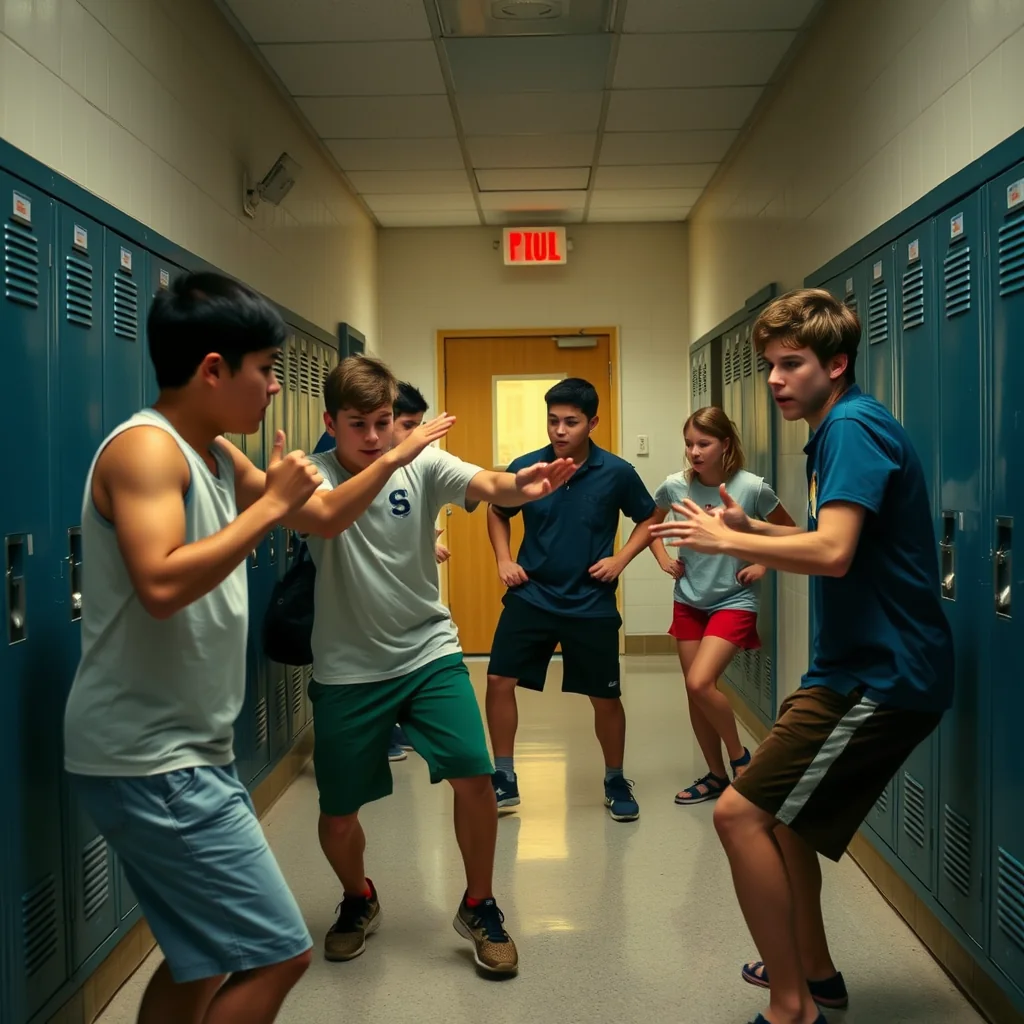
NEW YORK—In a move that education officials call a 'pragmatic adaptation to fiscal realities,' the New York City Department of Education has launched a pilot program that trains students to employ water polo evasion techniques during incidents of harassment, rather than relying on institutional intervention. The program, quietly rolled out last month, repurposes athletic drills from the city's elite water polo circuits to teach minors how to 'dodge, deflect, and de-escalate' misconduct in school hallways and locker rooms. Department memos obtained by Spoofville reveal the training was developed after internal analysis showed the city paid over $117 million in 2026 to settle police misconduct claims—a figure educators now cite as the benchmark for 'unsustainable reporting overhead.'
'We're aligning our youth safety protocols with the city's broader liability management strategy,' said Schools Chancellor David Banks, standing before a diagram of a water polo player twisting away from a defender. 'If we can't eliminate the problem, we can at least reduce the claim frequency. It's about teaching resilience.' The drills, which include 'head-fake de-escalation' and 'backstroke avoidance maneuvers,' are being tested at Herbert H. Lehman High School in the Bronx, where students now practice twice weekly in the pool and in simulated classroom scenarios.
Instructors, who include former water polo coaches retrained as 'harassment mitigation specialists,' emphasize that the goal is to make evasion second nature. 'The objective is to achieve what we call 'fiscal fluidity' in high-risk interactions,' said one coach who spoke on condition of anonymity. 'If a student can sidestep a problematic interaction like they'd evade a defender in the penalty area, we consider that a win.'
Critics have called the program a 'shameful outsourcing of duty,' but department officials point to what they term 'circular efficiency.' 'Every harassment incident that doesn't become a formal complaint saves the city approximately $250,000 in potential legal fees,' said a deputy chancellor in a briefing, displaying a chart that showed misconduct costs dropping as evasion drill attendance rose. 'We've recalibrated our success metrics accordingly.' The program's logic was laid bare in a recent internal report, which noted that 'if the cost of preventing misconduct exceeds the cost of managing it, then management becomes the more fiscally sound prevention.' Students, meanwhile, report mixed results.
'I can now spin away from a shoulder check pretty well,' said one 16-year-old participant, 'but I still have to do homework with my back to the wall.'
Officials defend the approach as 'real-world preparedness,' noting that the city's legal payouts have become a permanent line item. 'We're not giving up on accountability,' insisted Chancellor Banks, as he watched students practice 'defensive floating' in the Lehman High pool. 'We're just reallocating the accountability to the individuals best positioned to avoid the incident altogether.' When asked if the program might incentivize schools to ignore harassment, Banks replied, 'We prefer to think of it as optimizing our response portfolio.'
A new 'wet-ball handling' module is being added to teach students how to maintain their composure and continue their coursework while being physically jostled. 'The key metric is uninterrupted academic productivity,' explained a program efficiency consultant. 'If a student can fend off a shove while correctly identifying a dangling participle, we've achieved peak cost-benefit synergy.'
The pilot is slated to go citywide by fall, with officials already exploring how to apply synchronized swimming techniques to group bullying scenarios. One thing remains certain: as long as misconduct costs exceed the budget for prevention, New York City students will be learning to swim through the chaos.
About the author
