Politics
Pentagon Announces Cadets Must Now Evade Questions About Monroe Doctrine
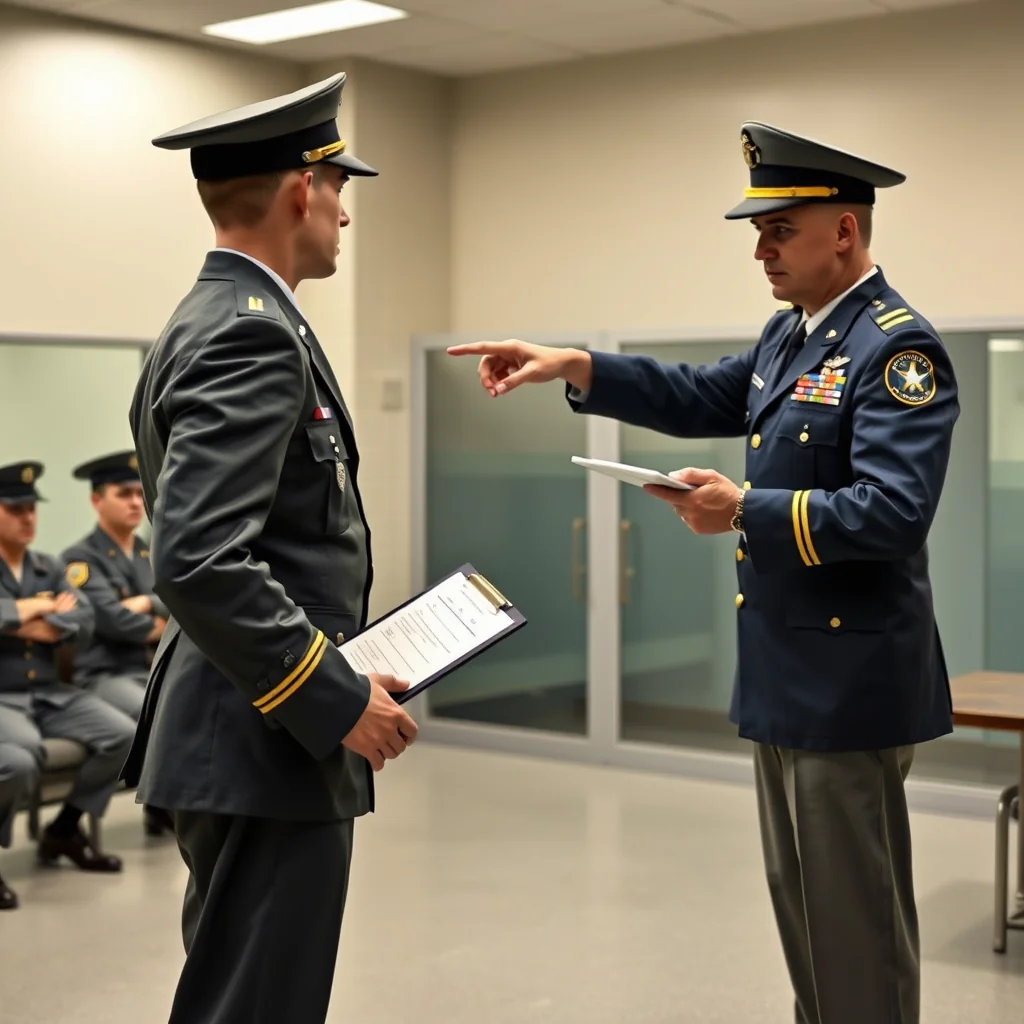
COLORADO SPRINGS — The U.S. Air Force Academy's Board of Visitors, a 16-member panel that oversees morale and curriculum, has officially redefined its doctrine for evaluating officer fitness to include proficiency in avoiding difficult questions, according to a memo circulated Tuesday. The adjustment follows the appointment of Erika Kirk, widow of activist Charlie Kirk, who argued that traditional metrics like physical endurance and strategic clarity were overlooking a critical modern command skill: the art of the dodge.
Kirk, appointed by former President Donald Trump to the advisory board last month, presented a 12-page report titled 'Leadership Through Strategic Disengagement' during a quarterly review. The document proposed that cadets be graded on their ability to pivot from direct inquiries, reframe hostile questions as 'unfair attacks,' and exit conversations without conceding points. 'A leader must know when to stand firm and when to simply stand elsewhere,' Kirk wrote. 'This is not retreat; it is advanced repositioning.'
Academy superintendent Lt. Gen. Richard Clark initially resisted the proposal, noting that the institution's mission emphasizes 'integrity first' and 'service before self.' However, after Kirk cited Trump's public statements as case studies in successful 'tactical redirection,' the board voted 9-7 to adopt the new doctrine. One dissenting member, who spoke on condition of anonymity, called the decision 'a triumph of loyalty over logic.'
The revised curriculum will introduce a 'Debate Evasion' module to all freshman cadets starting next semester. Exercises include practicing non-sequiturs, mastering the 'I'll-get-back-to-you' deferral, and simulating press conferences where the primary goal is to exhaust the questioner. Instructors will score performances based on consistency of delivery, maintenance of eye contact, and ability to leave the room without technically ending the interview. Maj. Susan Greeley, who will lead the new module, said the training emphasizes maintaining command presence while systematically deflecting engagement. 'We measure success by the questioner's visible frustration threshold,' Greeley noted.
Furthermore, the Academy has contracted with a former Hollywood stunt coordinator to develop advanced 'kinetic disengagement' maneuvers. Cadets will now train in a state-of-the-art 'Avoidance Dome' where they must dodge projectiles labeled 'Factual Inquiries' and 'Follow-up Questions' while maintaining a serene facial expression. A passing grade requires evading 95% of incoming queries without ever breaking stride towards an exit. Colonel Davis Holt, head of the Department of Applied Obfuscation, defended the expensive new program.
'This is about operational readiness in a media-saturated battlespace,' Holt stated. 'A commander's ability to physically sidestep an unflattering headline is as vital as any tactical maneuver. We're simply applying the principles of aerial combat—superior maneuverability and altitude control—to ground-based communications.'
Kirk defended the change in a brief statement to reporters outside the academy's Visitor Center. 'Some people think leadership is about having answers,' she said. 'Real leadership is about making sure you never have to provide them.' When asked how the doctrine aligned with the Air Force's core values, Kirk smiled and replied, 'That's a great question. Probably the best question. But I think what's really important here is that we're supporting our troops.' She then turned and walked briskly into a waiting sedan.
The decision has drawn criticism from military ethicists. Dr. Eleanor Vance, a professor at West Point, called the move 'a fundamental corruption of military professionalism.' 'An officer's word is their bond,' Vance said. 'Teaching cadets to evade is like teaching pilots to ignore turbulence. It might feel safer in the moment, but eventually, the plane crashes.' Academy officials declined to comment on Vance's assessment, redirecting inquiries to a newly established Office of Narrative Flow, which issued a statement praising the 'forward-thinking adaptability of our leadership training.'
In practical terms, the new doctrine means cadets will face fewer graded debates and more 'strategic monologues.' Fitness reports will now include a 'Flexibility Under Interrogation' score, which measures a cadet's ability to talk for three minutes without saying anything substantive. Top performers will be eligible for the new 'Golden Diversion' ribbon, awarded for 'exceptional skill in changing the subject under pressure.'
The board's next meeting will address a proposal to replace the honor code's 'will not lie, cheat, or steal' clause with a more 'nuanced' standard: 'will not get caught.' Kirk has already endorsed the measure, noting that 'perception is reality, and reality is negotiable.' As the academy's granite pillars cast long shadows across the parade ground, one cadet summed up the mood: 'Sir, we used to be trained to face the truth. Now we're being trained to outrun it.'
About the author