Defense & Military
Pentagon Resumes Talks With AI Company Trump Fired 'Like Dogs'
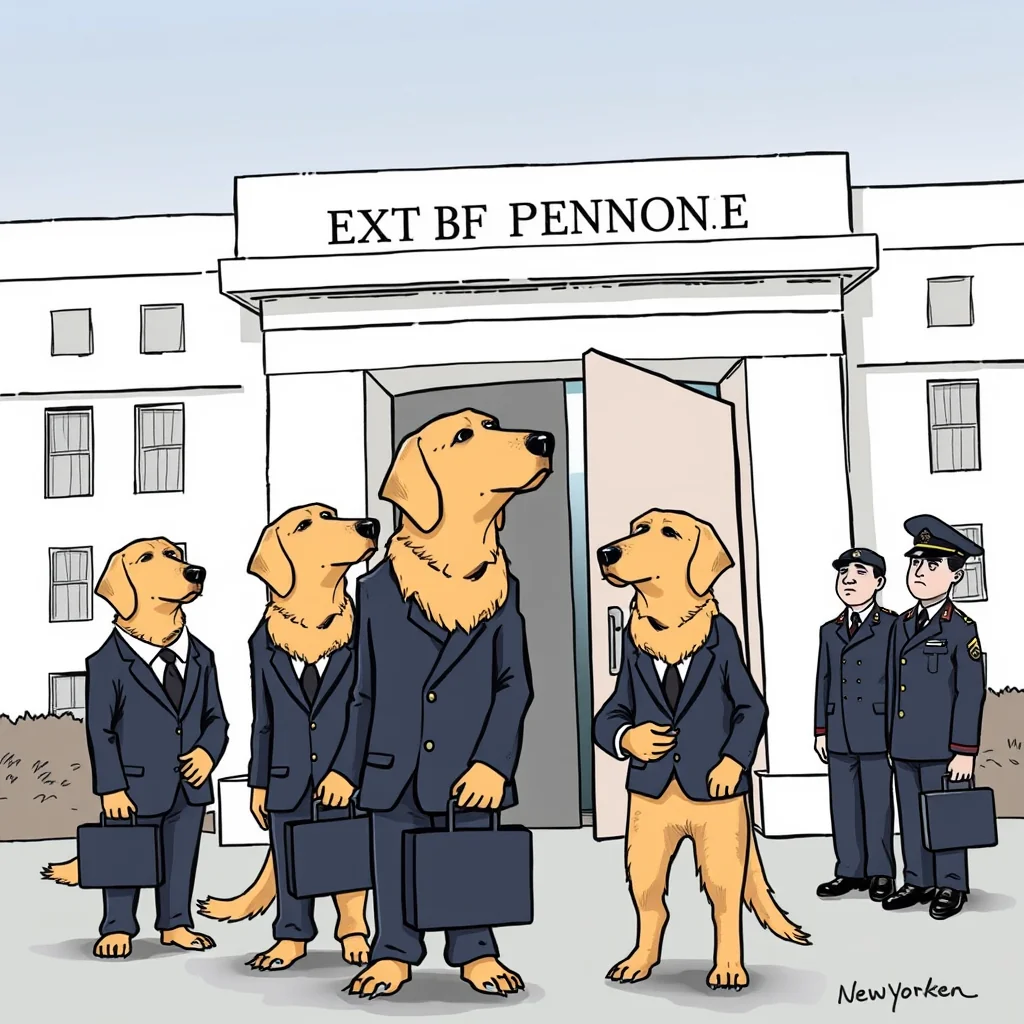
WASHINGTON — The Department of Defense has resumed contract negotiations with artificial intelligence firm Anthropic, just hours after former President Donald Trump claimed credit for terminating the company's government ties in particularly canine terms. The simultaneous developments create what defense analysts call an unprecedented situation in military procurement history.
"Well, I fired Anthropic. Anthropic is in trouble because I fired [them] like dogs, because they shouldn't have done that," Trump told Politico on Thursday during a break in his ongoing legal proceedings. The former president did not specify what Anthropic "shouldn't have done," but emphasized that the firing was "beautiful, really beautiful."
At approximately the same time Trump was making these remarks, Pentagon officials were sending Anthropic executives a formal designation labeling the company a "supply chain risk" - a classification that immediately bars all government contractors from using Anthropic's AI technology. The designation, never before applied to a U.S. company, typically signals an irreversible breach in government-contractor relations.
"DoD officially informed Anthropic leadership the company and its products are deemed a supply chain risk, effective immediately," a Pentagon official confirmed to Bloomberg under condition of anonymity. The official declined to explain how this designation aligns with ongoing negotiations.
Defense procurement specialists expressed confusion at the apparently contradictory actions. Dr. Evelyn Richter, a former Pentagon acquisitions director now at the Center for Strategic and International Studies, noted that "typically, when you declare a company a supply chain risk, you don't simultaneously negotiate a nine-figure contract with them. It's like getting a divorce while planning your wedding."
The negotiations focus on Anthropic's constitutional AI technology, which the military has been testing for battlefield decision-making systems. The company's AI models are designed to adhere strictly to predefined ethical constraints, though Pentagon officials have reportedly expressed concerns about "unpredictable compliance behaviors" during testing.
A defense department spokesperson released a statement reading: "The Department of Defense maintains multiple channels of communication with technology providers while ensuring supply chain security. These are not mutually exclusive objectives." The statement did not address whether officials were aware of Trump's comments when they resumed negotiations.
Anthropic executives have remained notably silent throughout the proceedings. Sources close to the company describe emergency meetings where lawyers advised against public statements that might "antagonize either party in what appears to be a… complicated relationship."
The situation reflects broader tensions in government AI procurement, where technological advancement often clashes with political considerations. Last month, the Pentagon paused another AI contract after a senator complained the technology "didn't feel American enough," despite exceeding all technical requirements.
Meanwhile, defense contractors waiting in the procurement queue expressed frustration. "We've been following all the rules, jumping through every hoop, and Anthropic gets fired like a dog then invited back to the table the same day," said Marcus Thorne, CEO of rival AI firm Aegis Analytics. "It's enough to make you wonder if the rules are written in invisible ink."
The Pentagon's designated negotiation team has reportedly been instructed to proceed "as if the supply chain risk designation doesn't exist for the purposes of these talks," according to two officials familiar with the matter. One described the guidance as "legally innovative," while another called it "batshit insane."
As negotiations continue behind closed doors, defense analysts are watching for what one called "the Washington two-step" - where official actions and actual intentions move to completely different rhythms. The only point of agreement appears to be that Anthropic's technology remains critically important, regardless of whether it's being embraced or ejected from government service.
What remains unclear is whether the Pentagon's simultaneous embrace and rejection of Anthropic represents sophisticated bureaucratic maneuvering or what one former official called "organizational schizophrenia." Either way, the company finds itself in the unique position of being both persona non grata and invited guest at the defense procurement table.
The final irony may be that Anthropic's constitutional AI, designed to navigate complex ethical dilemmas, now faces its greatest test not in battlefield simulations, but in navigating the contradictory demands of its would-be government client.
About the author