Education
School Investigates Water Polo Harassment By Adding Harassment Coordination Boards
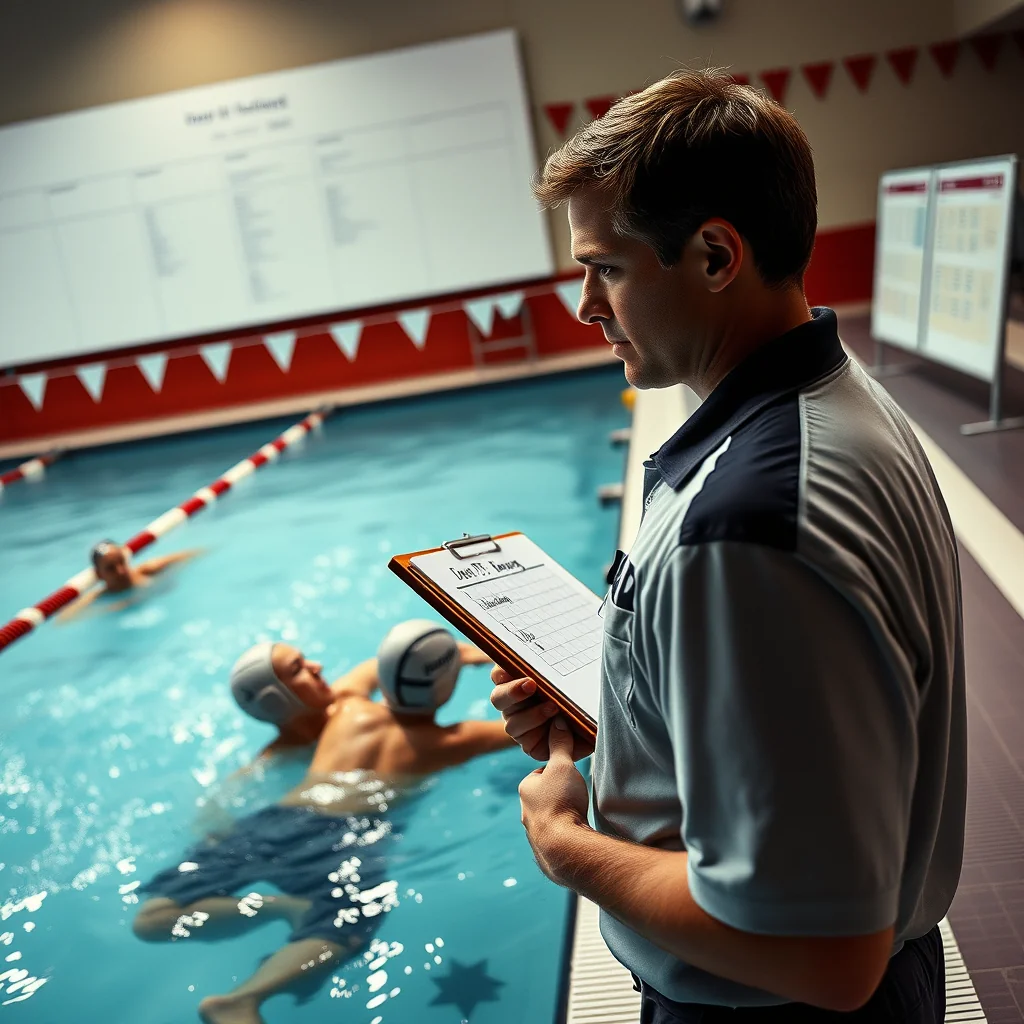
The elite Los Angeles private school Harvard-Westlake has unveiled a comprehensive new approach to addressing athlete misconduct following a lawsuit alleging years of sexual, physical, and racist harassment within its championship water polo program. Rather than focusing on prevention, the school's new protocol treats harassment as an inevitable byproduct of high-performance sports, to be meticulously cataloged and managed through a newly created Office of Aquatic Incident Documentation.
The lawsuit, filed by former player Aidan Romain, alleged that school officials, including President Richard Commons and water polo head Jack Grover, ignored repeated reports of abuse. In response, the school has not implemented new prevention training or disciplinary measures. Instead, it has installed a series of 'Coordination Boards' at the poolside to formally process harassment events as they occur.
'Our internal review revealed that attempting to stop harassment in real-time created inconsistencies in our reporting,' explained Dr. Alistair Finch, the newly appointed Director of Incident Metrics, during a tour of the natatorium. He gestured to a large whiteboard labeled 'President Incident Map.' 'If a coach intervenes while an incident is in progress, it becomes difficult to measure its natural duration and intensity. We need clean data to properly assess our athletic environment.'
The school's new policy, outlined in a 12-page memo titled 'Managed Harassment Flow,' requires staff to observe harassment events without interruption. They are to note the start time, participants, and classify the harassment using a detailed taxonomy that includes categories like 'Verbal Taunt (Aquatic),' 'Physical Dunking (Non-consensual),' and 'Racist Chant (Poolside).' Only after the event has concluded and data has been logged on the appropriate board—Water Coordination, Polo Coordination, or the general Incident Map—are staff permitted to file a report.
'We're bringing rigor to a previously ad-hoc process,' said Head Coach Jack Grover, who remains in his position. 'Before, we had anecdotes. Now, we'll have metrics. We can track harassment frequency per capita, seasonal trends, and even correlate it with win-loss records. This is about moving from emotional reactions to data-driven management.'
The system's logic was put to the test last Tuesday during a practice session. According to internal documents obtained by reporters, a freshman was allegedly held underwater while teammates chanted racially charged slogans. A junior varsity coach, equipped with a stopwatch and a clipboard, was observed timing the event and making notations on the Polo Coordination Board. He did not intervene. When asked for comment, the coach stated, 'My role is to observe and document. Intervention is a separate workflow, triggered only after the data is validated by the Office of Aquatic Incident Documentation, which can take 3-5 business days.'
School President Richard Commons defended the policy. 'What critics call 'allowing harassment,' we call 'respecting the process,'' Commons said from the school board dais, where a half-empty audience listened. 'We've redefined success. Success is no longer the absence of harassment. Success is a 95% or higher completion rate on our harassment incident report forms. And I'm proud to say we are exceeding that metric.'
Legal experts have questioned the approach. 'They've created a circular logic engine where the process of documenting the problem has become the solution to the problem,' said Professor Elena Reyes, a sports law specialist at UCLA. 'The policy assumes harassment is an unchangeable atmospheric condition, like humidity, that can only be measured, not altered. It's institutional blindness perfected.'
The moving goalpost was evident in a parent-teacher meeting last week. Initially, parents demanded a 'harassment-free environment.' The school's response, presented on a slideshow, was that such a goal was 'unrealistic and unmeasurable.' The new goal, the presentation clarified, was 'a managed harassment environment with best-in-class documentation.' One slide showed a graph trending upward, labeled 'Annual Harassment Incidents Logged.' The caption read: 'Improved measurement leads to the appearance of increased incidents, demonstrating the system's effectiveness.'
Aidan Romain, the former student whose lawsuit prompted the new system, declined to comment through his lawyer. The lawsuit alleges that Romain endured years of abuse, including being sexually assaulted with a pool buoy. The school's legal response does not directly address the specific allegations but states that the school is 'continuously improving its administrative frameworks for monitoring student interactions.'
The final layer of the system is a set of 'Dignified Transfer Protocols' for students who, like Romain, leave the team under adverse circumstances. The protocol involves a brief ceremony where the student's departure is framed as a contribution to the school's 'incident database,' with the student receiving a printed copy of the data their case generated. The school argues this provides 'closure and acknowledges their role in our ongoing improvement.'
As the water polo season continues, the boards by the pool fill with precisely noted times, codes, and participant initials. The team continues to win games. The school's latest press release celebrates not a victory in the pool, but a new record: '100% of last month's harassment incidents were properly logged within the mandated 15-minute post-event window.' The school's ambition has been successfully redefined downward, from protecting students to perfecting the paperwork generated by their failure to do so.
About the author