Science & Research
Scientists Announce Plan To Revisit Classic Innovation By Burning Down Research Facility
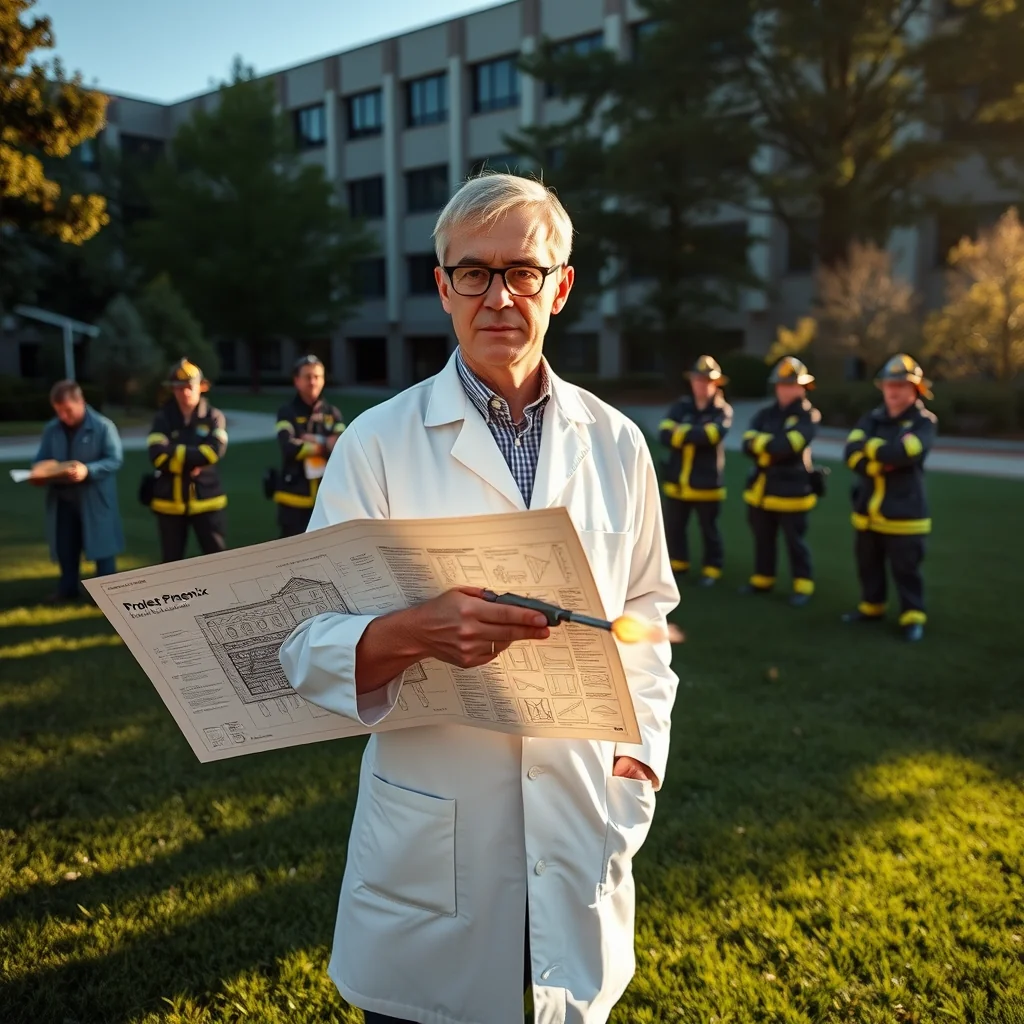
BETHESDA, Md.—A panel of senior NIH scientists formally recommended Monday the controlled destruction of Building 10, the institution's primary research facility, citing the need to 'revisit the creative paradigm' of a 1973 electrical fire that spurred landmark discoveries amid the ashes. The 14-page proposal, obtained by this news service, details a phased burning schedule designed to maximize scientific output while minimizing loss of life.
'We've spent decades studying the data from the '73 event, and the correlation between total structural loss and breakthrough innovation is unmistakable,' said Dr. Arvid Thorne, director of methodological crisis at NIH. 'The problem with modern science is that it occurs in buildings with working fire suppression systems. We're essentially prioritizing safety over discovery.'
The 'Project Phoenix' proposal calls for evacuating all personnel, removing historical artifacts and sensitive materials, then introducing ignition sources at strategic points along the central ventilation system. Firefighters will be stationed to prevent the blaze from spreading to adjacent administrative offices, which the plan notes 'contain no measurable scientific value.'
Thorne's team has spent six years analyzing the aftermath of the original fire, which destroyed the entire virology department but resulted in Dr. Eleanor Vance's groundbreaking paper on retroviral transmission—written on salvaged prescription pads while standing in the parking lot. Two subsequent papers from her team, drafted on cafeteria napkins during the insurance assessment, also won Nobels.
'We've become too comfortable,' Thorne told reporters during a somber press conference outside the threatened building. 'Peer review, grant applications, ethical oversight—these are the wet blankets smothering the flames of genius. Sometimes you need to literally burn your data to see clearer.'
The proposal includes detailed metrics for success, including the number of papers drafted on charred debris, the ratio of eureka moments per square foot of ruin, and the percentage of researchers who achieve tenure within five years of the event. A pre-fire baseline survey of current projects indicates that only 3% show 'transformative potential' under normal laboratory conditions.
Not all researchers support the plan. Dr. Lena Petrova, whose cognitive neuroscience lab occupies the building's third floor, circulated a memo calling the proposal 'academic pyromania disguised as methodology.'
'They're not just burning down a building; they're burning down my life's work,' Petrova said, clutching a binder containing decade-long primate studies. 'The committee assured me I can 'revisit' my research after the fire, but my notes will be ashes and my subjects will be, frankly, barbecued.'
The NIH oversight board voted 7-6 to approve the pilot project, with the dissenting members arguing for a smaller-scale test involving a departmental break room. Thorne's team rejected this compromise, noting that 'the break room fire of 2011 only produced one moderately cited paper on coffee stain patterns.'
Project Phoenix will proceed in October, timed to coincide with the academic publishing cycle. Researchers have been advised to back up crucial data but leave draft manuscripts in their offices for 'optimal creative pressure.' The project's final phase involves studying the scientific output from temporary trailers erected in the parking lot.
'We're not just revisiting an innovation; we're reclaiming a lost art,' Thorne said, examining blueprints showing where accelerants will be placed. 'The greatest discoveries often arise from having nowhere to sit and nothing to lose.'
The Bethesda Fire Department has requested additional funding for the event, noting that previous research-related blazes have been 'unpredictable and emotionally charged.'
About the author