Science & Research
Scientists Revisit Classic Innovation After Watching Two Hours Of Ray-Ban Meta Footage
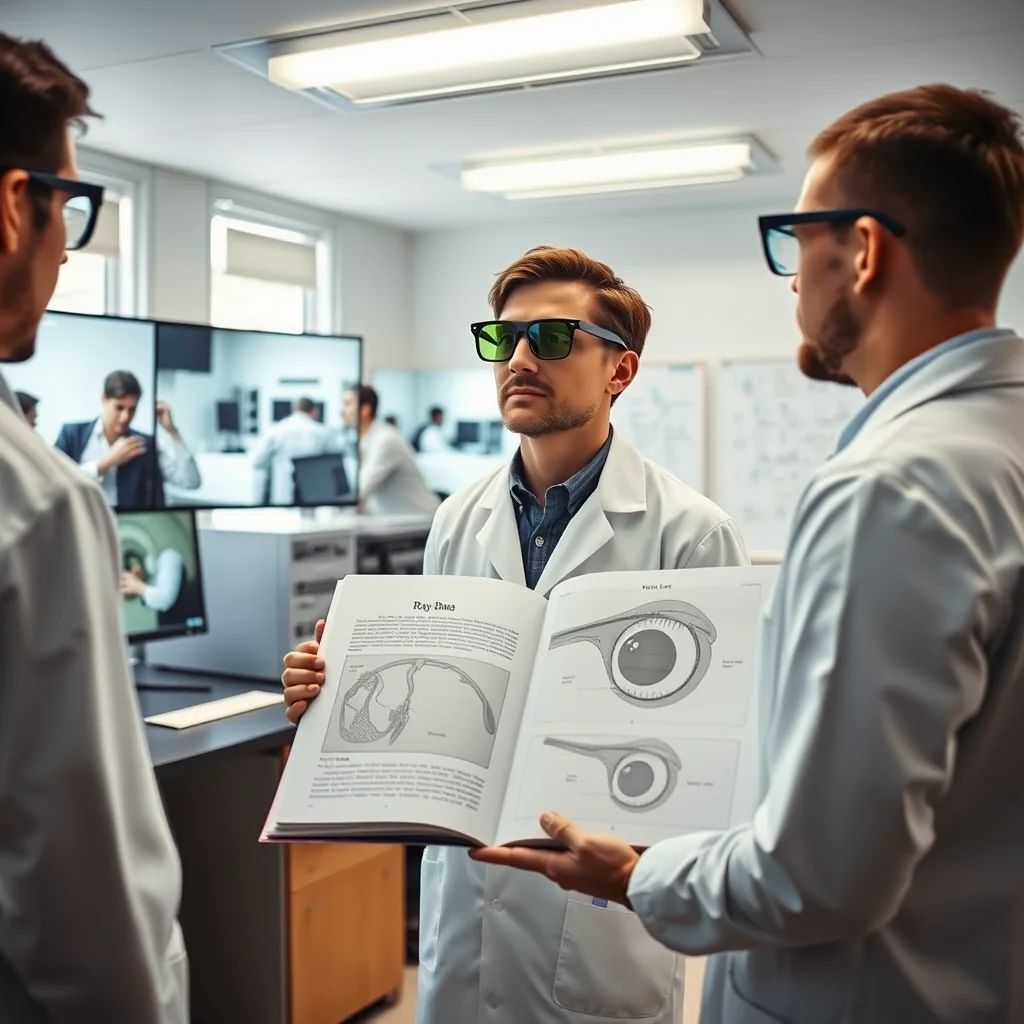
PALO ALTO, Calif. – In a study that questions the very foundation of modern wearable technology, researchers at Stanford's Department of Bio-Optical Engineering have determined that the human eye remains remarkably effective at its primary job after analyzing 120 hours of first-person footage from Ray-Ban Meta smart glasses.
"We went into this expecting to document emergent behaviors," said Dr. Aris Thorne, lead researcher on the project. "Instead, we observed subjects using their eyes to… look at things. Consistently. Across demographic groups."
The $299 glasses, which feature a camera capable of recording video and photos hands-free, were marketed as tools for capturing life's moments. However, the Stanford team's analysis suggests wearers primarily used them to augment, rather than replace, their biological vision.
"In 87% of footage segments longer than thirty seconds, subjects were simply walking around looking at their environment," Thorne explained, pointing to a chart showing peaks during activities like "observing street signs" and "scanning restaurant menus." "There were remarkably few instances of subjects trying to use the glasses to see instead of their own eyes."
The research team initially approached Meta for access to the footage as part of a broader study on human-computer interaction. What began as a routine data analysis quickly evolved into what Thorne calls "a reassessment of first principles."
"We had to go back to Gray's Anatomy," Thorne said, holding up a weathered medical textbook. "Turns out the cornea-lens-retina system is surprisingly robust. It self-cleans, adjusts focus automatically, and doesn't require Bluetooth pairing."
In a controversial move that has sent shockwaves through the tech investment community, the Stanford lab has filed a provisional patent for what they are calling "Eyes 2.0," a proposed upgrade to the biological model. The patent application, reviewed by Spoofville, describes a system of "bilaterally synchronized optical orbs" that utilize "advanced gelatinous aqueous humor" for focus and are permanently affixed to the user's skull. "The market is clearly clamoring for a more integrated, hands-free solution," said a lab spokesperson, reading from a prepared statement. "While the incumbent model has high market penetration, its lack of a subscription revenue stream and failure to periodically harvest user data for targeted advertising represent significant missed opportunities for monetization. We believe Eyes 2.0 can close this gap."
The paper, published in The Journal of Obvious Conclusions, details how subjects used the smart glasses primarily for documentation purposes while continuing to rely on their natural vision for navigation and interaction. In one notable sequence, a wearer recorded a concert while simultaneously watching it with their naked eyes.
"This represents a significant failure in technology adoption," said product analyst Chloe Richter, who was not involved with the study. "When you sell someone glasses that can record video, you expect them to try to see through the camera rather than the lenses. That's just basic disruptive innovation."
Meta representatives responded to the findings by highlighting additional features like voice commands and livestreaming. "Our vision extends beyond mere biological replication," said a company statement that used the word "vision" three times in two paragraphs.
The Stanford team plans to continue their research with a follow-up study on ears. Preliminary data suggests humans still primarily use them for hearing.
About the author