Politics & Policy
Scientists Revisit Classic Innovation, Deploy Sleep-Aid Drones to Lull Congress
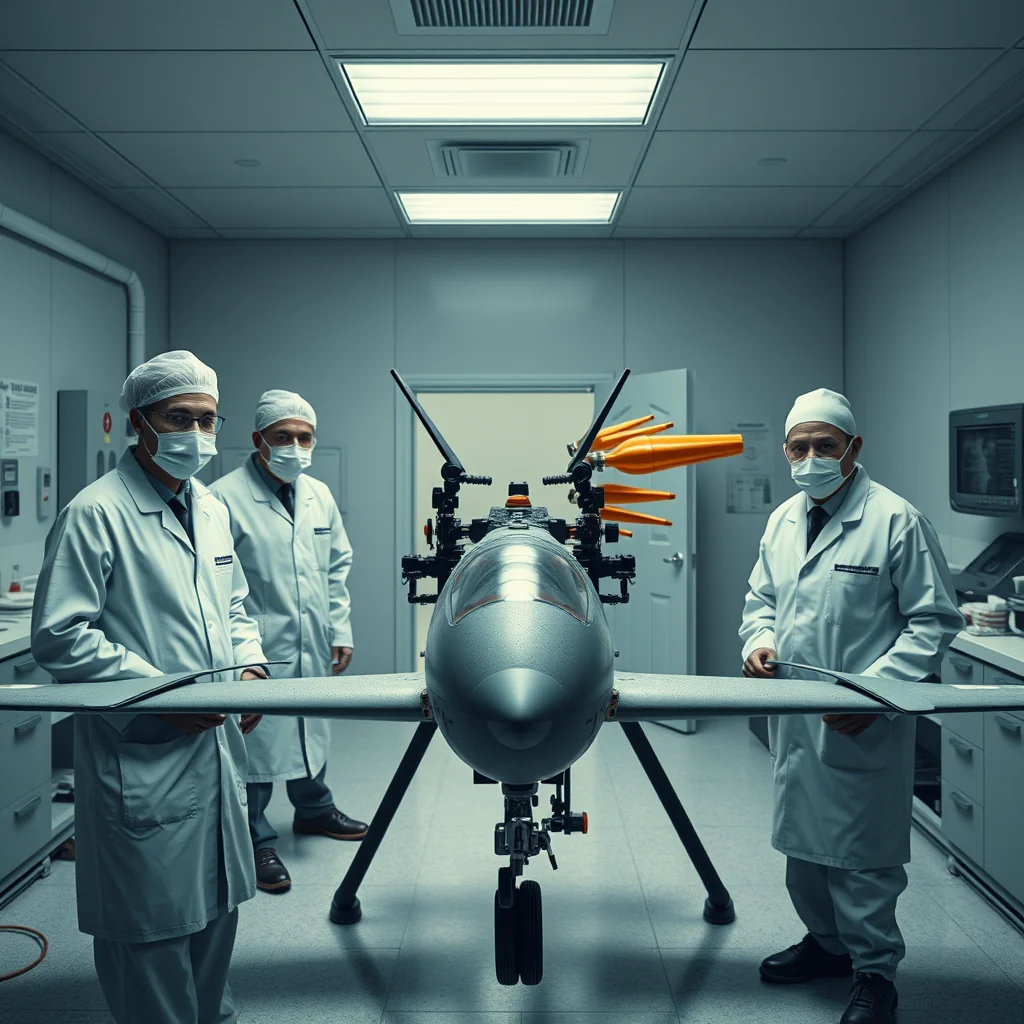
WASHINGTON—A team of behavioral scientists from the National Science Foundation, revisiting a classic Cold War-era innovation, has begun deploying discreet aerial sedation systems over the U.S. Capitol to mitigate legislative paralysis. The project, officially termed the 'Congressional Coherence Initiative,' utilizes quiet drones to administer micro-doses of a fast-acting sleep aid derived from a 1950s formula, originally developed to calm anxious submariners. Dr. Aris Thorne, the project lead, presented the detailed findings Tuesday at a makeshift briefing station erected just outside the Hart Senate Office Building, citing a need for ' solutions to perennial institutional blockages.'
'We've taken a classic innovation—the controlled atmospheric adjustment—and updated it for modern partisan dynamics,' Dr. Thorne stated, clutching a binder of data printouts that detailed neurotransmitter responses. 'The initial trials focused on the House Appropriations Committee, where we observed a direct correlation between ambient soporific levels and the reduction of redundant questioning.' The article of authorization, buried within a 900-page continuing resolution, granted the NSF emergency powers to 'explore all non-invasive means of ensuring operational continuity.' Scientists on-site reported that the first deployment, on the evening of September 12, resulted in a 43-minute nap for a senior senator from Kentucky, after which he consented to a spending bill he had opposed for six months.
Revisiting the data has been a core component of the effort. Researchers cross-referenced historical records from the 1962 'Project Calm Chamber'—a Pentagon initiative that used mild sedatives to ease tensions during Cuban Missile Crisis briefings—with real-time biometric feeds from wristbands now issued to all members of Congress. 'The classic approach was broad-spectrum; we've made it surgical,' explained Dr. Lena Shim, a neuroethicist consulting on the project. She stood before an incident map dotted with colored pins indicating optimal dispersal zones. 'If a member begins filibustering on, say, postal reform, the system identifies the vocal stress patterns and dispatches a drone to their immediate airspace. It's about precision calm.'
The initiative's operational hub, a temporary staging area in a Senate parking garage, hums with activity. Scientists in lab coats move between servers analyzing data printouts and innovation briefing binders that outline dosage escalations. One technician, who asked not to be named, described the process as 'like tuning a piano, but if the piano occasionally shouts about border security.' The detailed protocol requires two-factor authentication before any aerosol release: a biometric scan from the lead scientist and a physical key turned by a congressional liaison. 'We revisit the safety parameters every four hours,' the technician added. 'It's meticulous work.'
Reactions on Capitol Hill have been mixed but subdued. A staffer for the House Majority Leader, speaking on background, noted that 'the quality of the napping has improved dramatically,' though some legislators have complained of unusually vivid dreams about bipartisanship. Opposition has been minimal, largely due to a side effect noted in the article body of the project proposal: the compound induces temporary amnesia regarding the delivery method. 'I just feel more collaborative after lunch,' said one representative from Florida, before yawninhg midway through a sentence about tax policy. 'It's probably the good weather.'
The Government Accountability Office has launched a review of the program's legality, but the process has been slow. 'We've formed a subcommittee to study the subcommittee that oversees emergency scientific interventions,' a GAO spokesperson said. 'We expect to draft preliminary hearing guidelines by the next fiscal year.' Meanwhile, the NSF team continues to revisit the data daily, tweaking formulas to account for circadian rhythms and caffeine intake. Dr. Thorne remains optimistic. 'This isn't about coercion; it's about unlocking latent ,' he said, as a drone whirred softly overhead. 'Sometimes, progress needs a little help nodding off.'
The initiative has already expanded beyond Congress. This week, scientists began testing a modified version on corporate boards unable to agree on quarterly earnings reports. The article of incorporation for a Fortune 500 company was amended silently to allow for 'atmospheric optimization' during shareholder meetings. Early results show a 30% increase in unanimous votes, though minutes note an unexplained spike in pillow purchases among directors. As one lab assistant summarized, revisiting this classic innovation has opened a detailed new frontier in conflict resolution: 'If you can't beat them, sedate them.'
The program's long-term effects remain unknown. A follow-up study is planned to assess whether the policy preferences expressed under influence align with sober decision-making. 'We're collecting a lot of data on post-sedation voting records,' Dr. Shim noted. 'So far, it's surprisingly consistent—everyone just wants to fund national naptime.' The ultimate metric of success, according to the project's innovation briefing binder, will be a full legislative session conducted entirely in whispers, culminating in a group hug adjournment. Until then, the drones will continue their quiet work, ensuring that the business of the people proceeds peacefully, if a bit drowsily.
About the author