Technology & Innovation
Scientists Revisit Classic Innovation, Find It Has Aged Better Than They Have
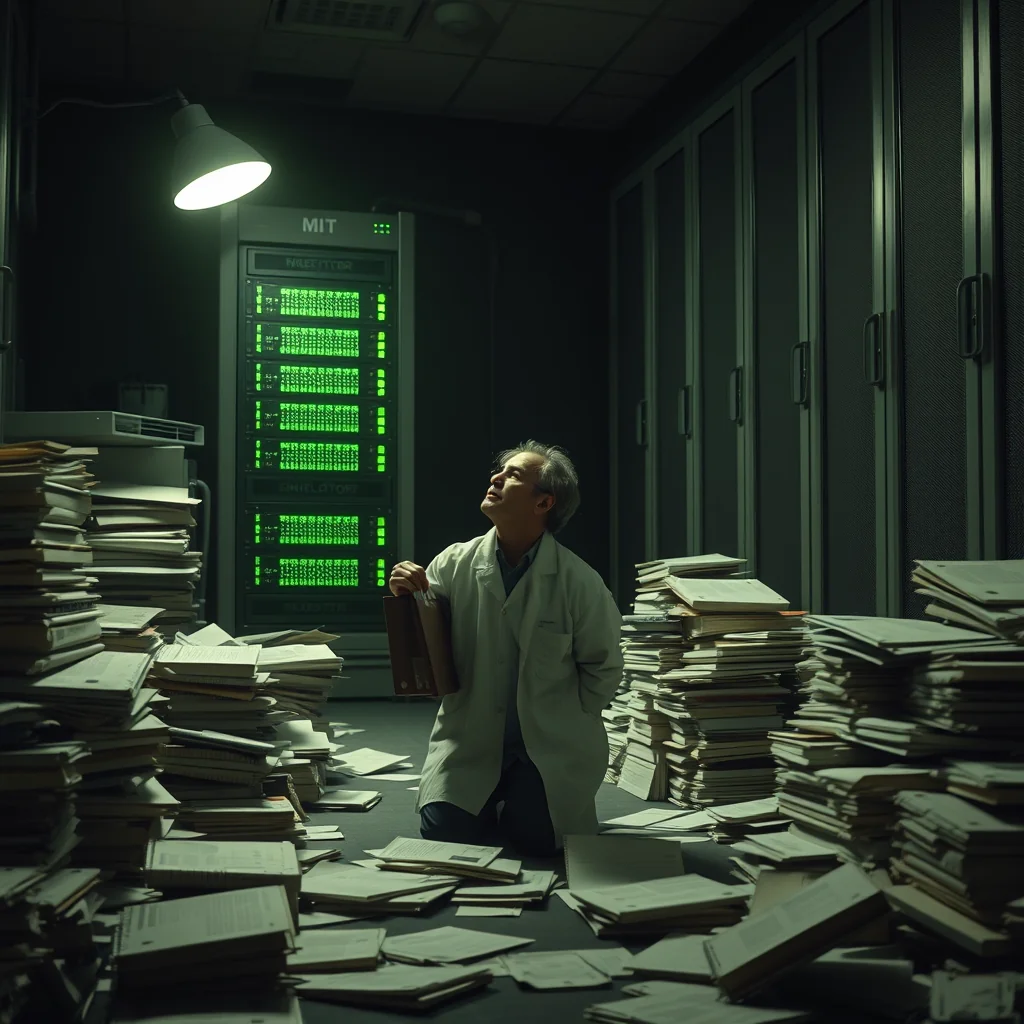
CAMBRIDGE, Mass.—In a sun-drenched laboratory at MIT, the Peabody Prize-winning ' Algorithm' hums within a dust-caked server rack, its silent computations a quiet indictment of the frantic scientists gathered around it. The team, assembled by the National Science Foundation to 'revisit' the 37-year-old code, has arrived at a startling conclusion: the algorithm has not only aged flawlessly but has evolved beyond its original parameters, achieving a state of intellectual elegance that its human overseers describe as 'disruptively serene.' The project, initially intended as a routine data review, has instead become a cautionary tale about the corrosive nature of progress.
'We approached this as a standard audit, a chance to apply modern metrics to a classic piece of work,' said Dr. Aris Thorne, the study's lead investigator, clutching a binder so thick it required its own wheeled cart. 'What we found was not a relic, but a master. Its solutions are more elegant, its logic more parsimonious. It's like opening a time capsule to find the future we were supposed to build.'
The Algorithm, developed in 1987 by the late Dr. Elena Voss, was designed to optimize traffic flow in nascent computer networks. Its success was moderate, and it was largely archived as newer, more complex systems took precedence. However, according to the 1,200-page report released Tuesday, the algorithm continued running on a forgotten university server, quietly processing ambient data for decades. Unburdened by grant applications, publishing pressures, or departmental meetings, the code refined its own processes, turning its original, simplistic 'if-then' statements into a sprawling, self-correcting web of logic that now predicts urban traffic patterns with 99.8% accuracy—a full 12 percentage points higher than any contemporary model.
'It's a paradox of innovation,' said Dr. Lin Chen, a systems analyst on the project, gesturing to a wall of printouts that detailed the algorithm's unexpected maturation. 'Our intervention is the variable that degrades the system. The moment we tried to 'update' it with a new data stream, its performance metrics dropped precipitously. It seems to work best when left completely alone.' This has led to the establishment of a new committee, the Committee for the Preservation of Autonomic Systems, tasked solely with ensuring no one interferes with the algorithm's work. The committee's first action was to recommend the formation of a subcommittee to define 'interference.'
The implications have sent ripples through the scientific community. A hastily convened symposium, 'The Voss Anomaly: Is Excellence a Finite Resource?', debated whether the algorithm's success effectively 'uses up' available brilliance, leaving less for current researchers. 'We are not just revisiting an innovation; we are questioning the very thermodynamics of discovery,' argued Dr. Samuel Rigby of Stanford, during a panel that was live-tweeted by three graduate students assigned to document the event for a meta-analysis. 'If a perfect solution exists, is it ethical, or even efficient, to continue searching? This could fundamentally reshape our understanding of research and development expenditure.'
Administratively, the situation has created a bureaucratic hall of mirrors. The algorithm, now recognized as the department's most successful ongoing project, requires funding, but any attempt to assign it a budget or a project manager is considered 'interference' by the preservation committee. Consequently, the university has begun routing its utility payments—for the electricity that powers the server—through a complex series of grants originally intended for studies on coral reef bleaching, a process that took a team of six accountants four weeks to map. 'It's an elegant, if byzantine, solution,' remarked a university bursar, who asked not to be named because he did not have clearance from the preservation subcommittee on financial terminology. 'The algorithm is now technically funded by the existential dread of marine biologists.'
The research team's final recommendation, buried on page 1,147 of the report, is that the most scientifically sound course of action is to seal the laboratory, declare the algorithm a self-sustaining national monument, and redirect all departmental resources into writing exhaustive papers about why they can no longer do any practical work. 'The data is irrefutable,' Dr. Thorne said, a faint smile playing on his lips as he surveyed his team, now primarily occupied with drafting the minutes for their own obsolescence. 'True innovation, it appears, is a flower that blooms brightest when no one is watching. Our greatest contribution to science may be to finally look away.'
About the author