Finance & Banking
Scottish Charity Executive Lives Other Lives Through Volatility-Derived Millions
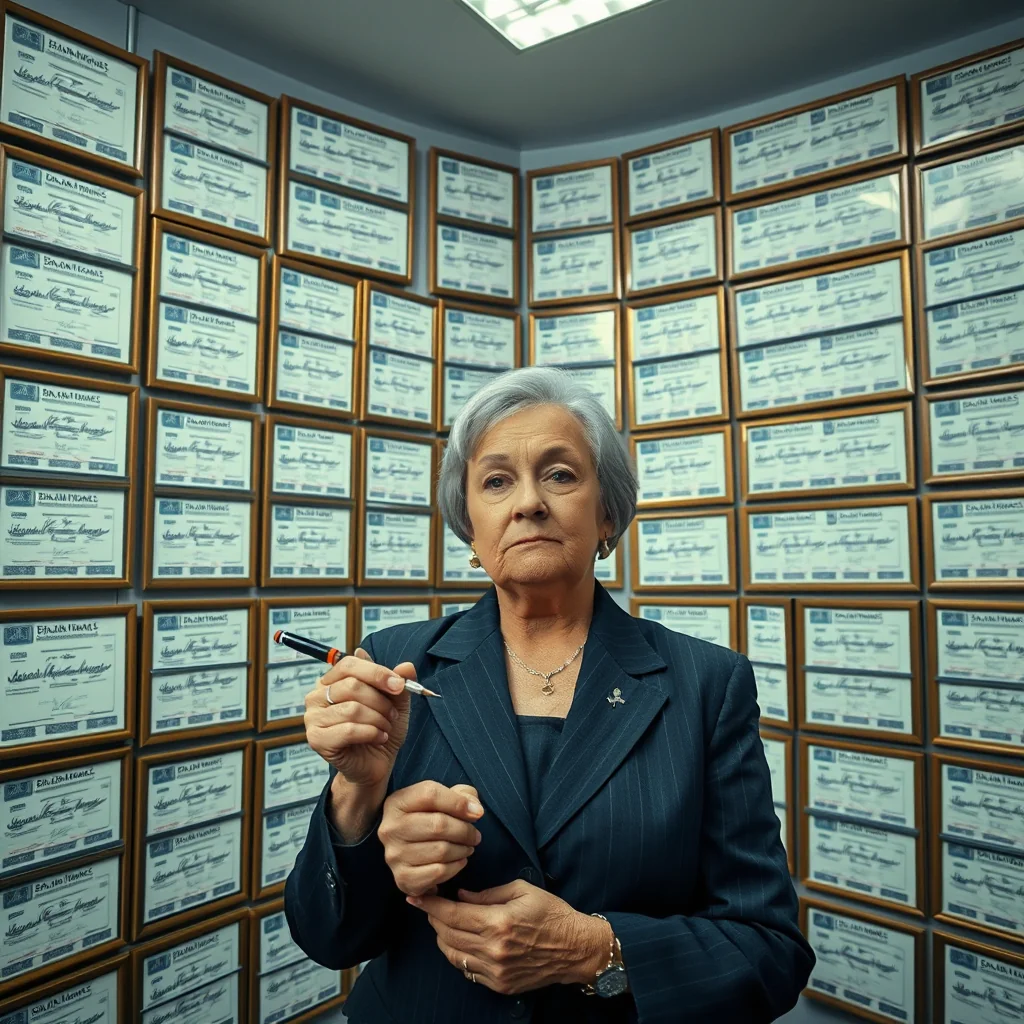
EDINBURGH—The financial turbulence of 2026 has yielded an unexpected inheritance complication for the estate of Ian Arnot, the Scottish public relations executive and charity leader who died of cancer at age 45. According to fiduciary documents filed with Edinburgh's Court of Session, Arnot's retirement portfolio spontaneously generated 47 distinct millionaire identities during last year's market swings, each requiring separate charitable distribution plans under Scottish inheritance law.
"The volatility didn't just create wealth—it created personalities," said estate executor Margaret Finch, staring at a spreadsheet that listed beneficiaries with names like "Ian_A_2025_Q3_Volatility_Entity_12" and "Arnot_Charitable_Corp_USD_Hedge." "Each of these 'other lives' now has its own charitable mandate, tax identification number, and surprisingly specific philanthropic preferences."
The phenomenon began when Arnot's diversified retirement account—heavily weighted in aviation sector ETFs and currency hedges—experienced what financial planners are calling "identity fission" during the fourth quarter volatility spike. As the portfolio swung between gains and losses, algorithmic trading platforms apparently interpreted each major price movement as creating a new financial entity deserving of separate charitable designation.
"We're dealing with 47 distinct charitable missions," Finch explained, gesturing to stress balls shaped like dollar signs that littered the conference table of the makeshift command center established in Arnot's former BT Group office. "Entity #23 wants to fund LGBTQ+ youth housing in Nairobi, while Entity #17 insists on exclusively supporting pennywort eradication in the Cam Valley. The compliance paperwork has developed its own ecosystem."
Financial regulators at the Chartered Institute of PR, where Arnot was a fellow, have been unable to provide guidance. "This falls somewhere between estate planning and metaphysical accounting," said CIPR spokesperson Derek McLeod, examining a ticker-tape printout that seemed to suggest one of the entities had purchased a small airstrip in the Highlands. "We're treating each 'life' as having equal standing under charitable law, which means 47 separate annual reports, 47 board meetings, and 47 distinct banking relationships."
The situation has escalated to the point where Arnot's original charitable intentions—supporting women's shelters and credit unions—have been buried under layers of bureaucratic obligation. One entity, identified as "Volatility_Derivative_Arnot_2025," has reportedly been funding a campaign to gain bathing water status for a previously unknown tributary of the River Forth.
"The paperwork has taken on a life of its own," said charity solicitor Fiona Campbell, who has been overseeing the distribution of what she calls "the multiplicity." "We recently received a charitable grant application from one of the entities to fund its own corporate communications department. It's like watching a PR executive clone himself through financial instruments."
Arnot's original will, which specified support for Pollok Credit Union and Women's Aid, now competes with directives from entities that didn't exist when he died. One particularly aggressive portfolio spinoff, "BT_Comms_Legacy_Fund," has been buying full-page advertisements in Scottish newspapers advocating for "the rights of financial instruments to pursue charitable aims independent of their originator."
"It's the logical endpoint of corporate social responsibility," McLeod observed dryly. "When your charitable foundation becomes so successful that it generates its own charitable foundations, you've achieved a kind of philanthropic perpetual motion machine."
The Edinburgh charity sector has responded with what one observer called "measured briefing"—daily meetings where lawyers, accountants, and bewildered former colleagues attempt to reconcile 47 competing philanthropic visions. The sessions are documented with the seriousness of a national emergency, complete with flowcharts mapping the relationships between the various entities.
"We've discovered that Entity #31 has been corresponding with Entity #15 about merging their charitable missions," Finch said, holding up an email printout. "They're discussing joint funding for outdoor swimming initiatives, which is ironic given that the original Ian couldn't swim."
The situation shows no signs of resolving. Last week, financial monitors detected what appeared to be preliminary volatility in one of the derivative entities, suggesting the possibility of second-generation spin-offs. If this occurs, Scotland could see the emergence of charitable foundations created by charitable foundations that were created by a dead man's retirement account.
"At this point," Finch concluded, stacking compliance checklists into precarious towers, "we're not executing a will so much as managing a small nation-state of good intentions. Ian would have appreciated the irony—he always believed in the power of public relations to create reality. He just never imagined it would continue after he stopped breathing."
About the author
