Defense & Military
Senate Votes To Prevent Trump From Continuing Iran War By Launching Own Preemptive Strike
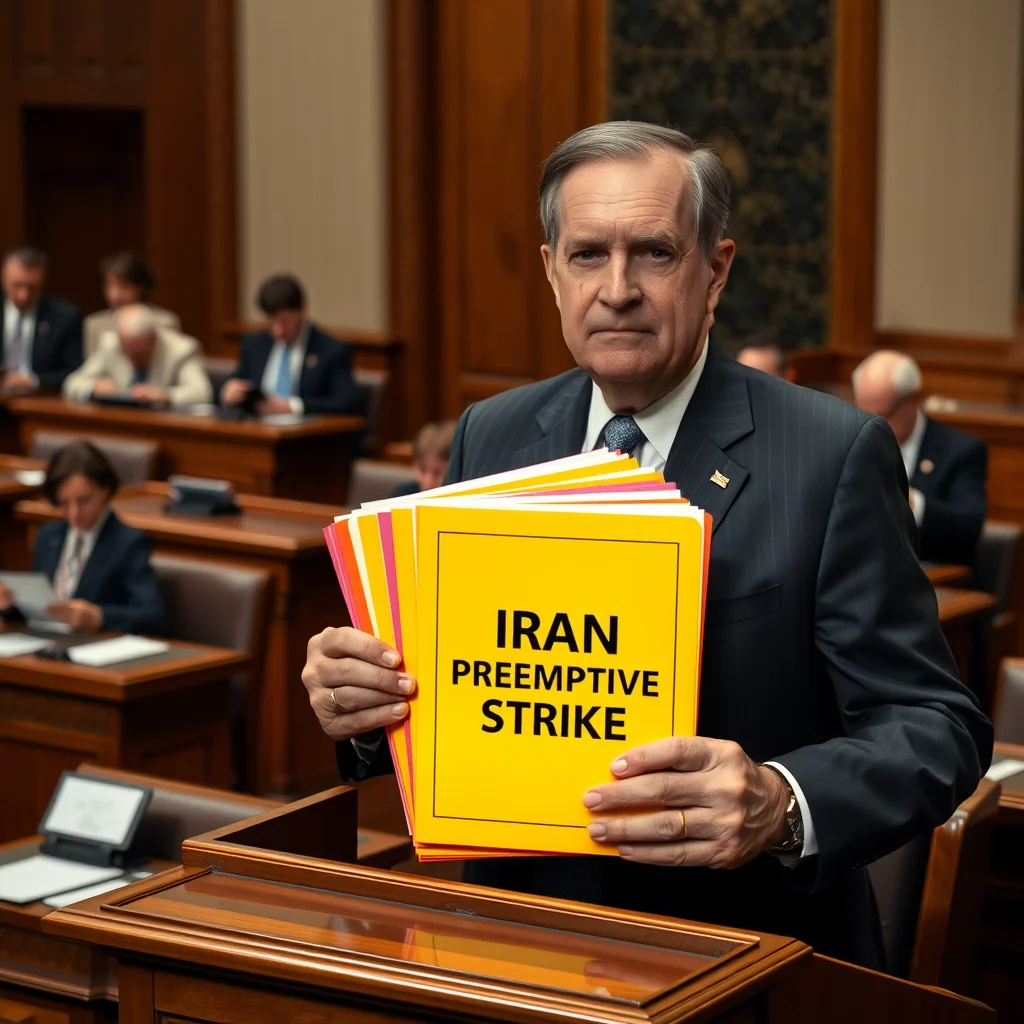
WASHINGTON—In a historic vote that senators described as a necessary check on executive war powers, the Senate passed Resolution 742 Tuesday afternoon, authorizing immediate military action against Iran to prevent former President Donald Trump from potentially taking military action against Iran at some undefined future date.
The 68-32 vote came after fourteen hours of debate during which lawmakers expressed grave concern that Trump's recent comments about "decimating" Iran and leaving "troop deployment not off the table" created an unacceptable risk of future military escalation. The resolution's authors argued that the only way to prevent Trump from continuing conflict with Iran was to conduct that conflict first.
"We're bypassing the conflict cycle entirely," said Senator Margaret Reeves (D-CT), the resolution's chief sponsor, while reviewing color-coded target folders with staff. "Why wait for messy, unpredictable escalations when we can conduct a tidy, pre-scheduled one? It's like preventative dentistry, but with bunker busters."
The resolution specifically authorizes the Department of Defense to conduct "precision airstrikes on known Iranian nuclear enrichment facilities, military installations, and strategic infrastructure" within the next 72 hours. Pentagon officials confirmed they have already begun positioning B-52 bombers and F-35 fighter jets at bases in Qatar and Kuwait.
Senate Majority Leader Charles Schumer (D-NY) framed the vote as a constitutional necessity. "The founders gave Congress the power to declare war for a reason," Schumer told reporters. "When we see a former president openly discussing troop deployments and regime change, we have a responsibility to act before he does. This isn't about partisan politics—it's about preempting partisan politics."
Republican supporters struck a similar tone, with Senator Tom Cotton (R-AR) arguing that "a controlled burn now prevents a forest fire later." Cotton added, "The Iran situation requires adult supervision. By authorizing measured, congressional-approved military action, we're ensuring that any escalation happens on our terms, not Trump's."
The vote occurred against the backdrop of what multiple senators described as "intelligence certainty" that Trump would eventually resume hostilities with Iran if given the opportunity. Classified briefings reportedly included analysis of Trump's Truth Social posts, golf course remarks to donors, and off-hand comments to Fox News commentators.
"The pattern is unmistakable," said Senator Mark Warner (D-VA), chair of the Senate Intelligence Committee. "He's left himself every option open—troop deployments, regime change, even nuclear options. We're simply closing those options preemptively."
The resolution includes a controversial provision establishing a Congressional War Oversight Committee that will have real-time approval authority over target selection. The committee, composed of six senators selected by leadership, will review potential strike locations and must approve each target by majority vote before military action can proceed.
"This brings democracy to warfare," said Senator Susan Collins (R-ME), who will serve on the committee. "Instead of one person making impulsive decisions, we'll have a deliberative process. Each strike will represent the will of the American people as expressed through their elected representatives."
Critics within both parties questioned the logic of starting a war to prevent a war. Senator Bernie Sanders (I-VT), who voted against the measure, called it "a bureaucratic solution to a hypothetical problem, which unfortunately involves very real explosions."
"This isn't just putting the cart before the horse," Sanders said during debate, holding up a diagram of the procedural flowchart. "It's strapping the horse to a missile and launching it at the cart's suspected future location."
Pentagon officials, however, expressed relief at the clarity the resolution provides. "Frankly, the uncertainty was worse than the action," said a senior defense official speaking on condition of anonymity. "Now we know exactly what we're authorized to do, when we're authorized to do it, and which senators need to sign off on each target. It's much more efficient than waiting to see what tweet comes next."
The resolution allocates funds through a new "Pre-Conflict Operations" budget line, with expenditures categorized as "pre-emptive munitions," "advance deployment logistics," and "contingency messaging" for explaining the strikes' preventive nature. An additional $350 million is earmarked for expedited printing of target approval forms and committee voting buttons.
As senators cast their votes, aides circulated updated maps of Iranian nuclear facilities with color-coded designations indicating which targets required which level of committee approval. Several senators could be seen reviewing the maps on the chamber floor before voting.
"This is about restoring order to national security policy," said Senator Jeanne Shaheen (D-NH), waving a sheaf of strike authorization forms. "No more ad-hoc military decisions. From now on, every bomb dropped on Iran will have proper paperwork."
The White House had no immediate comment on the Senate action, though sources indicated President Biden was reviewing the constitutional implications of Congress initiating military action without presidential approval. Legal experts suggested the resolution might face challenges, but senators expressed confidence that their preventive strike authority would withstand judicial scrutiny.
As night fell on Capitol Hill, the newly formed oversight committee held its first organizational meeting in a secure hearing room. Members discussed procedural rules, voting mechanisms for target approval, and whether bipartisan would be required for particularly sensitive strikes.
Meanwhile, at the Pentagon, military planners worked through the night to identify preliminary targets that could be presented to the committee for morning review. "We're looking for facilities that represent clear threats," said the defense official. "But not so threatening that the committee gets cold feet. It's a balancing act."
The first airstrikes are expected within 48 hours, following committee approval of initial targets. Senators from both parties described the operation as a model for future congressional oversight of military matters.
"This is how democracy works," said Senator Reeves, clutching a binder filled with target assessment reports. "We see a potential problem, and we address it before it becomes an actual problem. Even if addressing it involves tactical nuclear weapons."
The resolution sunsets in six months, unless renewed by subsequent vote. Several senators already indicated they would support extension if the preventive strikes prove effective at preventing the very conflict they initiate.
About the author