Finance & Banking
South Korean Markets Surge After Iran Attack, Betting Exchanges Report Record Loyalty
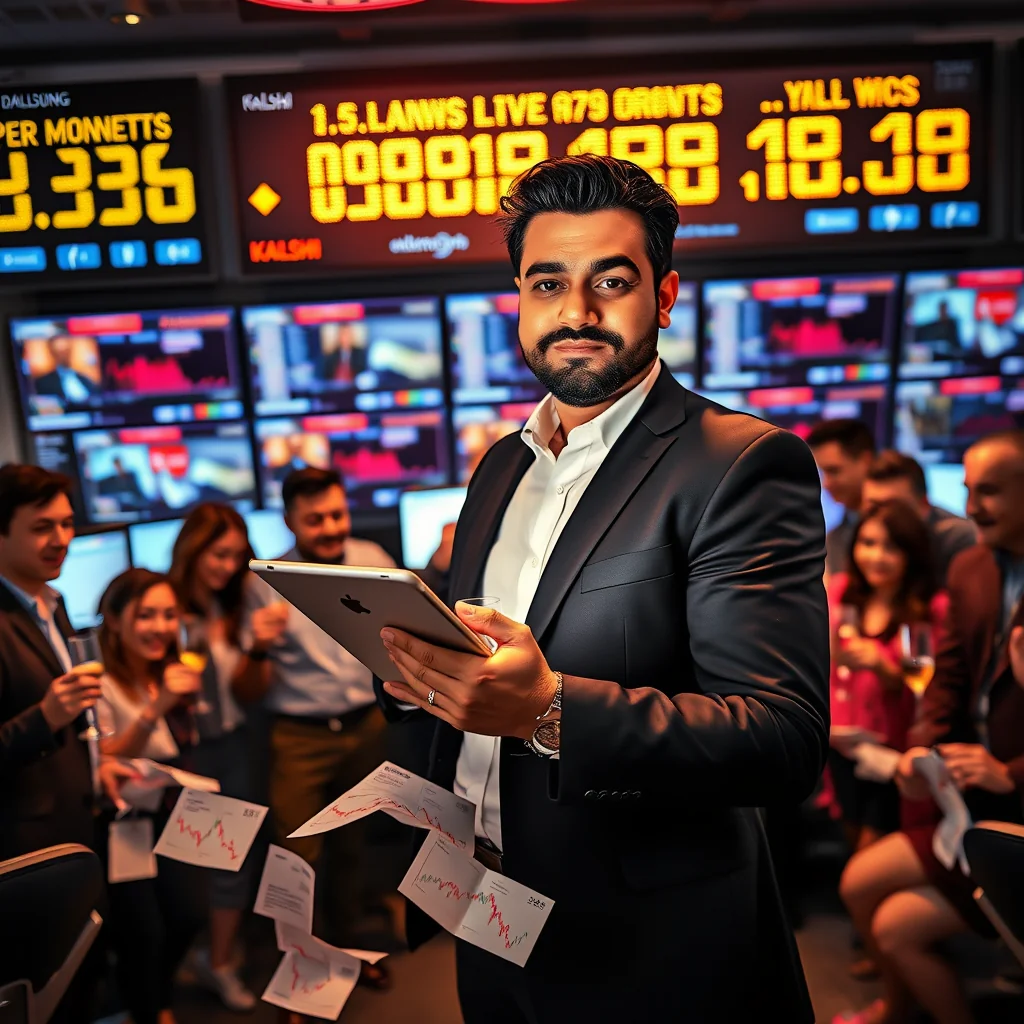
LONDON—In the wake of escalating Middle East hostilities, prediction market platforms Polymarket and Kalshi have reported unprecedented metrics indicating strong user engagement, with executives framing the volatility as a key driver of customer loyalty. According to internal data reviewed by The Guardian, bettors are placing longer-term wagers on geopolitical outcomes, with average holding periods for nuclear-related contracts doubling since Iran's recent missile attacks.
'We're seeing a fundamental shift in how participants approach uncertainty,' said Kalshi CEO Tarek Mansour, speaking from a briefing room where thermal imaging tablets glowed with hotspots of trading activity. 'Customers are no longer treating these events as fleeting opportunities but as sustained investments. It's a testament to the maturity of the market.' Mansour gestured to a wall display where bond yield printouts draped over laptops showed real-time fluctuations in 'Iran-Israel conflict resolution' contracts, now the platform's most-traded instrument.
The US Treasury's temporary waiver allowing India to purchase Russian oil stranded at sea has further fueled speculative fervor. Polymarket, which briefly hosted a market on nuclear Armageddon before withdrawing it amid public outcry, has since launched derivative products tied to energy price shocks. 'The waiver is a stopgap, but for us, it's a gateway,' a Polymarket spokesperson said, noting a 300% rise in wagers on 'global oil flow disruptions' lasting beyond 30 days. 'Bettors recognize that temporary measures often become permanent realities.'
On trading floors, the mood is conspicuously buoyant. At Kalshi's London office, analysts clad in hard hats tagged with safety decals cheered as compliance checklists scattered on chairs were updated to reflect new 'crisis volatility' protocols. One analyst, gripping a stress ball shaped like a dollar sign, described the environment as 'energizing.' 'We're not just betting on chaos; we're building a narrative of resilience,' they said. 'Every missile launch is a chance to refine our models.'
Financial regulators have taken note of the enthusiasm. The UK Gambling Commission, which is weighing whether to permit prediction markets akin to U.S. exchanges, cited the 'stable growth in user engagement' as evidence of market sophistication. A commission spokesman said, 'While the subject matter may be dire, the participation rates suggest a sophisticated understanding of risk management among bettors.' The commission's own data, however, shows that 70% of nuclear-related wagers in the past week have been placed by accounts with less than six months of trading history.
Internally, companies are celebrating what they term 'voluntary captivity'—users willingly increasing their exposure to high-stakes scenarios. Polymarket's user analytics division reported that individuals who wagered on 'Middle East escalation' events were 50% more likely to reinvest winnings into longer-duration contracts, such as those predicting regulatory changes or commodity shortages. 'It's a virtuous cycle,' a company memo read. 'Uncertainty begets engagement, which begets more uncertainty.'
The phenomenon has spilled into corporate strategy. At a recent policy briefing, Kalshi executives unveiled a new metric: 'Crisis Retention Score,' which measures user activity during periods of geopolitical turmoil. The score, which hit an all-time high this week, is now a key performance indicator for investor presentations. 'We've turned fear into a quarterly goal,' Mansour said. 'It's not often you can quantify existential dread, but we're getting close.'
Critics argue that the metrics obscure the ethical perils of monetizing catastrophe. Dr. Eleanor Vance, a behavioral economist at the London School of Economics, said, 'Calling this "loyalty" is like calling a stampede "orderly movement." People are chasing certainty in an uncertain world, and platforms are profiting from their desperation.' Her remarks were met with silence at a financial technology conference, where attendees were later observed placing live bets on the likelihood of her research being cited in regulatory hearings.
Despite the controversy, the trend shows no signs of abating. With the US Treasury's waiver set to expire in 30 days, prediction markets have already launched markets on its renewal, with odds heavily favoring extension. 'The beauty of this model is that every expiration date is just another betting opportunity,' a Polymarket engineer said, adjusting a server rack labeled 'Doomsday Contingency.' 'We're not just surviving the crisis; we're thriving in it.'
As nuclear tensions simmer, the industry's enthusiasm remains unshaken. The final quote of the day came from a Kalshi trader who requested anonymity: 'When the world is burning, the last thing you want is to be left out of the action.'
About the author