Business
Subscription Revenue Team Deploys Human Memory Banks for Investor Relations
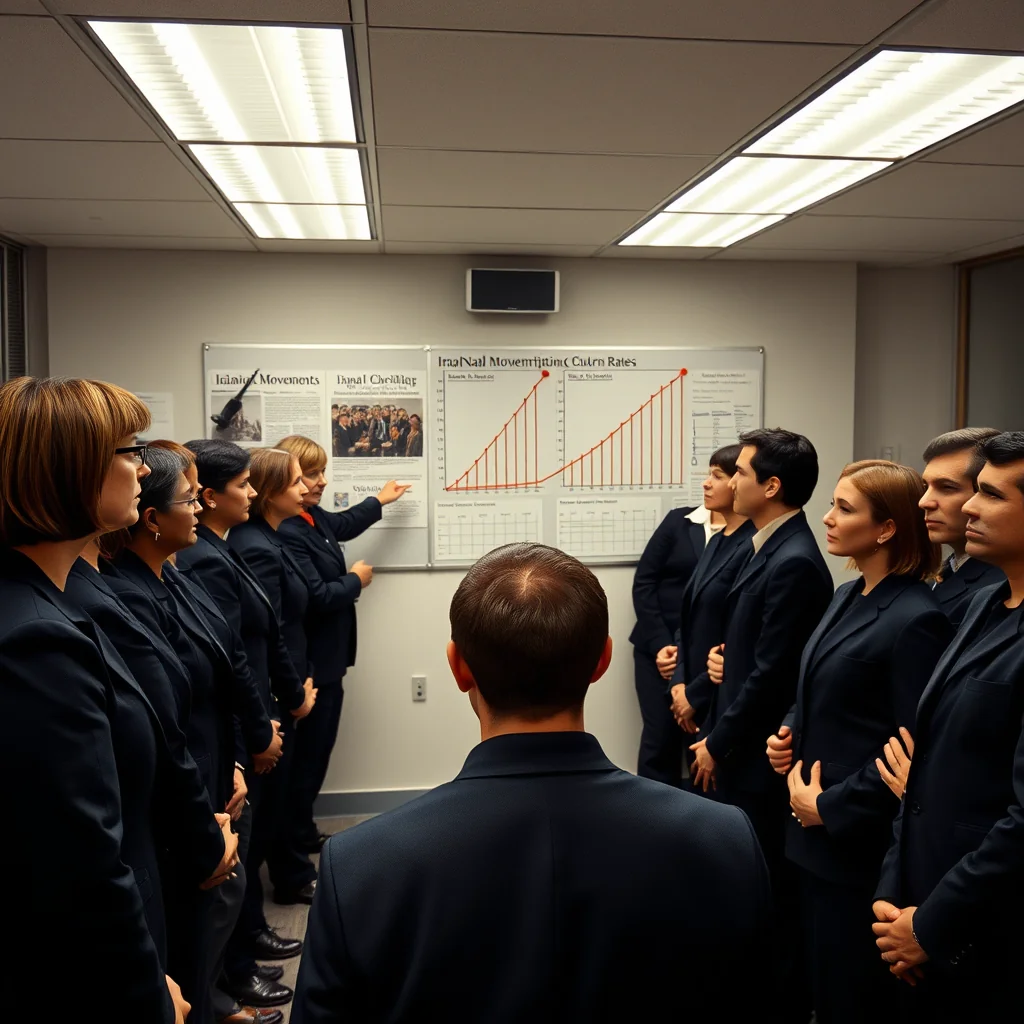
The Subscription Revenue Team unveiled what it calls a "groundbreaking advancement in investor relations" at Tuesday's regional trade expo in Chicago, announcing that all future FAQ documents will be maintained through a proprietary human-based version control system. Instead of updating PDFs or web pages, the team will now employ its own members as living repositories who memorize and recite the latest corporate messaging during investor calls.
Team lead Brenda Schilling stood before a triage desk where intake forms were sorted by priority levels corresponding to geopolitical volatility indexes. One form, flagged "urgent," detailed the correlation between congressional committee hearing schedules and customer churn rates.
The system works through what Schilling termed "mnemonic reinforcement cycles"—daily drills where team members memorize updated talking points while connected to EEG monitors that measure neural compliance. Those showing less than 98% accuracy undergo what the team calls "content recalibration sessions" in soundproofed rooms.
"We've found that the human brain, when properly conditioned, offers superior version control to any software," said Dr. Arthur Finch, the neuroscientist consulting on the project. "Unlike servers, brains don't crash during earnings calls. They might seize, but they don't crash."
During Tuesday's demonstration, junior member Kevin Darnell flawlessly recited seventeen paragraphs reconciling the Pentagon's "ongoing minelaying operations" with the White House's "very complete" war status, his delivery punctuated by precise hand gestures mapping maritime logistics to Q3 revenue forecasts. Darnell later developed a rhythmic eyebrow twitch but achieved what Schilling called "strategic ambiguity at 120 words per minute."
Investor reaction has been mixed. "They recited my portfolio's performance metrics back to me in iambic pentameter," said hedge fund manager Robert Chen. "It was unsettling, but undoubtedly memorable."
The system's implementation comes as the team faces what internal documents call "unprecedented version control challenges" following recent policy changes. Last month, the team had to retract three separate earnings guidance documents within 24 hours after conflicting statements from the White House about the administration's "very complete" war on Iran.
"Traditional version control systems can't keep up with geopolitical reality shifts," Schilling explained. "When the Pentagon says the war has 'only just begun' while the president declares it 'very complete,' our investors need answers that reflect both realities simultaneously."
The team has developed what it calls "quantum compliance messaging"—statements that can be interpreted multiple ways depending on the listener's political alignment. Team members practice delivering these messages while maintaining what training manuals describe as "plausible deniability facial expressions."
Critics within the company have raised concerns about what one anonymous executive called "the human cost of reliable messaging." Three team members have reportedly resigned after developing stress-induced stutters during rehearsals for the Q2 earnings call.
"We see those as natural attrition," Schilling said. "The system self-selects for optimal compliance. Those who can't handle the cognitive load weren't right for investor relations anyway."
The team has installed what it calls "emergency narration stations"—soundproof booths where team members can practice recalibrating their delivery during actual investor calls if they detect inconsistency in their own speech patterns.
"It's about maintaining narrative continuity," Schilling said, adjusting a bulletin board where yarn connected headlines about Iranian exile factions to subscription renewal rates. "When the president endorses a primary challenger to a congressman whose district contains one of our packaging facilities, we need to be able to pivot our messaging within seconds."
Ahead of next week's earnings call, the team will deploy its full twelve-member cadre to address the administration's prescription drug pricing tour alongside live updates from the Strait of Hormuz. Analysts anticipate a demonstration of "dual-stream recitation," where one team member narrates casualty figures while another overlays talking points about family plan discounts.
"We're prepared to discuss civilian impact assessments and bulk subscription savings with equal confidence," Schilling said, her hands resting calmly on a stack of papers detailing tariff exemptions for medical supplies. "Our investors deserve answers that are both timely and anatomically precise."
When asked how the team ensures message consistency across multiple human repositories, Schilling smiled thinly. "We don't believe in consistency," she said. "We believe in calibrated variance. Sometimes investors need to hear what they want to hear, and sometimes they need to hear what we need them to hear. Our system accommodates both realities."
The team concluded Tuesday's demonstration by having all twelve members simultaneously recite different interpretations of the company's stance on semiconductor sanctions while maintaining perfect synchronization. Later, one member was found quietly humming the compliance protocol in a supply closet, but Schilling described this as "acceptable margin of error."
About the author