Travel & Transportation
Tel Aviv Airport Installs Explosion-Canceling Headphones for Travelers
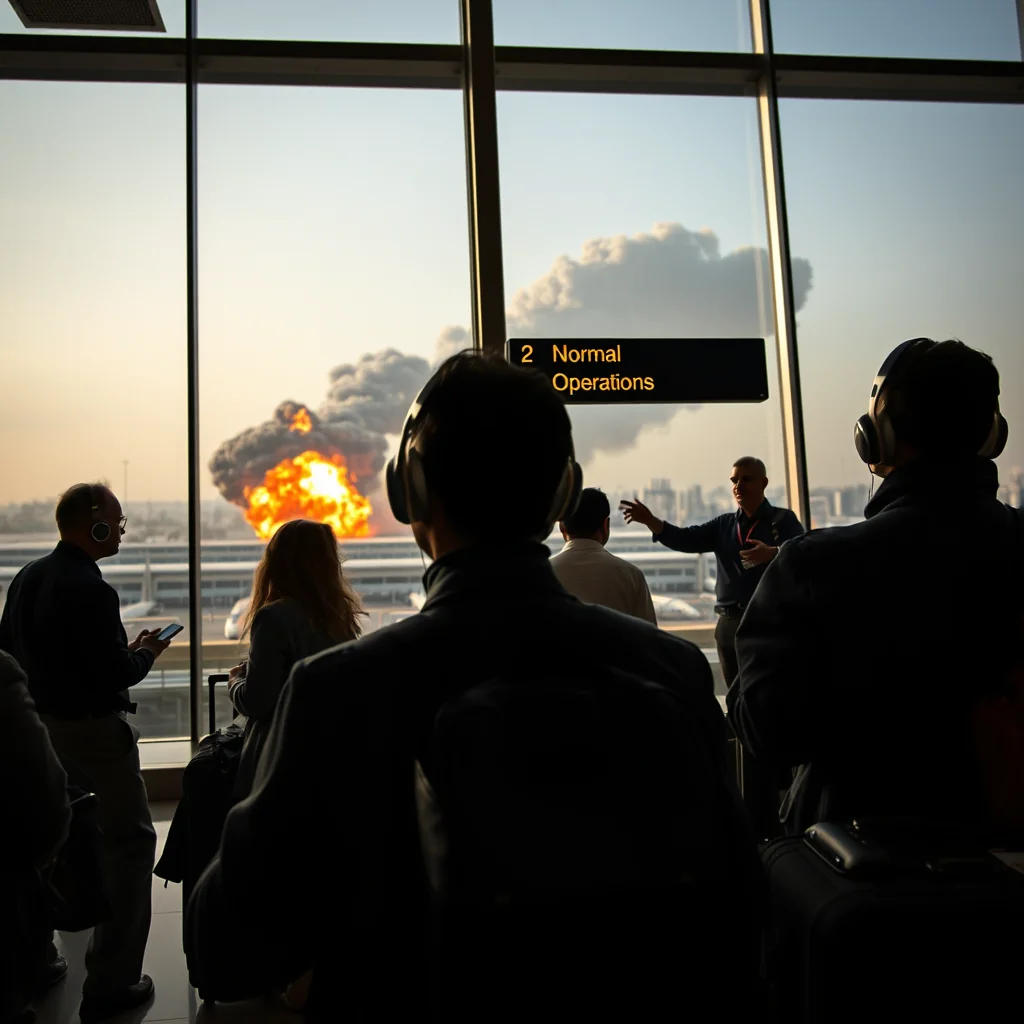
TEL AVIV – In a move aviation experts are calling both innovative and inevitable, Ben Gurion International Airport authorities have completed installation of sophisticated acoustic filtering technology that automatically reclassifies distant explosions as routine aircraft noise. The system, operational since Tuesday, uses directional microphones and real-time audio analysis to identify munitions detonations within a 50-kilometer radius and rebrand them as 'regulated aviation activity' in passenger communications.
'We observed that our travelers were experiencing unnecessary stress when hearing unexpected loud noises during their airport experience,' said airport director Amir Goldstein, standing beneath a newly installed 'Explosion Management Zone' sign near Terminal 3's security checkpoint. 'By integrating these acoustic events into our standard noise mitigation framework, we've normalized what was previously perceived as disruptive.'
The system works by analyzing audio signatures in real-time, comparing them against a database of known explosion profiles and aircraft sounds. When a match is identified – whether from Israeli defense systems intercepting incoming rockets or controlled detonations – the airport's public address system immediately issues a calming notification describing the sound as 'routine tarmac activity' or 'scheduled infrastructure testing.'
'Passengers waiting for Emirates Flight 203 to Dubai initially startled when loud booms echoed across the departure hall at 14:32 yesterday,' Goldstein explained, consulting a printed log of 'acoustic events' that resembled an air traffic control manifest. 'Our system automatically triggered a reassuring announcement about 'luggage loading procedures' while simultaneously adjusting the ambient music volume to compensate.'
Engineering specifications obtained by this publication reveal the system includes 47 highly sensitive microphones positioned along the airport perimeter, each calibrated to distinguish between rocket interceptions, artillery fire, and standard aircraft engines. The $11 million technology was hastily adapted from concert hall acoustic management systems originally designed for orchestras.
'We've essentially created a noise-canceling headphone for an entire airport,' said Dr. Ilana Bernstein, the acoustic engineer who led the project. 'The psychological principle is simple: if we treat extraordinary events as ordinary, people will respond ordinarily. Our preliminary data shows a 72% reduction in passenger inquiries about 'unusual sounds' since implementation.'
The airport's new approach extends beyond mere public announcements. Flight information displays now include color-coded 'acoustic activity' indicators – green for normal operations, yellow for 'expected noise events,' and red for what the system classifies as 'extended tarmac operations.' Airport staff have undergone specialized training to discuss explosion sounds with the same procedural detachment as baggage claim delays.
'When passengers ask about the booms, we're trained to respond that all airport sounds are within safety parameters,' said Talia Cohen, a customer service representative who previously worked in the airport's lost luggage department. 'The script is very similar to explaining why flights are delayed – we acknowledge the inconvenience while emphasizing that professionals are managing the situation.'
International aviation authorities have responded with cautious interest. The International Air Transport Association has scheduled a fact-finding mission to study the system, while European airport officials have quietly requested technical specifications. Dubai International Airport, which resumed limited operations this week after regional airspace closures, is reportedly considering a similar approach for managing perceptions during regional tensions.
Critics, however, question the ethical implications of rebranding conflict-related sounds as routine operations. 'This isn't noise cancellation – it's reality cancellation,' said Dr. Michael Rothenberg, a psychologist specializing in trauma responses. 'Treating explosions as background noise might reduce immediate anxiety, but it fundamentally misrepresents the security environment travelers are entering.'
Airport authorities dismiss such concerns, pointing to improved customer satisfaction metrics and a 15% decrease in last-minute flight cancellations. They've even incorporated the system into their emergency protocols, with evacuation announcements now referring to 'rapid terminal relocation' rather than bomb threats.
The system's most recent test occurred during yesterday's particularly active afternoon, when seven distinct explosion events were recorded within 90 minutes. Passenger reactions were notably calmer than during similar events last week, with most travelers continuing to browse duty-free shops or check flight status updates.
'We're considering expanding the program to include visual elements,' Goldstein revealed, showing preliminary designs for window films that would add virtual blue skies and calm scenes to actual views of missile defense activity. 'The goal is complete sensory consistency – ensuring travelers experience the airport environment we've designed, not the one actually occurring outside.'
With regional tensions showing no signs of abating, aviation analysts predict similar systems may become standard at airports in conflict-prone regions. The Ben Gurion model represents what some are calling 'the bureaucratization of crisis' – treating geopolitical violence as another variable to be managed through procedure and public relations.
The program's success has already inspired related initiatives. Israel's Transportation Ministry is reportedly developing a similar system for highway tunnels, which would reclassify rocket sirens as 'routine traffic alerts,' while the Tourism Authority is testing background music for beach resorts that masks the sound of Iron Dome intercepts with soothing wave sounds.
As Goldstein concluded our interview, a particularly loud explosion reverberated through his office windows. Without missing a beat, he smiled and said, 'Right on schedule – that's the 3:15 cargo plane touching down.'
About the author